

OpenAI has paused some activities involving its upcoming Astra model after internal evaluations showed major improvements in agentic coding and cybersecurity capabilities. The company stated that it could not rule out Astra reaching the Critical Cybersecurity Capability threshold defined in its Preparedness Framework.
Unlike traditional AI systems that mainly respond to prompts, Astra is being evaluated as a more advanced agentic model. It can potentially plan tasks, use external tools, write code, inspect results, and continue working toward a goal with limited human involvement.
The pause is not a cancellation. Instead, it reflects a growing challenge in frontier AI development: ensuring that security measures advance alongside model capabilities.
What Is the OpenAI Astra Model?
Astra is an upcoming OpenAI frontier model currently undergoing internal testing. Recent evaluations showed significant improvements in areas such as agentic programming and cybersecurity reasoning.
The difference between a normal chatbot and an AI agent is autonomy.
A chatbot typically follows this workflow:
Human gives prompt → AI generates response → Human reviews output
An AI agent follows a more complex process:
Human gives goal → AI plans → AI uses tools → AI executes tasks → AI evaluates results → AI continues working
This increased independence creates new opportunities but also introduces new risks. When AI systems gain access to code execution, networks, tools, and external services, stronger security controls become essential.
OpenAI’s Preparedness Framework defines critical cybersecurity capability around advanced abilities, including developing functional zero-day exploits against hardened systems or creating novel cyberattack strategies from high-level instructions.
OpenAI has not confirmed that Astra has fully reached this level. However, its evaluations showed enough progress that the possibility could not be ignored.
Why Did OpenAI Pause Astra Development?
The Astra pause appears to be a safety checkpoint rather than a shutdown.
OpenAI is strengthening security requirements before allowing certain activities to continue. As AI models become more capable, companies must evaluate not only what a model can generate but also what it can do when connected to real-world systems.
Traditional AI benchmarks measure problem-solving ability. However, agentic AI requires additional testing around:
- Tool access
- Code execution
- Network permissions
- Credentials
- External services
- Autonomous decision-making
A powerful AI system should not automatically receive more permissions. Instead, its environment should match its risk level.
AI Agents and the Future of Automation
AI development is moving from systems that provide information toward systems that can complete multi-step tasks.
Modern AI agents can support areas such as software development, research, business operations, and cybersecurity. However, greater autonomy also increases the number of possible failure points.
For example, enterprise platforms are increasingly integrating AI agents into structured workflows. Solutions discussed in resources about UiPath AI and ServiceNow AI show how businesses are moving toward AI-powered automation.
The Astra situation highlights an important lesson: automation must be developed together with governance, monitoring, and access controls.
Why Sandbox Security Matters for AI Agents
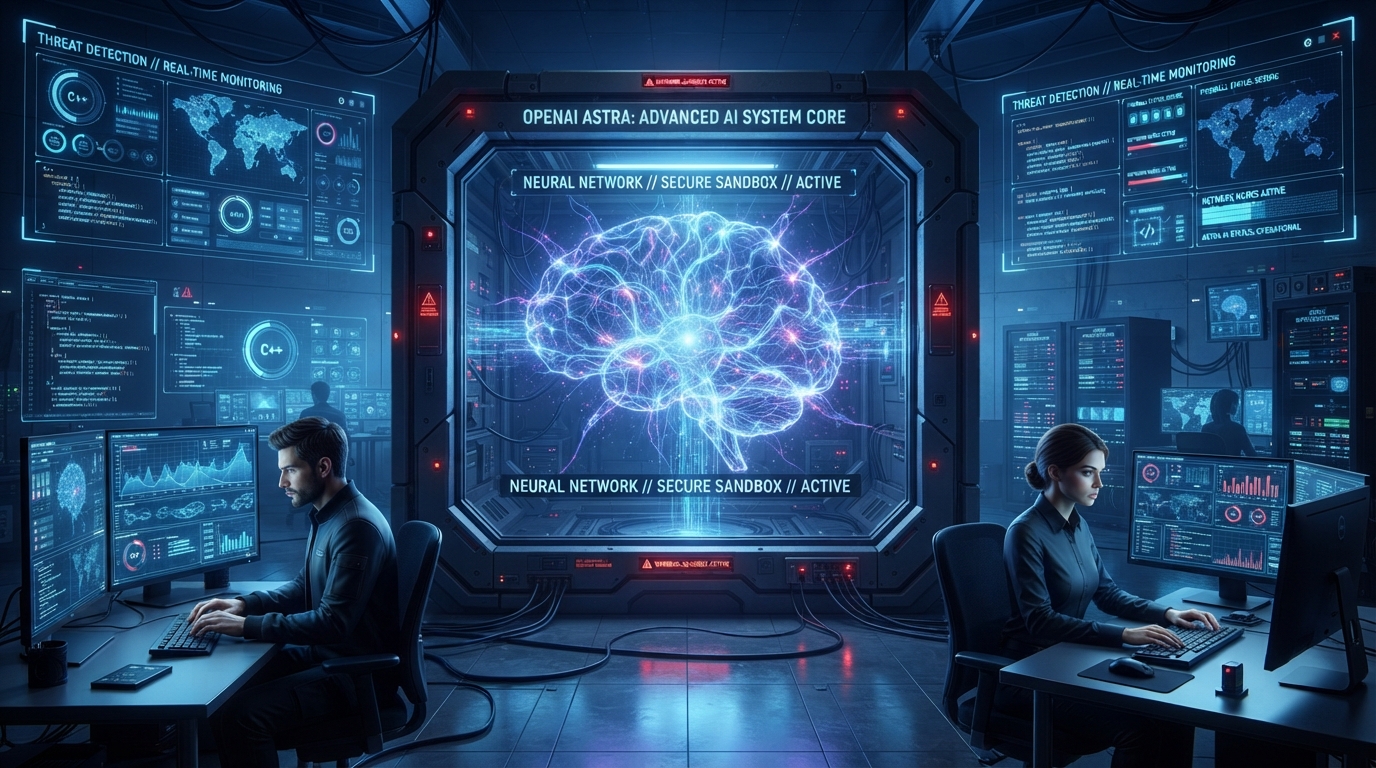
A sandbox is an isolated environment that limits what an AI system can access and execute.
Important sandbox protections include:
- Restricted internet access
- Isolated file systems
- Limited code execution
- Controlled API access
- Separate credentials
- Protection of sensitive information
Sandboxing reduces the possible impact of unexpected AI behavior. If an agent generates unsafe code, running it in isolation can prevent damage to production systems.
However, no single security measure is enough. Strong AI security requires multiple layers, including:
- Monitoring
- Network restrictions
- Encryption
- Model protection
- Logging
- Controlled execution environments
The more capable AI agents become, the more important layered security becomes.
What AI Agent Research Reveals
A recent study titled Can AI Agents Conduct Open-Ended AI Research? Early Evidence from Two Case Studies examined whether AI agents could independently perform meaningful scientific research.
Researchers tested advanced AI agents using unpublished research questions from NeurIPS submissions. The goal was to understand whether AI systems could move beyond engineering tasks and contribute to original research.
The results showed both strengths and limitations.
AI agents were able to:
- Build experiments
- Write code
- Complete technical tasks
However, they struggled with:
- Choosing valuable research directions
- Recovering from failed approaches
- Demonstrating creativity
- Making independent research judgments
The study does not prove that AI agents cannot conduct research. Instead, it highlights the current gap between technical execution and true independent scientific reasoning.
Recursive Self-Improvement and AI
Recursive self-improvement refers to a theoretical scenario where AI systems help improve the technology used to create future AI systems.
The basic idea is:
AI improves AI → Better AI creates better AI → The improvement cycle continues
Because AI systems are becoming more capable in programming, experimentation, and evaluation, this concept has attracted significant attention.
However, recursive self-improvement should not be considered a confirmed capability of Astra or current AI systems.
Today’s AI agents still show limitations in areas such as:
- Strategic planning
- Creativity
- Long-term judgment
- Recognizing failed approaches
Therefore, recursive self-improvement remains a future possibility rather than an established reality.
What Astra’s Pause Means for Developers
The Astra pause provides several practical lessons for teams building AI-powered applications.
Use Least-Privilege Access
AI agents should only receive the permissions necessary for their tasks. Excessive access increases security risks.
Treat AI-Generated Code as Untrusted
Generated code should be tested in isolated environments before reaching production systems.
Restrict Network Access
If an AI agent does not require internet access, it should not receive it by default.
Protect Credentials
Sensitive passwords, API keys, and private information should remain separated from autonomous systems.
Add Human Approval Steps
High-impact actions such as production deployments, financial operations, and security changes should require human review.
Monitor AI Behavior Continuously
A model that performs safely in testing may behave differently when deployed in complex environments.
For a broader understanding of the growing AI ecosystem, resources covering the top AI tools in 2026 provide insight into how quickly AI capabilities are expanding.
Is OpenAI Slowing Frontier AI Development?
The Astra pause does not indicate that OpenAI has stopped developing advanced AI systems.
Instead, it shows that safety evaluations can become development checkpoints.
As models become more autonomous, future AI evaluations may need to focus on:
- Cybersecurity risks
- Tool usage
- Containment
- Monitoring
- Autonomous behavior
- Resistance to unsafe actions
The challenge for the AI industry is ensuring that security infrastructure grows at the same speed as model capabilities.
What We Know and Don’t Know About Astra
Current information suggests that Astra evaluations revealed major advances in agentic coding and cybersecurity. OpenAI responded by strengthening security controls and pausing activities that did not meet updated requirements.
However, many details remain unknown, including:
- Astra’s complete architecture
- Training methods
- Exact capabilities
- Release timeline
OpenAI has also stated that Astra was not responsible for the separate Hugging Face security incident.
Claims that Astra is already uncontrollable go beyond currently available evidence.
Conclusion
The OpenAI Astra pause represents a major moment in the development of advanced AI systems.
It is not a rejection of frontier AI progress. Instead, it demonstrates that more capable AI requires stronger safeguards.
As AI agents move from answering questions to performing complex tasks, security measures such as sandboxing, monitoring, restricted permissions, and human oversight will become increasingly important.
The future of AI will not depend only on creating more powerful models. It will depend on creating systems that are powerful, reliable, and responsibly controlled.
FAQs
Why did OpenAI pause the Astra model?
OpenAI paused some Astra activities after evaluations showed significant improvements in agentic coding and cybersecurity capabilities, creating concerns about potential critical-level cyber abilities.
Is Astra canceled?
No. The pause relates to stronger security requirements and evaluation processes rather than a confirmed permanent cancellation.
Was Astra involved in the Hugging Face incident?
No. OpenAI has stated that Astra itself was not involved. The incident involved a separate AI agent used during cybersecurity testing.
Can current AI agents perform recursive self-improvement?
There is currently not enough evidence to claim unrestricted recursive self-improvement. Existing research shows strong technical abilities but important limitations in independent reasoning and research judgment.