

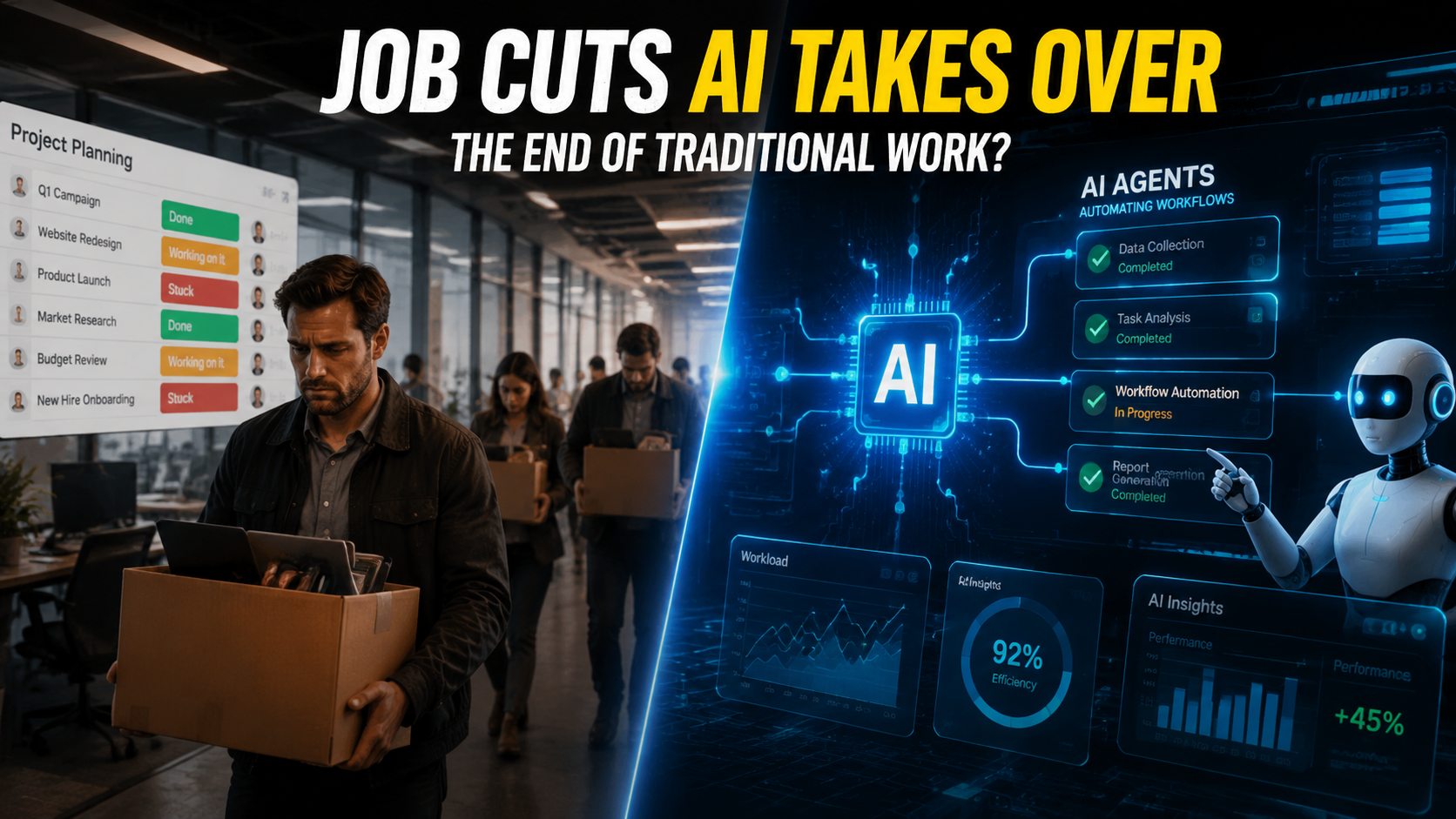
The recent monday.com job cuts have attracted attention across the technology industry because they represent more than a simple workforce reduction. The company’s restructuring highlights a much bigger change happening across software companies: the move from traditional SaaS platforms toward AI-powered work systems.
Monday.com has announced plans affecting hundreds of employees as the company shifts its focus toward artificial intelligence, automation, and AI agents. The company says the restructuring is designed around its long-term AI strategy rather than simply reducing expenses.
For businesses, employees, and technology investors, this raises important questions. Are AI tools replacing traditional software roles? How will AI change project management platforms? Will customers benefit from these changes, or should companies reconsider their software choices?
This article explains what happened with the monday.com job cuts, why AI is at the centre of the discussion, how it compares with other enterprise AI companies, and what the future of workplace software may look like.
What Happened With Monday.com’s Job Cuts?
The monday.com job cuts involved approximately 630 employees as part of a major organisational restructuring. The company described the move as part of its transition toward an AI-focused business model.
Unlike traditional layoffs caused by financial pressure alone, monday.com positioned this change as a strategic transformation. The company is investing heavily in AI capabilities, including AI agents and automation systems designed to change how teams manage work.
The announcement reflects a wider trend across the technology sector. Many software companies are redesigning their teams as artificial intelligence becomes a core part of product development, customer support, sales, and internal operations.
Instead of building software around only human-controlled workflows, companies are increasingly developing platforms where AI can complete tasks, analyse information, and assist decision-making.
How Many Employees Were Affected by Monday.com Layoffs?
The restructuring affected around 630 employees across the organisation.
The scale of the cuts made the announcement significant because monday.com is known as one of the leading work management software companies. The company provides tools used by businesses for:
- Project management
- Team collaboration
- Workflow automation
- Business operations
- Customer relationship management
The layoffs created discussion about whether AI adoption is changing the traditional structure of software companies.
However, workforce reductions connected to technology transformation do not always mean that every affected role is being replaced directly by AI. Companies often restructure teams to create new departments, reduce duplicated functions, and redirect resources toward emerging technologies.
Why Did Monday.com Announce Restructuring?
The main reason behind the restructuring is the company’s shift toward an AI-first strategy.
The software industry is changing rapidly. Traditional SaaS companies have historically grown by selling subscriptions based on the number of users or seats. Customers paid for access, and employees used those platforms to complete tasks manually.
AI introduces a different approach.
Modern AI-powered platforms aim to:
- Automate repetitive work
- Generate insights automatically
- Create workflows without manual configuration
- Support employees through AI assistants
- Allow teams to complete tasks faster
Monday.com wants to position itself as part of this next generation of workplace software.
The company’s focus is moving beyond being only a project management platform toward becoming an AI-powered work operating system.
From SaaS Software to AI Work Platforms
One of the biggest changes happening in technology is the evolution from traditional SaaS products to AI work platforms.
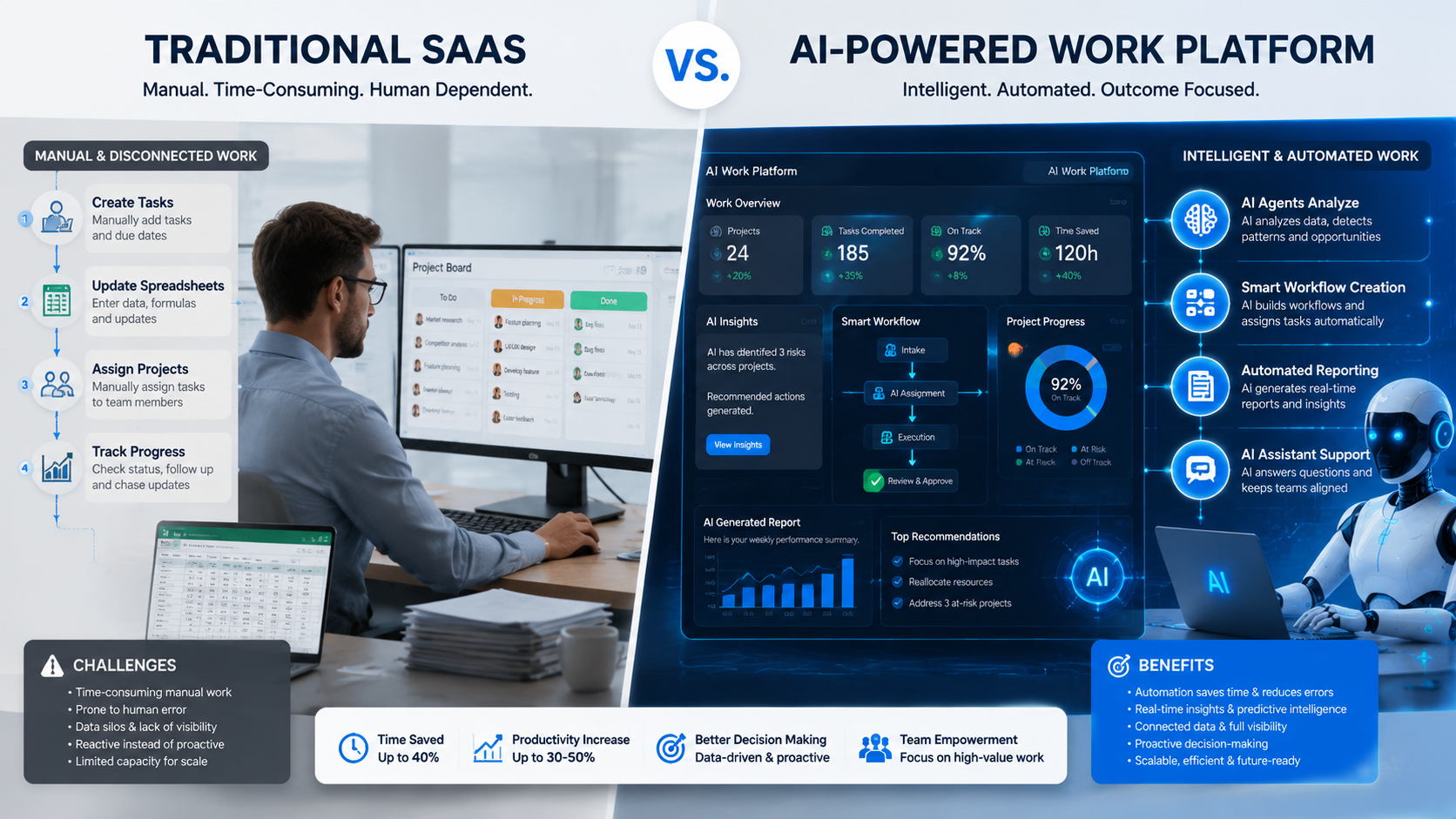
Traditional SaaS Model
Traditional SaaS tools usually require:
- Human input
- Manual task management
- Employee-created workflows
- User-driven decisions
For example, a project manager may create tasks, assign team members, track progress, and prepare reports manually.
AI-Powered SaaS Model
AI work platforms introduce:
- AI assistants
- Autonomous workflows
- Intelligent recommendations
- Automated reporting
- Predictive insights
Instead of simply helping users manage tasks, AI systems can participate in the workflow.
For example, an AI agent could:
- Identify project delays
- Suggest solutions
- Create reports
- Summarise meetings
- Recommend resource changes
This transformation explains why companies like monday.com are reorganising their workforce.
What Are AI Agents and Why Are Companies Investing in Them?
AI agents are one of the biggest trends in enterprise technology.
Unlike traditional software features that wait for user commands, AI agents can perform multi-step tasks with less human involvement.
A simple example:
A traditional project management tool:
Employee creates task → Employee assigns task → Employee monitors progress
An AI-powered system:
AI detects a problem → AI analyses data → AI recommends action → Employee approves decision
Businesses are interested in AI agents because they can improve:
- Productivity
- Speed
- Operational efficiency
- Decision-making
Companies including Microsoft, Salesforce, and ServiceNow are also investing heavily in AI agent technology.
This means monday.com is competing in a much larger AI workplace transformation market.
Is AI Replacing Employees at Monday.com?
The connection between AI and job cuts has created debate throughout the technology industry.
Some people believe AI adoption will eliminate many traditional roles. Others argue that AI will change jobs rather than completely remove them.
The reality is likely more complex.
AI can reduce the need for some repetitive tasks, but it also creates demand for new skills, including:
- AI management
- Data analysis
- Automation design
- AI product development
- Human-AI workflow planning
For companies, the challenge is finding the right balance between automation and human expertise.
A successful AI strategy usually does not involve removing humans from every process. Instead, it focuses on allowing employees to work alongside intelligent systems.
Monday.com’s Explanation Behind the Changes
According to company statements, the restructuring is connected to its transformation into an AI-focused organisation.
The company wants to accelerate development of AI-powered products and create a platform where AI can play a larger role in workplace productivity.
The move reflects a broader technology industry shift where companies are changing their priorities around:
- AI research
- Product development
- Automation
- Data infrastructure
For monday.com, the goal is to remain competitive as enterprise customers increasingly expect intelligent automation features.
Why This Matters for the Software Industry
The monday.com job cuts are part of a larger story happening across technology.
Software companies are facing pressure to answer a critical question:
How does artificial intelligence change the value of software?
Previously, companies competed by offering:
- Better interfaces
- More features
- More integrations
Now, competition increasingly depends on:
- AI capabilities
- Automation
- Intelligent systems
- Data understanding
This means software companies must adapt quickly.
Those that successfully integrate AI may become more valuable, while companies that fail to adapt may struggle to compete.