
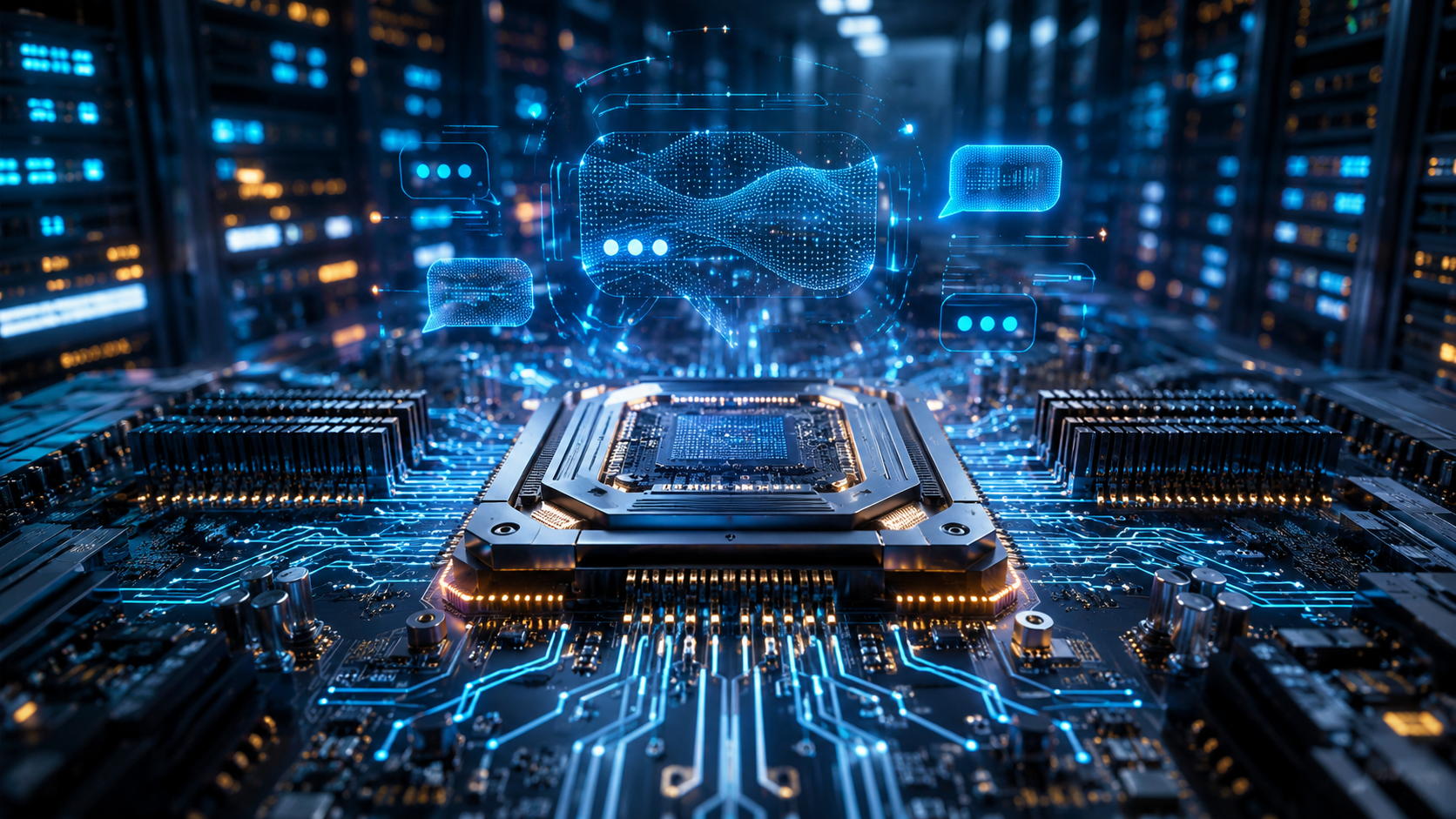
Anthropic, the company behind the Claude family of artificial intelligence models, is reportedly building an internal chip-design team as it seeks greater control over the hardware powering its AI systems.
The move signals an important change in the AI race. Competition is no longer limited to creating smarter language models. Leading AI companies are also trying to control the infrastructure beneath those models, including data centres, cloud capacity, networking systems and specialised processors.
For Anthropic, custom silicon could eventually improve Claude’s efficiency, reduce long-term computing costs and lessen its dependence on external suppliers. Nvidia remains the dominant provider of AI accelerators, but the price and limited availability of advanced GPUs have encouraged major technology companies to explore alternatives.
Anthropic is not expected to stop using Nvidia hardware or cloud processors supplied by partners such as Amazon Web Services and Google Cloud. A more likely outcome is a hybrid strategy in which custom chips support selected Claude workloads while third-party accelerators continue handling other training and inference tasks.
Anthropic Is Expanding Beyond AI Software
Anthropic built its reputation around Claude, a family of large language models used for conversational AI, coding, research, document analysis and enterprise applications.
Developing and operating these systems requires enormous computing power.
Two types of workload matter most.
Training is the process of teaching an AI model by processing large datasets and repeatedly adjusting its internal parameters. It usually requires large clusters of high-performance accelerators.
Inference begins after a model has been trained. It is the computing work required whenever a user sends a prompt and Claude produces a response.
Training receives much of the attention because it uses enormous computing clusters. However, inference can become an even larger business challenge once an AI service reaches millions of users.
Every answer, code suggestion, uploaded document, research request or AI-agent action consumes processing capacity. As Claude adoption grows, the cost of serving these requests can rise rapidly.
A chip designed around Claude’s architecture could therefore be valuable. Anthropic could optimise the hardware for the model’s most common calculations rather than relying entirely on processors designed for many different workloads.
Possible benefits include faster responses, lower energy use, higher processing capacity and more predictable infrastructure costs. These outcomes are not guaranteed, but they help explain why Anthropic is exploring custom silicon.
Anthropic Wants More Control Over Computing
Nvidia GPUs are widely used because they combine strong performance with a mature software ecosystem.
Nvidia’s CUDA platform, developer tools and broad support across machine-learning frameworks make it easier for researchers to train and deploy advanced models. Most major AI laboratories already have systems and workflows built around Nvidia hardware.
That strength also creates dependence.
When demand for GPUs rises faster than supply, AI companies may face delivery delays, higher prices and less flexibility when planning new models or products.
For Anthropic, relying entirely on external suppliers could affect model development, data-centre expansion and the cost of delivering Claude to businesses and consumers.
Custom silicon offers a possible way to reduce that risk.
A specialised processor could also be tuned for the operations Claude performs most often. General-purpose GPUs are flexible, but that flexibility can come with higher energy and financial costs.
A purpose-built accelerator can focus more of its chip area and power budget on the calculations that matter for a specific AI model.
This does not mean an Anthropic processor would automatically outperform Nvidia’s best GPUs. Instead, the company could target a narrower objective, such as reducing Claude’s inference costs or improving efficiency for long-context reasoning and AI-agent workflows.
Claude Optimisation Could Be the Main Advantage
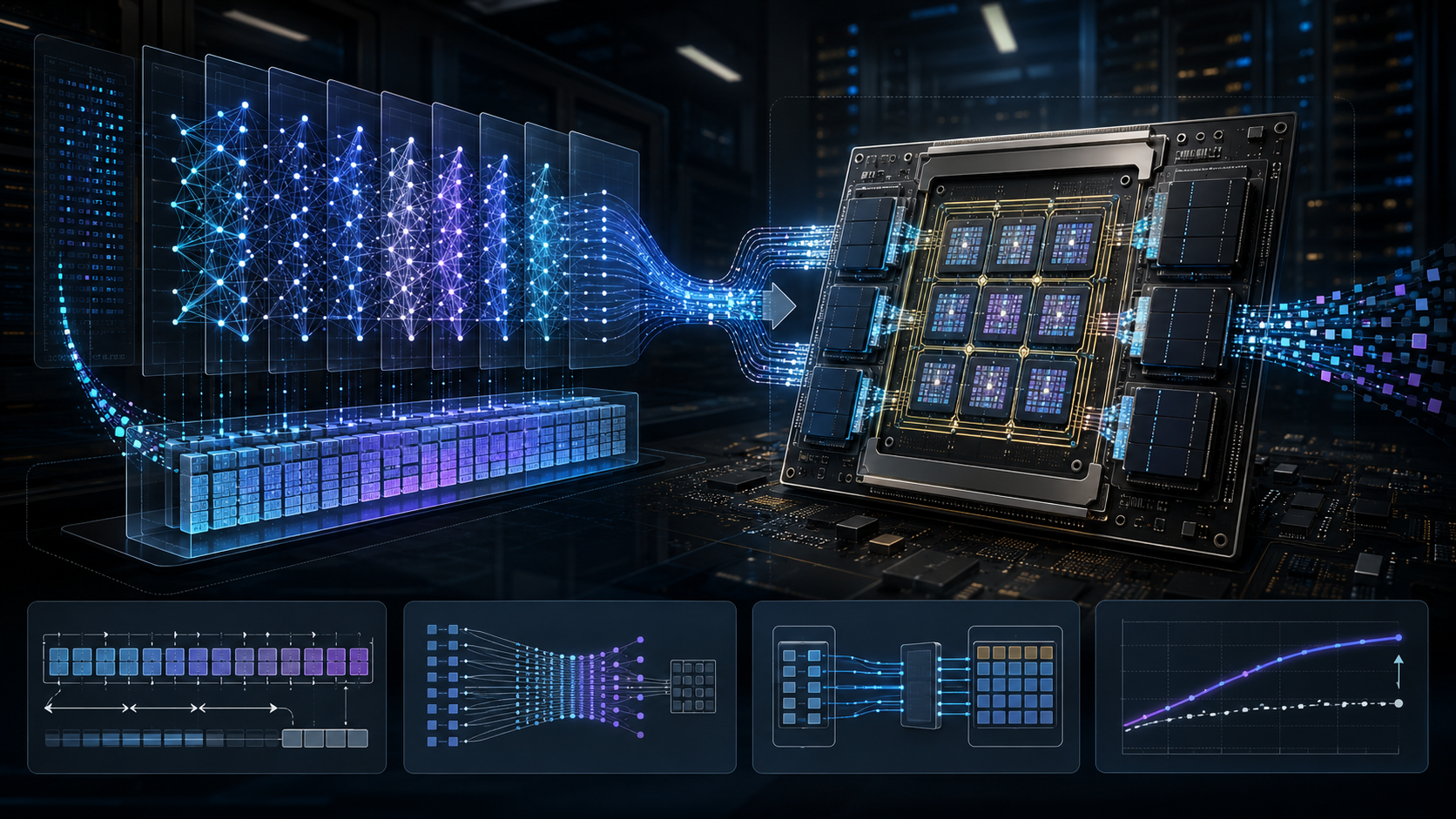
Custom chips are most useful when hardware and software are designed together.
Anthropic has detailed knowledge of Claude’s architecture, memory behaviour, data movement and inference patterns. That information could help its engineers design processors that better match the model.
Potential areas of optimisation include:
- Large-scale language-model inference
- Long-context processing
- Reasoning-intensive requests
- Tool use and AI agents
- Enterprise deployments
- Multimodal tasks involving text and images
Memory bandwidth and data movement are especially important in modern AI systems.
Moving information between memory and processing units can consume substantial power and slow down performance. A chip designed around Claude could potentially reduce these bottlenecks.
Anthropic could also choose numerical formats, interconnects and memory systems that suit its models. Lower-precision calculations may allow the company to process more requests with less hardware, provided model quality remains stable.
This hardware-software co-design approach is one of the biggest advantages available to companies that build both AI models and the processors running them.
Content image 1 placement: Insert the first in-content image here.
Anthropic Is Joining a Wider Custom-Chip Race
Anthropic’s reported initiative is part of a much broader industry shift.
Large technology companies increasingly view custom silicon as a way to reduce costs, secure chip supply and strengthen their cloud or AI services.
| Company | Custom AI hardware approach | Main objective |
| Anthropic | Reported internal chip-design effort | Optimise Claude and gain infrastructure control |
| Nvidia | AI GPUs and complete computing systems | Maintain the leading AI acceleration platform |
| Tensor Processing Units | Support internal AI and Google Cloud services | |
| Amazon | Trainium and Inferentia | Provide training and inference alternatives on AWS |
| Microsoft | Maia accelerators | Strengthen Azure’s AI infrastructure |
| Meta | MTIA processors | Support internal recommendation and AI workloads |
| OpenAI | Reported hardware exploration | Improve long-term computing capacity and control |
Table caption: Major AI companies developing or exploring custom semiconductor hardware.
Google is one of the clearest examples. Its Tensor Processing Units were created specifically for machine-learning workloads and now support both internal products and cloud customers.
Google’s experience demonstrates how specialised hardware can become a long-term advantage when it is tightly integrated with software, networking and data-centre infrastructure.
Amazon has followed a similar path with Trainium for AI training and Inferentia for inference.
These processors give AWS customers an alternative to Nvidia GPUs while allowing Amazon to influence the cost and performance of AI services running on its cloud platform.
Microsoft’s Maia programme serves a related purpose within Azure, while Meta’s MTIA processors are designed to support internal recommendation systems and AI applications.
Anthropic is entering this field later than some competitors. It also relies heavily on cloud partners that already build custom processors.
Its strategy is therefore more likely to involve cooperation and specialisation than a complete break from existing suppliers.
Amazon and Google Will Remain Important Partners
Anthropic has major infrastructure relationships with Amazon Web Services and Google Cloud.
These partnerships provide large-scale computing capacity and access to custom processors developed by the cloud companies themselves.
That creates an obvious question: why would Anthropic build its own chip team when its partners already provide alternatives to Nvidia?
The answer may be control.
Cloud chips are designed to serve many customers and different AI workloads. Anthropic’s own hardware could be tailored more closely to Claude and the company’s long-term model roadmap.
An internal semiconductor team could also give Anthropic greater expertise in deciding how future models should be trained, deployed and scaled.
Building a chip team does not necessarily mean Anthropic will manufacture processors independently. Many technology companies design their own silicon but rely on external foundries and packaging companies for production.
Anthropic’s team could also focus on hardware co-design, chip testing, compiler optimisation, system architecture or technical requirements for processors produced with external partners.
Even without releasing a standalone Anthropic processor, semiconductor expertise could help the company shape the hardware it uses and negotiate more effectively with suppliers.
Nvidia Is Unlikely to Be Replaced Soon
Nvidia’s position in AI is based on more than raw chip performance.
Its software ecosystem remains a major competitive advantage. Researchers already understand CUDA, and many AI frameworks are optimised for Nvidia hardware.
The company also provides networking equipment, complete computing systems and enterprise software for building large AI clusters.
A new AI chip must therefore solve two problems. It needs competitive hardware, and it needs software that allows developers to use that hardware efficiently.
Compilers, libraries, debugging tools, monitoring systems and compatibility with popular AI frameworks are all essential.
A powerful processor without a strong software stack can be difficult and expensive to adopt.
Anthropic’s most practical route is therefore likely to involve selective deployment. Its custom silicon could handle workloads where the financial or performance advantages are strongest.
Nvidia GPUs could continue supporting flexible model training, experimentation and workloads that benefit from the wider CUDA ecosystem.
This mixed approach is already common across the technology industry. Even companies with advanced internal processors continue buying large quantities of Nvidia hardware.
The Chip Anthropic May Develop
Anthropic has not detailed a final chip architecture in the material available for this article. Any description of the finished processor therefore remains uncertain.
The company could develop an AI accelerator, an application-specific integrated circuit or a broader system combining computing, memory and networking components.
A GPU is designed to handle many types of parallel workload. An AI accelerator is more specialised and focuses on operations commonly used by neural networks, such as matrix multiplication.
An application-specific integrated circuit, commonly known as an ASIC, is designed for an even narrower purpose.
For Anthropic, an inference-focused accelerator may provide the clearest business case.
Inference occurs continuously as users interact with Claude. Even a small reduction in the computing cost of each response could create significant savings when applied across millions of requests.
A training processor could be more difficult to develop because training workloads change as model architectures evolve. Training also requires strong networking, large memory capacity and considerable software flexibility.
Anthropic may therefore begin with a specific workload before attempting to support the entire model-development process.
Custom Chip Development Brings Major Risks
Custom silicon can reduce operating costs only after a company has invested heavily in research, design, verification, software and production.
Advanced processors require expertise in chip architecture, circuit design, verification, packaging, compilers and complete computing systems.
A design error can delay a project for months and make an expensive manufacturing run unusable.
Manufacturing creates another challenge.
Leading AI chips depend on advanced semiconductor processes, high-bandwidth memory and sophisticated packaging technologies. Capacity for these components is limited, and many companies compete for access to the same suppliers.
Specialised talent is also scarce.
Experienced chip architects, verification engineers and compiler developers are in high demand across cloud providers, semiconductor manufacturers and AI laboratories.
Anthropic must also ensure its hardware remains useful as Claude evolves.
A chip designed too narrowly could become outdated if future Claude models use different architectures or memory patterns. However, a design that is too general may lose the efficiency advantages that justified building it.
The company will need to balance specialisation with enough flexibility to support several generations of AI models.
Potential Effects for Claude Users
Most Claude users will not see an immediate difference.
Semiconductor programmes usually take years to move from early hiring and design work to production deployment. Chips must be designed, tested, manufactured and integrated into complete computing systems.
The long-term effects could still be meaningful.
A successful processor could allow Anthropic to serve more requests using the same amount of electricity, data-centre space and cooling capacity.
That may improve response speeds during periods of high demand and make Claude easier to scale across different regions.
Lower inference costs could also support more competitive pricing for developers and enterprise customers.
Anthropic might eventually be able to provide larger usage allowances, longer context windows or more capable AI-agent features without increasing prices at the same rate as computing demand.
Custom hardware could also support future Claude models that perform more complex reasoning, use external tools over longer periods or process several types of media.
It remains too early to determine whether Anthropic’s processors would be better than Nvidia GPUs.
The more realistic objective is to make certain Claude workloads cheaper or more efficient, rather than attempting to outperform Nvidia across every category of AI computing.
A Mixed Hardware Strategy Is the Most Likely Outcome
Anthropic’s reported move should not be interpreted as a declaration of war on Nvidia.
The company is more likely to combine several hardware sources:
- Nvidia GPUs for flexible training and advanced workloads
- AWS Trainium and Inferentia where they provide cost advantages
- Google TPUs for selected cloud deployments
- Anthropic-designed hardware for tightly optimised Claude workloads
This diversified approach could reduce supply-chain risk and give Anthropic greater negotiating power.
It would also allow the company to select the most appropriate processor for each task instead of forcing every workload onto one hardware platform.
Future AI data centres may contain a combination of GPUs, custom accelerators, CPUs, networking chips and specialised memory systems.
The industry is gradually moving away from the idea that one type of processor will power every AI application.
Why Anthropic’s Chip Strategy Matters
Anthropic’s reported chip-design effort shows how quickly the AI industry is becoming vertically integrated.
The first stage of the generative AI boom focused mainly on model capability. The next stage is increasingly about which companies can operate advanced models at the lowest cost and largest scale.
That competition will be influenced by access to electricity, data centres, networking equipment, memory and advanced semiconductors.
Companies that control more of these resources may be able to develop models faster, launch products more reliably and offer services at more competitive prices.
Anthropic still faces a difficult journey.
Designing a competitive processor requires specialist expertise, substantial investment and strong manufacturing partnerships. Nvidia’s ecosystem remains the industry standard, while cloud providers such as Google and Amazon already have years of custom-chip experience.
Even so, developing internal semiconductor capabilities could be strategically important.
It would give Anthropic more influence over the systems powering future Claude models and reduce the risks associated with relying on a single hardware path.
Conclusion
Anthropic’s AI chip strategy reflects a major change in how leading AI companies think about growth.
Building better models is no longer enough. Companies also need secure computing capacity, efficient inference and infrastructure that can scale without allowing operating costs to rise uncontrollably.
Custom silicon could help Anthropic optimise Claude, improve energy efficiency and gain more control over its long-term technology roadmap.
It is unlikely to replace Nvidia GPUs completely, and it will not remove the importance of AWS or Google Cloud.
Instead, Anthropic appears to be preparing for a future in which several types of hardware work together.
The project remains at an early and technically demanding stage. However, it demonstrates that competition between Claude, ChatGPT, Gemini and other AI systems will increasingly extend beneath the software layer.
The next generation of AI leaders may be defined not only by the intelligence of their models, but also by the chips, data centres and infrastructure built to run them.