
The Apple OpenAI lawsuit has turned a closely watched artificial intelligence partnership into one of Silicon Valley’s most important hardware disputes.
Apple filed a federal complaint against OpenAI, its hardware operation io Products, and former Apple employees Chang Liu and Tang Yew Tan. The company alleges that confidential information about unreleased products, engineering systems, manufacturing methods, suppliers, and physical components was improperly obtained to advance OpenAI’s consumer hardware plans.
OpenAI denies wanting Apple’s confidential information. Its public response states that the company has “no interest in other companies’ trade secrets.” The claims have not been proven, and the defendants had not submitted a later filing on the court’s public case page as of July 24, 2026.
The case matters beyond the individual allegations. Apple and OpenAI already cooperate through ChatGPT’s integration with Siri and Apple’s Writing Tools. At the same time, OpenAI is assembling a team to create consumer AI devices that could eventually compete with the iPhone as people’s primary interface with digital services.
Here is what Apple alleges, how OpenAI has responded, what the company wants from the court, and how the dispute could affect the next generation of AI hardware.
Important legal context: Apple’s account appears in a civil complaint. Allegations in a complaint represent one party’s claims and should not be treated as established facts.
Apple OpenAI Lawsuit: Key Facts
- Case: Apple Inc. v. Liu et al.
- Case number: 5:26-cv-07078
- Court: U.S. District Court for the Northern District of California
- Location: San Jose
- Filing date: July 10, 2026
- Nature of suit: Defend Trade Secrets Act
- Individual defendants: Chang Liu and Tang Yew Tan
- Corporate defendants: OpenAI Foundation, OpenAI Group PBC, and io Products
- Main allegation: Misappropriation of confidential Apple hardware information
- Relief requested: Injunctions, return of Apple material, evidence preservation, damages, and a jury trial
- Current public status: The court page lists July 10 as the last filing date.
What Happened in the Apple OpenAI Lawsuit?
Apple filed the 41-page complaint on July 10 in the Northern District of California. It describes what Apple characterizes as a coordinated effort to obtain confidential information through former employees, recruitment interviews, supplier relationships, and continued access to Apple systems.
The defendants include two former employees with different backgrounds.
Chang Liu worked as a senior system electrical engineer at Apple before moving to OpenAI. Tang Yew Tan spent 24 years at Apple and most recently served as vice president of product design for the iPhone and Apple Watch. Tan is now OpenAI’s chief hardware officer and was one of the founders of io Products.
Apple argues that the alleged conduct was not simply a case of experienced employees applying general knowledge at a new workplace. Its complaint claims that specific files, internal terminology, components, supplier information, engineering documentation, and offboarding procedures were retained or obtained without authorization.
That distinction will be central to the case.
California generally supports employee mobility, and the federal Defend Trade Secrets Act does not allow a court to stop someone from accepting a job merely because of information that person knows. A company can, however, seek relief when it believes identifiable trade secrets were acquired, disclosed, retained, or used through improper means.
What Does Apple Accuse OpenAI of Doing?
Apple’s complaint separates the allegations against Liu and Tan while also claiming that their actions formed part of a wider pattern involving OpenAI’s hardware recruitment and development processes.
What the Apple OpenAI Lawsuit Alleges Against Chang Liu
Apple alleges that Liu retained an Apple-issued work computer after leaving the company in January 2026. According to the complaint, that device had previously been authenticated to Apple’s network.
The company further claims Liu used a former colleague’s authenticated Apple computer and discovered a rare authentication vulnerability that allowed access to shared network folders. Apple says it fixed the vulnerability after finding it and that other users affected by the bug did not appear to have accessed confidential material in the same way.
While working for OpenAI, Liu allegedly downloaded dozens of confidential hardware files. Apple says these materials included information about unreleased products, technical specifications, engineering presentations, and proprietary project data.
The complaint also alleges that Liu communicated with an Apple employee he was recruiting to OpenAI. Apple claims he advised that employee on how to avoid security attention while copying information and told her which confidential materials to study before an OpenAI interview.
These are unusually specific allegations. Rather than relying only on the fact that Liu moved from one company to another, Apple points to devices, system access, server logs, messages, and allegedly downloaded documents.
The defendants will have an opportunity to dispute Apple’s interpretation of that evidence, challenge whether the information qualifies as legally protected trade secrets, and argue whether any conduct can be attributed to OpenAI.
What Apple Alleges Against Tang Tan
Tan’s role gives the lawsuit broader strategic importance. He spent 24 years at Apple and worked on some of the company’s most commercially important hardware, including the iPhone and Apple Watch.
Apple alleges that, before leaving, Tan emailed himself internal summaries about the consumer electronics industry and information concerning Apple’s suppliers. The complaint also claims that he discussed meetings involving an important Apple supplier while working with OpenAI or its collaborators.
The recruiting allegations are even more striking.
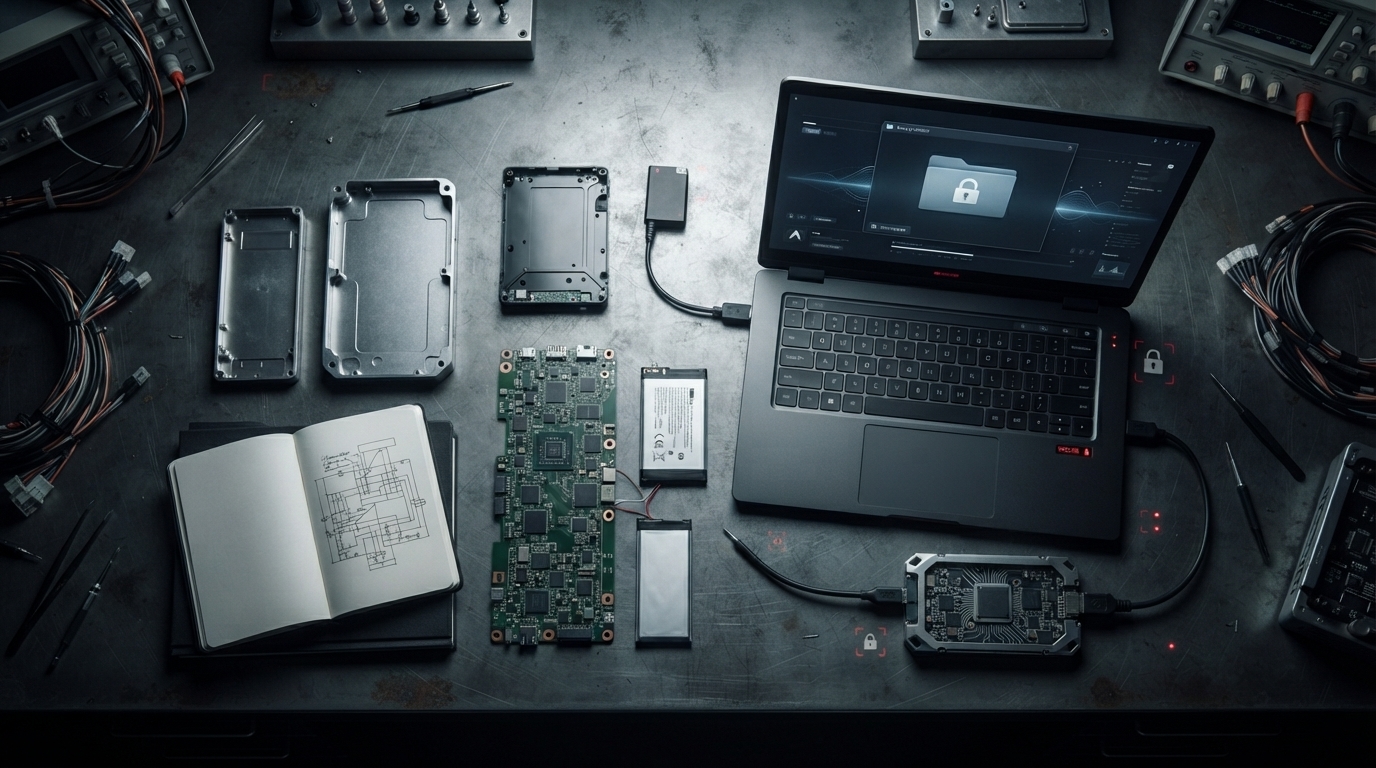
Apple says Tan used an internal Apple project codename when questioning candidates about an unannounced product. It also alleges that candidates were directed to bring “actual parts” to interviews for “show and tell” sessions. The filing identifies examples such as batteries, logic boards, shields, housings, back glass, and other product samples.
According to Apple, at least one candidate expressed surprise that people could take such components from the office.
Apple also alleges that Tan retained or obtained an internal document describing the company’s employee offboarding and security-review procedures. The company claims this information was shared with recruits before they announced their departures, allowing them to anticipate Apple’s forensic and security checks.
Again, these remain Apple’s allegations. The complaint does not establish that Tan or OpenAI violated the law.
Broader Recruitment, Prototype and Supplier Claims
Apple portrays the alleged conduct as larger than two isolated employee departures.
The complaint says more than 400 former Apple employees now work at OpenAI. Apple acknowledges that people who previously worked for it will naturally possess experience and knowledge. Its argument is that OpenAI allegedly went further by structuring interviews and supplier discussions to obtain protected information.
Apple claims candidates were asked to prepare detailed technical presentations about their recent work, including engineering methods, system integration tools, component selection, manufacturing workflows, and vendor relationships.
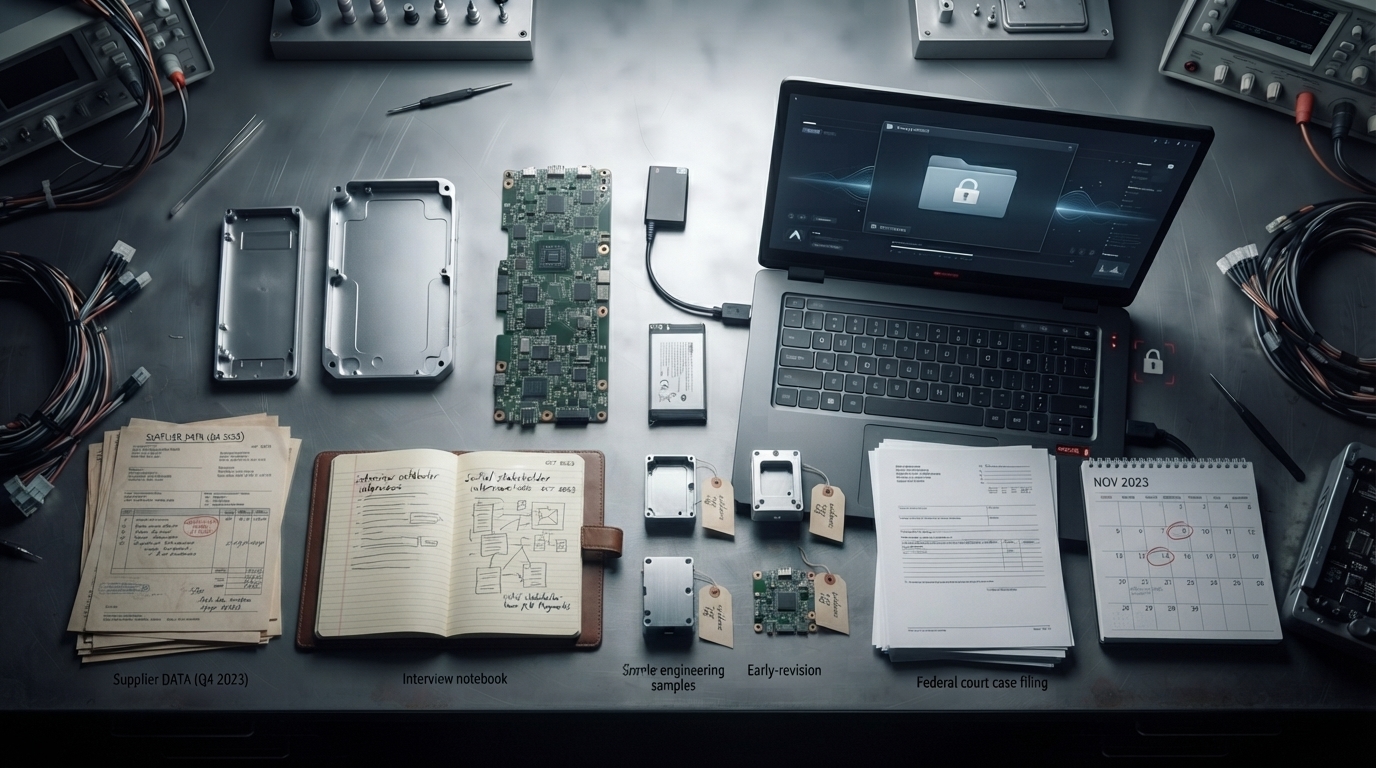
It also alleges that candidates were requested to bring CAD or design artifacts, prototypes, and physical components to interviews. Panels containing former Apple employees allegedly used Apple terminology and internal project names to ask targeted questions.
Separately, Apple accuses OpenAI and io of using insider knowledge when approaching Apple’s suppliers. One allegation concerns confidential metal-finishing techniques. Apple claims a supplier was led to believe OpenAI had permission to use processes developed for Apple.
Whether Apple can connect these alleged acts to protected, identifiable trade secrets—and prove that the corporate defendants acquired or benefited from them—will likely become a major issue during discovery.
What Has OpenAI Said in Response?
OpenAI rejected the central premise of Apple’s allegations in its initial public response.
“We have no interest in other companies’ trade secrets.”
The company said it remained focused on building technology that empowers users. Chang Liu and Tang Tan did not immediately provide individual responses to Reuters when the complaint was reported.
A media statement is not the same as a formal legal defense. An answer or motion can challenge the allegations in several ways, including whether Apple sufficiently identified its trade secrets, whether information was genuinely confidential, whether OpenAI knew how it was obtained, and whether the information was ever used.
As of July 24, the Northern District of California’s public case page still listed July 10 as the last filing date. Readers should therefore distinguish OpenAI’s public denial from the detailed arguments it may later submit in court.
Apple Reportedly Expanded Its Evidence Search
The dispute may extend beyond the people named in the original complaint.
The Financial Times reported that Apple contacted approximately 40 former employees now working at OpenAI. Those employees were reportedly asked to preserve potentially relevant documents, notes, and electronic communications. Some were also asked to meet Apple’s legal team.
A preservation request does not mean that the recipient committed wrongdoing or will be added as a defendant. It is intended to prevent information that may become relevant during litigation from being deleted, altered, or lost.
The outreach does, however, suggest that Apple is investigating how information may have moved across a larger network of employees, interviews, managers, and hardware teams.
This evidence-gathering effort may become especially important if Apple seeks an early injunction. To obtain meaningful restrictions before a full trial, it would need to persuade the court that there is a credible threat of continued misappropriation and that ordinary financial damages would not adequately address the harm.
What Does Apple Want From the Court?
Apple is seeking both financial and nonfinancial relief.
Its complaint asks for preliminary and permanent injunctions preventing the defendants from acquiring, possessing, using, or disclosing Apple trade secrets. It also wants an order requiring the return of Apple property and confidential information.
Apple has asked the court to prevent the alteration or destruction of relevant evidence, including emails, files, metadata, electronic documents, and directories. The company is also seeking damages for alleged losses, unjust enrichment, legal costs, and other remedies available under federal and California law. It has requested a jury trial.
The Defend Trade Secrets Act permits courts to issue injunctions against actual or threatened misappropriation. It also allows damages for proven losses, unjust enrichment, or a reasonable royalty in appropriate cases. Enhanced damages may be available if conduct is ultimately found to have been willful and malicious.
However, federal law limits how far an employment-related injunction can go. A court generally cannot prevent a person from working for a competitor based only on the knowledge in that person’s head.
For OpenAI, this means an injunction would not automatically shut down every hardware project. A court could instead impose narrower restrictions concerning particular documents, supplier processes, components, teams, or development practices.
Why the Case Matters for OpenAI’s Hardware Plans
OpenAI is attempting to expand beyond chatbots, software subscriptions, and developer tools.
In its official announcement, OpenAI said the io Products team had merged with the company to develop a “family of AI products.” Jony Ive and his design firm LoveFrom remained independent but took on broad design and creative responsibilities across OpenAI. The io founding team included Ive, Scott Cannon, Evans Hankey, and Tang Tan.
The transaction was widely reported at approximately $6.5 billion, making the hardware initiative a major strategic investment rather than a small research experiment.
Consumer hardware is difficult to build. A company needs more than an attractive design. It must manage component selection, thermal performance, power consumption, manufacturing tolerances, material finishes, quality control, suppliers, logistics, and large-scale production.
That is why Apple’s allegations concerning engineering processes and supplier relationships are potentially significant. Such information could save a competitor time, reduce costly trial and error, or reveal which manufacturing partners can deliver a difficult process.
Still, a lawsuit does not automatically mean OpenAI’s planned products will be delayed. Three broad outcomes are possible:
- Limited operational impact: The case proceeds without an early injunction, and OpenAI continues development while preserving evidence.
- Targeted restrictions: OpenAI isolates certain employees, suppliers, files, or processes until ownership and use can be examined.
- Broader disruption: A court finds sufficient preliminary evidence to restrict parts of the hardware program linked to disputed information.
These are scenarios, not predictions. The actual effect will depend on the evidence, the court’s assessment, and the scope of any requested injunction.
From Siri Partner to Potential Hardware Rival
Apple and OpenAI are not simply conventional competitors.
Apple announced in June 2024 that ChatGPT would be integrated into Siri and systemwide Writing Tools across supported versions of iOS, iPadOS, and macOS. Users could choose to send questions, documents, or images to ChatGPT, with permission requested before information was shared.
That arrangement gave OpenAI access to hundreds of millions of potential Apple device users without requiring it to own a mobile operating system or consumer hardware platform.
OpenAI’s hardware strategy could change that relationship. A successful AI device might provide a direct interface between OpenAI and consumers, reducing its dependence on iPhones, app stores, browsers, or other companies’ operating systems.
For Apple, the threat is not necessarily that OpenAI will release a traditional smartphone. The larger concern is that AI could create a new computing category in which users rely less on apps and screens and more on assistants capable of understanding context and taking actions.
The Apple OpenAI lawsuit therefore sits at the intersection of two conflicts: protection of confidential hardware information and competition to control the interface that may come after the smartphone.
The current court action does not establish that Apple’s ChatGPT integration has ended. Unless either company announces a change, readers should not assume that the legal dispute automatically removes ChatGPT from Apple products.
What Is Confirmed and What Remains Alleged?
Several procedural facts are confirmed.
Apple filed the lawsuit, named the listed defendants, requested injunctions and damages, and demanded a jury trial. OpenAI also publicly rejected the suggestion that it wanted other companies’ trade secrets.
The alleged wrongdoing has not been established.
It remains unproven that Apple information was legally protected as a trade secret in every instance, that the defendants obtained it through improper means, that OpenAI directed any misconduct, that disputed information entered a product-development process, or that Apple suffered compensable harm.
The fact that more than 400 former Apple employees reportedly work at OpenAI does not itself prove misconduct. Hiring employees from a competitor is generally lawful. The legal question is whether protected material was improperly taken, disclosed, retained, or used.
This distinction should remain clear throughout coverage of the case.
What Happens Next in the Apple OpenAI Lawsuit?
The defendants will first have an opportunity to answer the complaint or challenge it through procedural motions.
OpenAI may argue that Apple has not defined the disputed trade secrets with enough precision. It may deny knowledge of any improper conduct, challenge the connection between individual behavior and the company, or contend that the information involved reflects general employee experience rather than protected material.
Apple may seek a preliminary injunction before trial. That process could require both sides to submit evidence, declarations, technical records, and arguments about whether continued harm is likely.
Discovery could involve:
- Internal Apple and OpenAI communications
- Computer and server access records
- Recruitment documents
- Interview presentations
- Supplier communications
- Hardware-development files
- Employee departure records
- Depositions of executives, engineers, recruiters, and suppliers
The litigation could end through dismissal, settlement, summary judgment, or trial. It is too early to predict which path is most likely.
The Bottom Line
The Apple OpenAI lawsuit is not primarily a dispute over AI training data or language models. It concerns alleged misuse of confidential hardware, manufacturing, supplier, recruitment, and product-development information.
Apple has made detailed allegations involving specific employees, files, messages, interviews, and components. OpenAI denies wanting competitors’ trade secrets, and none of Apple’s claims has been proven.
What happens next could influence OpenAI’s hardware development and help define how courts separate lawful talent movement from trade-secret misappropriation in the AI industry.
AI Daily Post will update this report as OpenAI responds formally and new court documents become available.