

Anthropic has overtaken OpenAI in quarterly revenue, marking a major shift in the competitive landscape of artificial intelligence. The company behind Claude generated approximately $11.5 billion in second-quarter 2026 revenue, compared with around $6.7 billion for OpenAI, according to recent reporting.
The reversal is striking because OpenAI was ahead just one quarter earlier. In Q1 2026, OpenAI generated approximately $5.7 billion compared with Anthropic’s $4.8 billion. By Q2, Anthropic had not only closed that gap but moved substantially ahead.
The numbers point to a broader change in the AI market. Competition is increasingly being measured not only by model benchmarks, chatbot popularity, or user numbers, but also by enterprise adoption, coding tools, recurring revenue, infrastructure costs, and profitability.
Recent reporting also indicates that Anthropic’s annualized revenue run rate exceeded $65 billion by the end of July 2026, showing that its Q2 performance was part of a much larger growth trajectory.
Anthropic’s Revenue Overtakes OpenAI
Anthropic’s reported Q2 revenue of about $11.5 billion represents a dramatic increase from its roughly $4.8 billion Q1 figure. OpenAI also grew during the same period, but at a much slower pace, increasing from approximately $5.7 billion to $6.7 billion.
That produces a very different growth picture.
Anthropic’s quarterly revenue increased by roughly 140%, while OpenAI’s rose by about 18%. At this scale, the difference is significant because both companies are already generating billions of dollars rather than growing from a relatively small base.
| Company | Q1 2026 Revenue | Q2 2026 Revenue | Approx. Growth |
| Anthropic | $4.8B | $11.5B | ~140% |
| OpenAI | $5.7B | $6.7B | ~18% |
The figures should not be interpreted as perfectly identical accounting measurements. Private AI companies can report financial information differently, and revenue comparisons do not automatically reveal differences in margins, cash flow, infrastructure commitments, or accounting treatment.
Nevertheless, the reversal is commercially important. Anthropic moved from trailing OpenAI in Q1 to leading it in Q2.
Anthropic vs OpenAI: Growth Is the Biggest Difference
The headline is that Anthropic surpassed OpenAI in revenue. The more important story may be the speed at which Anthropic expanded.
Going from $4.8 billion to approximately $11.5 billion in one quarter represents an unusually large jump for a company that had already reached multibillion-dollar revenue levels.
OpenAI’s growth was much more modest. Its $6.7 billion Q2 revenue still represents a substantial business, but the slower increase creates a different narrative around momentum.
This distinction matters for the wider AI industry because investors and technology companies are increasingly looking for evidence that AI demand can translate into durable commercial growth.
Anthropic’s rapid expansion suggests that customers are willing to spend heavily on AI systems when those systems are connected to valuable business workflows.
The trend also fits into the broader expansion of AI tools. Businesses are no longer evaluating AI only as a chatbot. They are increasingly adopting systems for coding, research, automation, analysis, content creation, and specialized professional tasks.
Profitability Makes Anthropic’s Lead More Significant
Revenue is only one part of the story.
Frontier AI companies face enormous expenses related to model training, inference, data centers, chips, research, engineering talent, and infrastructure. As AI models become more capable, serving millions of users and processing large workloads can require significant computing resources.
That makes profitability particularly important.
Recent reports indicate that Anthropic recorded approximately $559 million in adjusted operating profit during Q2, marking its first adjusted operating profit. OpenAI, meanwhile, reportedly increased its operating loss to around $12.3 billion during the quarter even as revenue increased.
These are not identical accounting measures and should not be treated as a direct comparison of net income. Even so, the contrast highlights an important question for the AI sector: Can rapid AI revenue growth eventually produce sustainable economics?
Anthropic’s Q2 performance provides an encouraging signal on that front.
A profitable quarter gives a company greater flexibility. Instead of relying entirely on external capital to fund expansion, a business can potentially use operating cash generation to support hiring, infrastructure, research, and product development.
That does not mean Anthropic’s profitability is guaranteed to continue. AI infrastructure costs remain extremely high, and the company is still investing aggressively in computing capacity.
Claude Code Is a Major Growth Engine
One of the clearest areas behind Anthropic’s commercial momentum is Claude Code.
Claude Code is designed as an AI coding agent that works directly with software development workflows. Instead of simply answering programming questions, it can interact with projects, understand codebases, make changes, and assist with multi-step engineering tasks.
Anthropic has expanded Claude Code across Team and Enterprise offerings, positioning the product as part of a broader professional workflow rather than a standalone chatbot.
This distinction is commercially important.
Software development is a high-value business activity. If an AI system can help developers investigate unfamiliar code, implement features, fix problems, automate repetitive work, or complete larger engineering tasks, companies may be willing to pay significantly more than they would for a basic conversational assistant.
Anthropic has also increased Claude Code usage limits and expanded compute capacity, reflecting the growing demand for coding and API workloads.
The rise of coding agents also connects with the wider AI productivity market. The coverage of 20 Best AI Tools for Architects in 2026 shows how AI adoption is spreading beyond general chatbots into specialized professional workflows.
OpenAI Is Fighting Back With Codex
Anthropic is not alone in recognizing the value of AI coding agents.
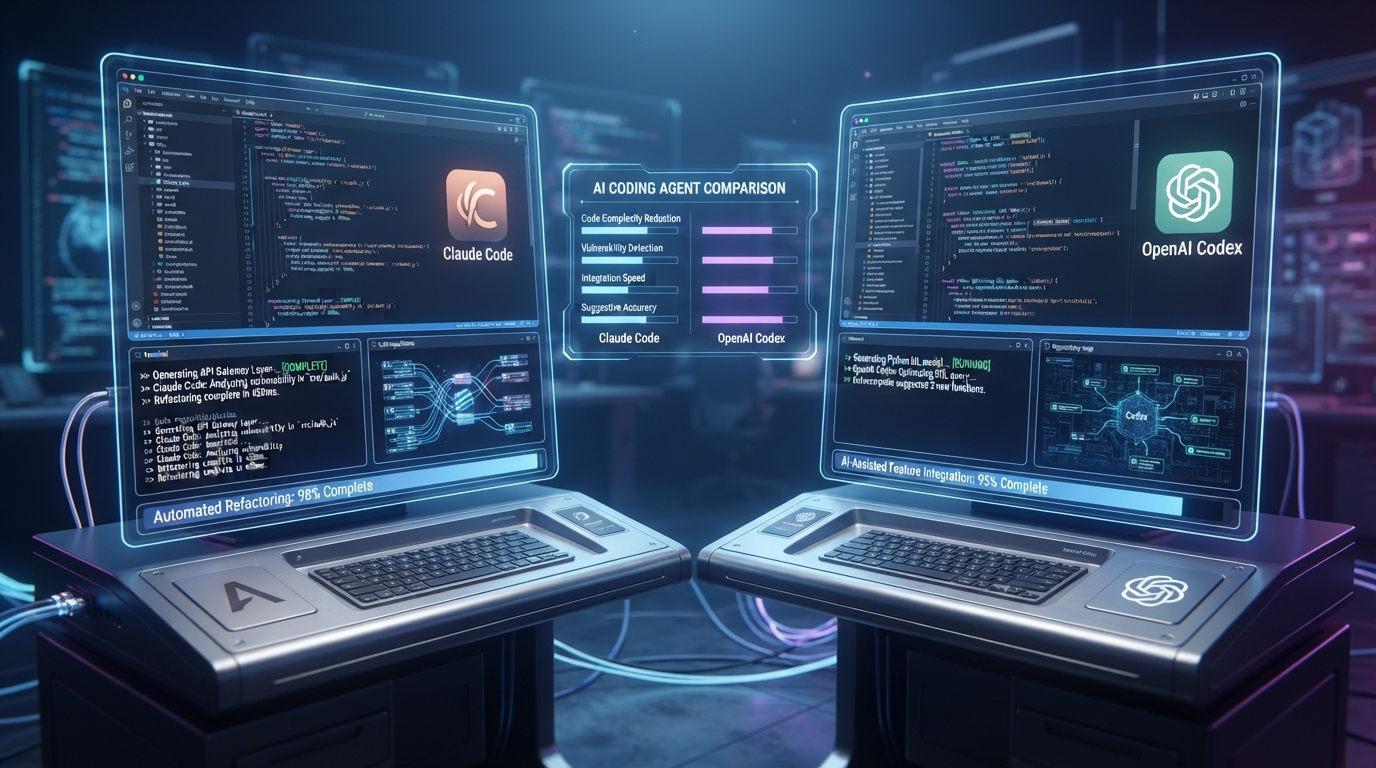
OpenAI is aggressively developing Codex, its coding agent designed for software engineering work. OpenAI describes Codex as capable of handling tasks such as feature development, refactoring, migrations, pull requests, issue triage, and other engineering workflows.
The company has also introduced Codex-focused options for business and enterprise customers, allowing organizations to integrate coding capabilities into professional environments.
This creates one of the most important competitive battles between Anthropic and OpenAI.
Claude Code and Codex are both moving AI coding beyond autocomplete and simple code generation. The competition is increasingly about whether AI agents can complete useful engineering work from beginning to end.
For businesses, that could mean faster development cycles, lower costs for repetitive tasks, and more efficient use of engineering teams.
Claude vs ChatGPT: Two Different Commercial Strategies
Anthropic and OpenAI overlap heavily, but their commercial strategies have developed around somewhat different strengths.
Anthropic has increasingly emphasized enterprise customers, APIs, developers, professional workflows, and Claude Code. Its positioning has made business and technical users an important part of the company’s growth strategy.
OpenAI has a much broader consumer footprint through ChatGPT. It also has enterprise products, developer APIs, coding tools, and an expanding ecosystem of AI capabilities.
ChatGPT remains one of the most recognizable AI products in the world, giving OpenAI a major advantage in consumer reach and brand awareness. Top 100 AI Tools in 2026 also highlights ChatGPT among the leading AI products in the current market.
The challenge for OpenAI is therefore not a lack of demand. The company continues to generate billions in revenue. Instead, the question is whether it can increase revenue quickly enough while controlling the enormous costs associated with operating frontier AI systems.
Enterprise AI Is Becoming the Main Battleground
The Anthropic-OpenAI competition reflects a broader transformation in the AI industry.
Early AI competition focused heavily on chatbot capabilities, benchmark scores, image generation, and consumer adoption. Those factors still matter, but businesses now want measurable outcomes.
An enterprise customer may care less about whether an AI model wins a benchmark and more about whether it can:
- Reduce software development time
- Automate repetitive business processes
- Analyze large amounts of information
- Improve customer support
- Generate useful reports
- Assist research teams
- Operate securely inside existing systems
- Produce measurable productivity gains
This is why enterprise AI has become such an important source of growth.
The companies that win this market may not necessarily be those with the most popular chatbot. They may be the companies that build AI systems capable of becoming deeply integrated into everyday business operations.
That also introduces another challenge: reliability.
As AI becomes responsible for more complex workflows, inaccurate outputs can create operational problems. AI Role Drift Exposes Hidden Flaw in AI Pipeline Accuracy explores why maintaining accuracy and consistency becomes increasingly important as AI systems take on different roles.
Profitability Could Matter More Than Revenue
Anthropic’s revenue lead is impressive, but profitability may ultimately be the more important metric.
AI companies can grow revenue rapidly while simultaneously spending even more money on computing infrastructure and research. That model can work while capital is abundant, but it becomes more challenging when investors demand stronger margins and sustainable returns.
Anthropic’s reported adjusted operating profit suggests that its business may be moving toward a model where revenue growth and cost control can improve together.
OpenAI faces a different situation. Its broad consumer base and infrastructure investments provide enormous potential, but the cost of operating and scaling frontier models remains a major financial consideration.
The industry’s long-term winners will therefore need more than impressive revenue figures. They will need strong customer retention, efficient inference, sustainable infrastructure strategies, and products that customers continue paying for over time.
Anthropic Is Ahead, But the AI Race Is Not Over
Anthropic is now ahead of OpenAI in the reported Q2 revenue comparison, but that does not mean it has definitively won the AI race.
OpenAI still has enormous advantages. ChatGPT has a global user base, the company has a broad developer ecosystem, and its products extend across consumer, enterprise, and coding use cases.
Anthropic’s biggest advantage at the moment is momentum.
Its revenue growth has been extraordinary, Claude Code has become an important commercial product, and enterprise adoption is strengthening the company’s position.
Recent reporting also shows how quickly that momentum has continued beyond Q2. Anthropic’s annualized revenue run rate reportedly exceeded $65 billion by the end of July, up sharply from approximately $9 billion at the end of 2025.
That trajectory explains why the company is receiving increasing attention from investors and the broader technology industry.
Comes Next for Anthropic and OpenAI
The next stage of the competition will likely be less about who can produce the most impressive chatbot and more about who can build the most sustainable AI business.
For Anthropic, the priorities are clear: maintain Claude’s enterprise growth, expand Claude Code, increase API adoption, improve infrastructure efficiency, and convert rapid demand into durable profits.
OpenAI has a different set of opportunities. Its massive ChatGPT ecosystem gives it a foundation for expanding enterprise services, coding products, AI agents, and other applications.
The coding-agent market will be particularly important. Both companies are moving toward systems that can perform multi-step tasks rather than simply respond to prompts.
This shift could fundamentally change how businesses use AI. Instead of asking an AI assistant for information, employees may increasingly assign it tasks and review the results.
That creates a much larger commercial opportunity because AI becomes part of the workflow itself.
Anthropic’s Revenue Lead Means for the AI Market
Anthropic surpassing OpenAI in quarterly revenue is significant because it demonstrates how quickly the AI market is changing.
Only a quarter earlier, OpenAI held the revenue lead. By Q2, Anthropic had moved ahead with approximately $11.5 billion in quarterly revenue compared with OpenAI’s $6.7 billion.
The bigger story, however, is the combination of growth, enterprise adoption, coding tools, and improving operating economics.
Anthropic’s performance suggests that specialized professional use cases can generate enormous demand. Claude Code is an example of how an AI product can move from general conversation into high-value business workflows.
OpenAI’s continued investment in Codex and enterprise products shows that the company is responding to the same market opportunity.
The competition will ultimately be decided by more than quarterly revenue. Model quality, customer loyalty, infrastructure access, pricing, product breadth, safety, reliability, and profitability will all matter.
For now, Anthropic has achieved a major milestone: it has overtaken OpenAI in quarterly revenue while demonstrating exceptional growth momentum. Whether it can sustain that advantage will be one of the most closely watched stories in the AI industry through the rest of 2026.
Key Takeaways
- Anthropic generated approximately $11.5 billion in Q2 2026 revenue, ahead of OpenAI’s roughly $6.7 billion.
- Anthropic’s quarterly revenue grew by about 140%, compared with approximately 18% for OpenAI.
- Anthropic reportedly achieved its first adjusted operating profit in Q2.
- Claude Code and enterprise AI are important drivers of Anthropic’s growth.
- OpenAI continues to compete through ChatGPT, Codex, enterprise products, and its broader AI ecosystem.
- The AI market is shifting from simple model competition toward revenue growth, efficiency, enterprise adoption, and profitability.
- Anthropic’s revenue lead is significant, but it does not establish a permanent overall winner in the AI race.