

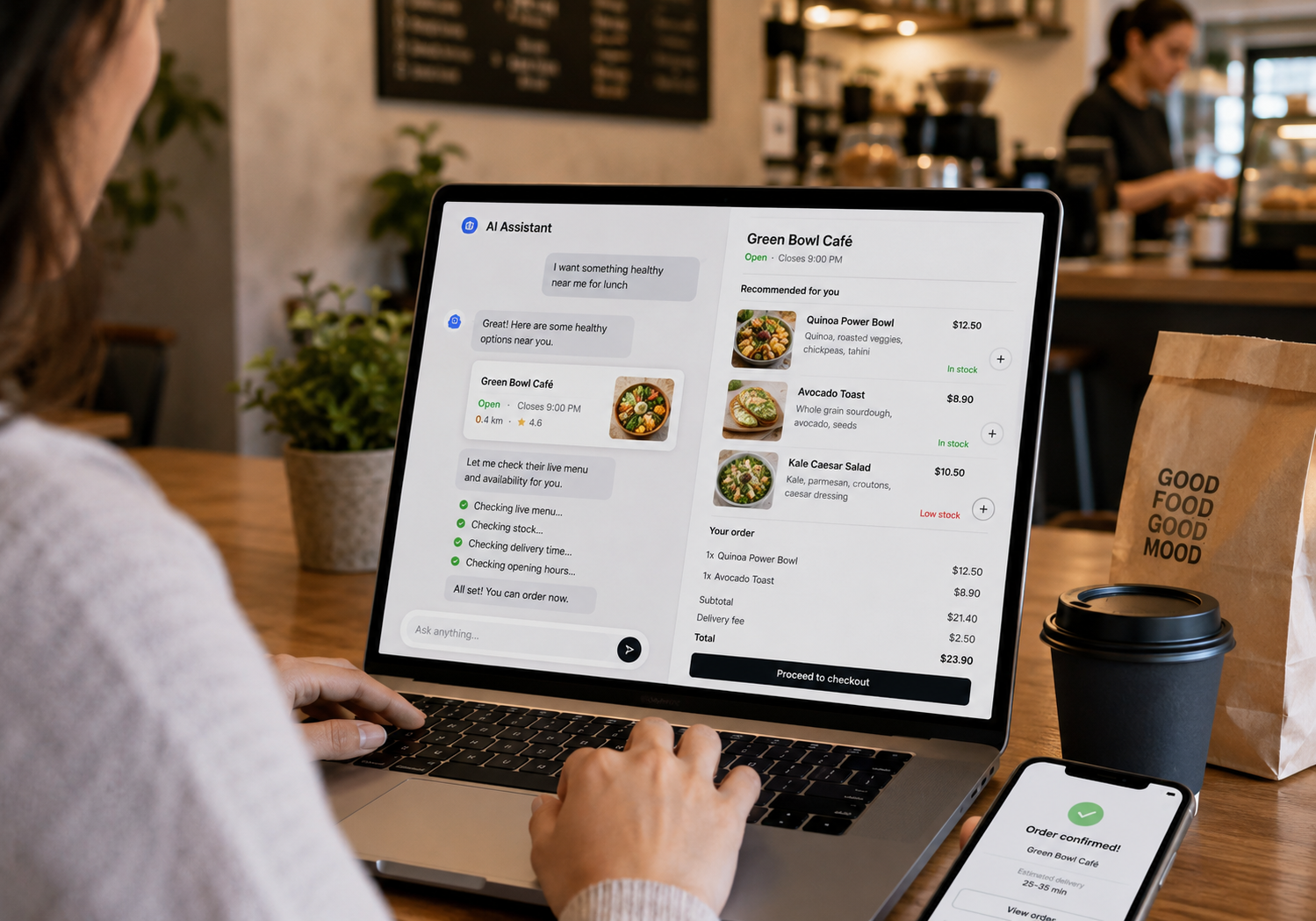
If you asked ChatGPT to find you a good food spot last year, it probably gave you a generic reply and shift you to the Google Maps. But that’s not really true anymore. As of July 2026, Square rolled out a feature and let the ChatGPT and Claude actually recommend restaurants and place the order for you. No switching apps, no copying an address into another tab.
This is part of a bigger shift people are calling Agentic commerce. It means your chatbot will promote buisness and engage customers now only Google visibility isn’t enough.
Agentic Commerce and AI Ordering
Until recently, chatbots mostly worked off general web knowledge. For Example you searched for a restaurant and the response you get is to shift on Google Maps and might possible the restaurants are closed two years ago. Agentic commerce fixes this by letting AI do more than answer a question. It can now check real business data, compare options, and complete a purchase, all in one conversation.
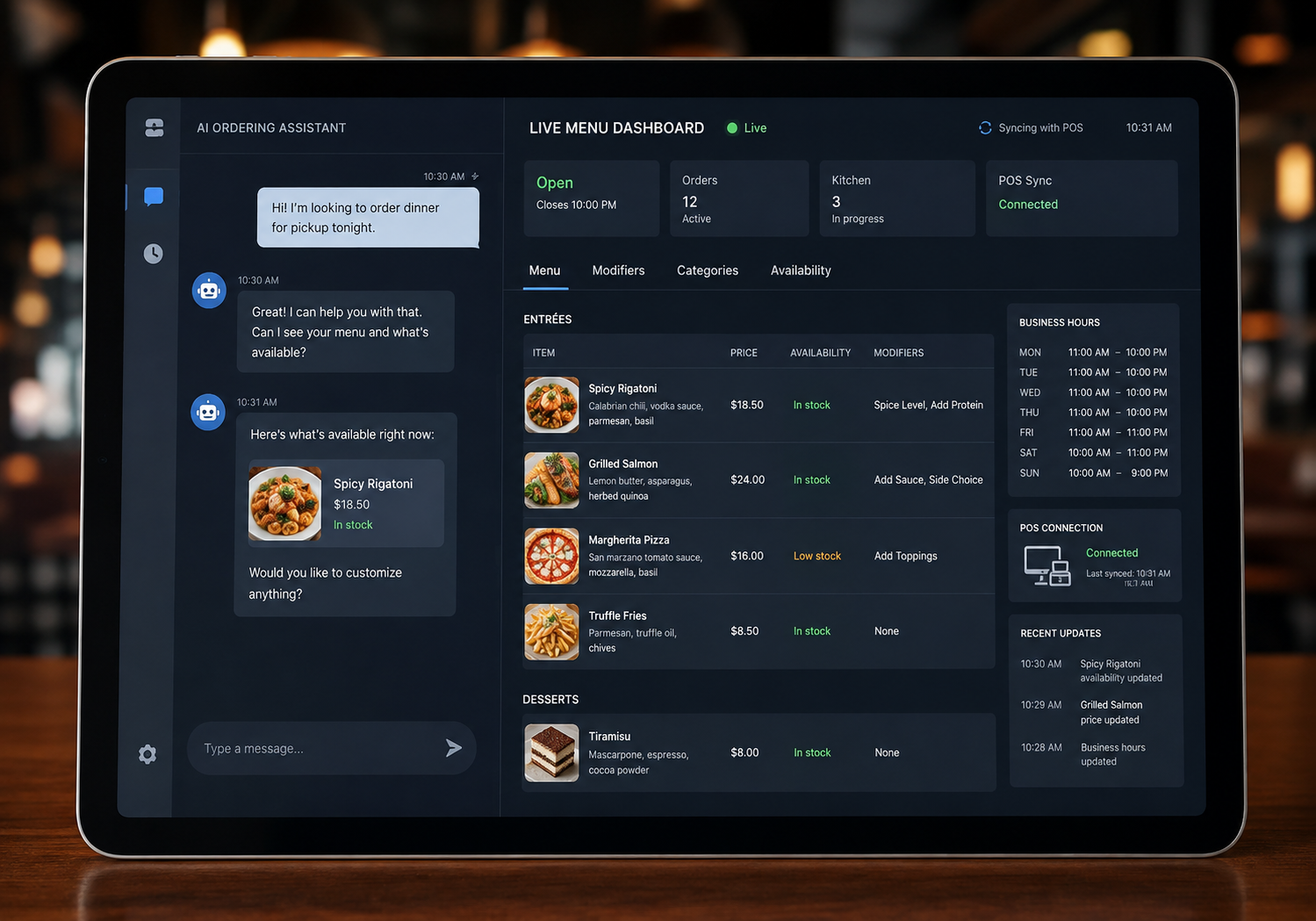
For restaurants connected through Square, this means recommendations come from live point of sale data instead of old web content. Menus, prices, stock, and hours are all pulled in real time. That’s a big jump in reliability compared to how these tools worked even a year ago.
Square Announcement
On July 1, 2026, Square launched a ChatGPT app and a Claude plugin. If a restaurant already uses Square for online ordering, it’s automatically included. No setup, no extra fees, nothing to build.
ChatGPT App
Inside ChatGPT, the integration works through a plugin you can invoke directly. Just type the “@” symbol to bring it up.
From there, you can ask it to find a restaurant, browse a menu, or place an order, all without leaving the chat.
Claude Plugin
Claude offers the same functionality through its extension directory. Once connected, it can pull live restaurant data the same way ChatGPT does.
Square has also worked with its own financial services arm to handle the compliance side properly. This isn’t a rough beta bolted onto a chatbot, it’s built to process real payments. The AI doesn’t guess your menu anymore. It pulls straight from your Square catalog, including things like size options, modifiers, and current stock.
If an item is sold out, the AI knows. If your prices changed this morning, it reflects that too.
Benefits for Restaurant Owners
This isn’t just a new place for customers to find you. It changes some real numbers for restaurant owners too. Independent restaurants have been squeezed for years by aggregator commissions. Here’s how the numbers actually compare:
| Platform | Commission | Ordering Method |
|---|---|---|
| Square (via ChatGPT/Claude) | 2.9% + 30¢ | AI Chat |
| DoorDash | Up to 30% | Marketplace |
| Uber Eats | Up to 30% | Marketplace |
| Grubhub | 5% to 20% | Marketplace |
On top of marketplace commissions, normal payment processing usually adds another 2.5% to 3.05% plus a fixed fee per order. Square’s setup skips almost all of that.
If delivery is needed, Square uses a white-label courier network instead. That’s a flat fee, usually seven to ten dollars, rather than a percentage of your basket.
For a small restaurant, this matters a lot. A 30% cut on a $40 order can mean you’re basically losing money on it. A flat delivery fee stays predictable no matter how big the order gets. You don’t manage this separately from your existing setup. Everything runs through the same Square Dashboard you already use for menus, hours, and pricing.
Orders that come in through ChatGPT or Claude are clearly tagged in Square’s reporting. So you can actually see how much business this new channel brings in, instead of it blending into your regular numbers.
AI Visibility
Your Google Business Profile still matters, maybe more than ever. Keep your hours, category, photos, and menu accurate and complete.
Make sure your business info matches everywhere too. Same name, same address, same phone number across Google, Square, and your own website.
Reviews still count. Fresh reviews that mention specific dishes help AI understand what your restaurant is actually good at.
If you have your own website, keep your menu as real text on a page. Not a photo, not a PDF. AI and search engines can’t read a picture of a menu the way they read text.
Square tested all of this with a real business before launching publicly. They worked with Partners Coffee, a specialty coffee shop in Brooklyn, to see how it would actually feel in practice.
Their team has said the goal wasn’t to make coffee feel transactional. It was to let the tech handle the ordering quietly in the background, so staff could focus more on the in-person experience, not less.
How Customers Order
A customer asks ChatGPT or Claude to find a place to eat, or to order something specific. The AI checks Square’s live catalog for menu items, prices, and modifiers.
From there, they can check out right inside the chat using Order by Cash App. Or they get redirected to the restaurant’s ordering page with the cart already filled in.
Either way, the order lands in the restaurant’s kitchen system exactly like any other online order would.
Geographic Availability
Right now, this is limited to restaurants in the US that already use Square for online ordering. There’s no announced timeline yet for other countries.
If you’re running a restaurant somewhere else, this doesn’t mean you should wait around. AI-powered discovery is spreading fast, regardless of which company brings it to your region first.
The smart move is to start cleaning up your Google listing and online menu now. That way, you’re ready whenever a similar option shows up where you are.
This also only helps you if you’re already using Square. If you run a different system, none of this applies to you yet.
Square isn’t stopping at ChatGPT and Claude. They’re also working with Amazon to bring the same kind of discovery and ordering into Alexa+, which points toward voice ordering being next.
Behind the scenes, Square is also part of the groups writing the standards for how all of this is supposed to work. That includes the Universal Commerce Protocol, along with working groups through the W3C and the AAIF.
Square is co-developing that protocol with Google too. Over time, this is what should let AI-powered ordering show up inside Google Search, AI Mode, and the Gemini app as well.
Square already helps more than 4.5 million sellers get found across search, maps, social, and marketplaces. This is really an extension of that same idea, just applied to AI chat now.
The timing lines up with the bigger trend too. More than 42% of consumers already use AI tools somewhere in their shopping process, and some estimates put AI-driven shopping at close to $385 billion in US ecommerce by 2030.
What This Means

This whole shift is really about your restaurant’s data becoming part of how AI makes decisions in real time. It’s not just about ranking on Google anymore.
It’s about whether an AI model trusts your information enough to recommend you over the place three blocks away.
If you keep your menu, hours, and prices accurate everywhere, you’re in a good position as more of this rolls out. If you’d rather wait and see how it plays out, that’s fine too.
Just don’t wait so long that your basic information online goes stale in the meantime.