
Anthropic has made its biggest product push since Claude Code. In just one week, the company launched Claude Sonnet 5, its most agentic Sonnet-tier model yet, and introduced Claude Science, a standalone AI workbench designed specifically for scientific research, with drug discovery as its headline use case.
This is more than a routine model update. Anthropic is making a clear statement that life sciences is becoming a core business line rather than a side experiment. The message was reinforced by the company’s decision to launch Claude Science in front of an audience of pharmaceutical and biotech executives.
This article breaks down what Anthropic actually launched, how Claude Science works, who can access it, what it costs, and how it compares with OpenAI’s GPT-Rosalind and Google’s Gemini for Science. It also examines the broader business strategy behind the move, including Anthropic’s reported IPO plans, its nearly $1 trillion valuation, and the growing battle for top AI-for-science talent.
Two Releases, Two Different Jobs
Claude Sonnet 5 and Claude Science may have launched within the same week, but they serve very different purposes.
Claude Sonnet 5 is a model upgrade. It brings stronger reasoning, improved coding, and more reliable tool use compared with Sonnet 4.6. Anthropic says its performance approaches Opus 4.8 on several benchmarks while costing significantly less.
For everyday Claude users, Sonnet 5 is the more visible update. It is now the default model across Free and Pro plans and inside Claude Code.
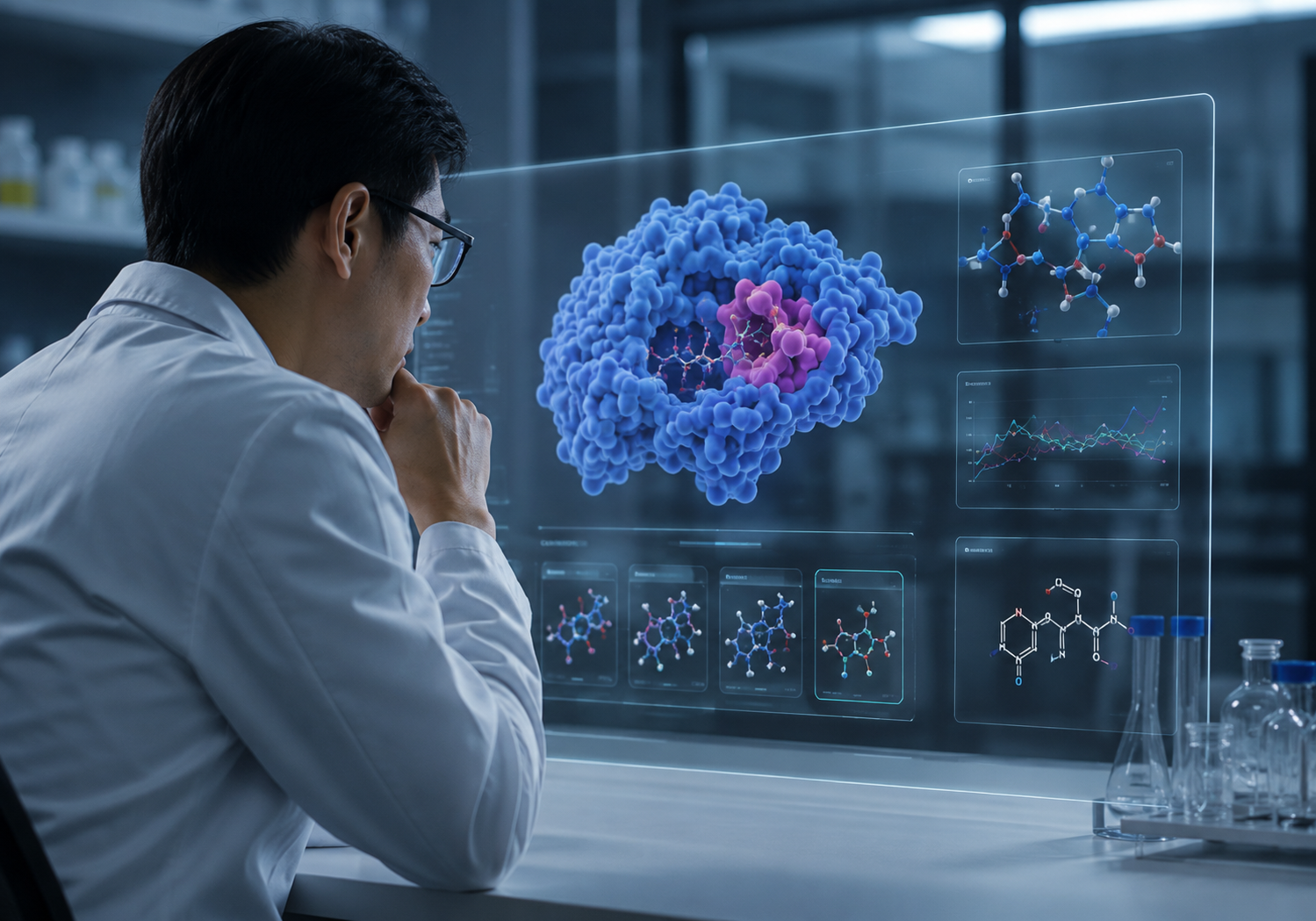
Claude Science is a product built around workflow. It is not a new foundation model. Instead, it connects Claude with scientific databases, computing infrastructure, literature search tools, and specialized research software within a single environment.
That means a researcher can ask Claude to review recent literature, investigate a biological target, retrieve structural data, run an analysis, generate a figure, verify citations, and draft part of a manuscript without manually moving between multiple disconnected tools.
The distinction is important. Anthropic is not simply giving scientists another chatbot. It is attempting to build an end-to-end research environment.
Auditability Is Central to the Product
One of Claude Science’s most important features is traceability.
In scientific research, producing an answer that looks convincing is not enough. Researchers need to know where the underlying data came from, how an analysis was performed, and which code generated a particular result.
Anthropic has therefore designed Claude Science around reproducibility and auditability. Research outputs can be traced back to their source data and the code used to generate them.
That approach is particularly important in fields such as drug discovery, genomics, and structural biology, where a seemingly small error in data interpretation can influence an entire research workflow.
Rather than treating verification as an optional final step, Anthropic is making it part of the workflow itself.
Why Anthropic Is Moving Into Science Now
The timing of Claude Science becomes more interesting when its product strategy, business ambitions, and hiring activity are considered together.
Anthropic has been expanding beyond the consumer chatbot market and toward high-value enterprise applications. Scientific research could become an especially attractive market because pharmaceutical and biotechnology companies have substantially larger technology budgets than most academic research groups.
Anthropic reportedly filed a confidential IPO prospectus with the SEC on June 1, 2026. Earlier this year, the company also closed a Series H funding round at a post-money valuation approaching $965 billion.
The company has also said it is approaching its first profitable quarter. If Claude Science leads to large enterprise contracts with pharmaceutical companies, those deals could become strategically important as Anthropic prepares for a potential public offering.
The opportunity is therefore bigger than selling another subscription tier. Anthropic is targeting organizations that could integrate AI directly into high-value research and development pipelines.
Partnerships, Acquisitions, and the Talent War
Claude Science is also the result of a broader effort to establish Anthropic’s position in AI-powered scientific research.
The company has spent months building its life sciences operation through acquisitions, partnerships, and executive appointments. Those efforts include the acquisition of AI biotech startup Coefficient Bio, the appointment of Novartis CEO Vas Narasimhan to Anthropic’s board, and research collaborations with Bristol Myers Squibb and the Gates Foundation.
These partnerships cover areas including vaccine research, disease modeling, and healthcare systems in lower-income countries.
The talent battle is perhaps an even stronger signal.
John Jumper’s move to Anthropic is particularly significant. At DeepMind, Jumper helped develop AlphaFold, the AI system that transformed protein structure prediction and became one of the most influential applications of AI in modern biological research.
AlphaFold has since modeled more than 200 million proteins, with applications spanning drug discovery, structural biology, and materials science. Jumper and DeepMind CEO Demis Hassabis shared the 2024 Nobel Prize in Chemistry for their work.
Jumper announced his departure from DeepMind on June 19, 2026, after nearly nine years at the company.
His move came during an unusually competitive period for AI research talent. Around the same time, Noam Shazeer, a major figure in Google’s Gemini development, left Google for OpenAI.
The broader trend is difficult to miss. Anthropic, Google, and OpenAI are increasingly competing not only for customers and computing infrastructure but also for researchers capable of connecting frontier AI with real-world scientific problems.
How Claude Science Actually Works
Claude Science is built around several core capabilities.
Literature and Data Analysis
Researchers can use the platform to review scientific papers, compare biological targets, and retrieve structured information from connected databases.
Instead of performing each step manually, researchers can combine literature review and data analysis into a single workflow.
Code Execution on Real Infrastructure
Claude Science can work with computing infrastructure ranging from local machines to high-performance computing clusters and cloud GPUs.
The system can prepare and execute computational tasks while surfacing important decisions for researchers to review before jobs are submitted.
This is particularly useful for scientific workflows that require substantial computational resources.
Domain-Specific Scientific Tools
Anthropic says Claude Science includes more than 60 skills and connectors covering areas such as:
- Genomics
- Single-cell analysis
- Proteomics
- Structural biology
- Cheminformatics
The platform can connect with scientific resources including UniProt, PDB, Ensembl, Reactome, ClinVar, ChEMBL, and GEO.
The goal is to reduce the friction between an AI model and the tools researchers already use.
Reproducibility by Default
Every generated figure or research result can maintain a traceable connection to its underlying data and the code used to produce it.
For scientific teams, this could be one of the product’s biggest advantages because researchers need to reproduce and validate computational results rather than simply accept an AI-generated conclusion.
What Researchers Are Already Using It For
Claude Science is currently in beta, but Anthropic says early users have already applied it to several research tasks.
These include single-cell RNA sequencing analysis, CRISPR screen design, protein structure prediction, and cheminformatics.
These examples are important because they represent early-stage research workflows rather than claims that Claude Science can independently produce a regulator-ready drug candidate.
The distinction matters. AI can accelerate research tasks, but moving a discovery from computational analysis to an approved medicine still requires extensive laboratory validation, safety testing, clinical trials, regulatory review, and years of development.
Availability and Pricing
Claude Science is currently available in beta to users on Pro, Max, Team, and Enterprise plans.
At launch, the platform supports macOS and Linux, while Windows support is not yet available.
Team and Enterprise customers also require an administrator to enable access before individual users can use Claude Science.
Anthropic is additionally offering research grants of up to $30,000 to academic and nonprofit laboratories. That could help researchers experiment with the platform without having to absorb the full cost of adopting a new research environment during an ongoing project.
Claude Science and Drug Discovery
Drug discovery is the most prominent use case Anthropic has attached to Claude Science, and the company is putting its own resources behind the effort.
Anthropic announced an internal drug discovery program using Claude Science to focus on neglected diseases. These conditions can carry significant global health burdens but often receive less pharmaceutical investment because their commercial markets are comparatively limited.
The internal program serves two purposes.
First, it gives Anthropic an opportunity to apply its own technology to real scientific problems. Second, it creates a feedback loop that could help the company understand what researchers and pharmaceutical organizations actually need from an AI research platform.
Eric Kauderer-Abrams, Anthropic’s life sciences head, has described this type of internal work as an important way to develop tools alongside real scientific workflows.
Jonah Cool, Anthropic’s head of life sciences partnerships, has also positioned the neglected-disease initiative alongside the company’s broader effort to work with biopharmaceutical organizations.
At the launch event, Anthropic demonstrated Claude Science identifying potential drug candidates for phenylketonuria, a rare genetic disorder.
It is an interesting proof of concept, but it should not be interpreted as evidence that AI has solved drug discovery. Identifying a promising candidate is only one stage of a much longer process involving laboratory experiments, toxicity testing, clinical trials, manufacturing, and regulatory approval.
Claude Science vs. GPT-Rosalind vs. Gemini for Science
Claude Science is entering an increasingly competitive market.
OpenAI and Google are also developing dedicated AI systems for scientific research, but the three companies are approaching the market differently.
| Claude Science | GPT-Rosalind | Gemini for Science | |
|---|---|---|---|
| Format | Standalone scientific workbench | Specialized model paired with Prism | Scientific research suite |
| Core strength | Execution, coding, compute, reproducibility | Specialized reasoning across biology and medicinal chemistry | Scientific models and research infrastructure |
| Database integration | 60+ scientific connectors | Plugin-based database access | 30+ life-science databases |
| Headline capability | Drug candidate identification for phenylketonuria | Research and drug discovery acceleration | Hypothesis generation through Co-Scientist |
| Key advantage | End-to-end research workflow | Specialized scientific reasoning | DeepMind’s scientific AI ecosystem |
The biggest difference is not whether these companies have scientific AI products. All three increasingly do.
The difference is how they package those capabilities.
Claude Science emphasizes execution. The researcher can use Claude to write and run code, interact with computing infrastructure, analyze scientific data, and maintain a reproducibility trail.
OpenAI takes a more modular approach, combining a specialized scientific reasoning model with a separate research and collaboration environment.
Google, meanwhile, has an advantage in its long-standing scientific AI infrastructure, particularly through DeepMind’s work on systems such as AlphaFold.
For drug discovery, this makes the market a genuine three-way competition.
Anthropic’s recruitment of John Jumper is therefore better understood as an attempt to strengthen its scientific credibility and close Google’s existing advantage than as proof that Anthropic has already surpassed Google.
Claude Sonnet 5 Is the Quieter Half of the Update
Claude Science may be the more strategically important launch, but Sonnet 5 is likely to have the larger day-to-day impact.
Unlike Claude Science, Sonnet 5 does not require researchers to adopt an entirely new workflow. It simply improves the underlying model that millions of users interact with.
Anthropic designed Sonnet 5 to handle multi-step tasks more reliably, with stronger reasoning, coding, and tool-use capabilities.
That matters for scientific research because modern research increasingly depends on software. Scientists often need to work with data pipelines, statistical analysis, simulations, visualization tools, and custom scripts even when they were not formally trained as software developers.
A stronger coding and reasoning model can therefore improve scientific productivity even outside Claude Science itself.
Independent observations have also highlighted how capable Anthropic’s models have become at completing scientific projects. Harvard physicist Matthew Schwartz, for example, has described his experience using Claude Code and related Anthropic tools as approaching the productivity level of a second-year graduate student in some research tasks.
That comparison should still be treated cautiously. A graduate student works under the supervision of experienced researchers, and AI systems require human oversight for scientific decision-making.
Anthropic’s own positioning reflects this distinction: Claude Science is designed to function as a highly capable research assistant, not an unsupervised scientist.
Who Should Use Claude Science?
Developers
Developers are likely to benefit immediately from Sonnet 5 and Claude Code. There is no need to adopt Claude Science simply to access the model improvements.
Scientific Researchers
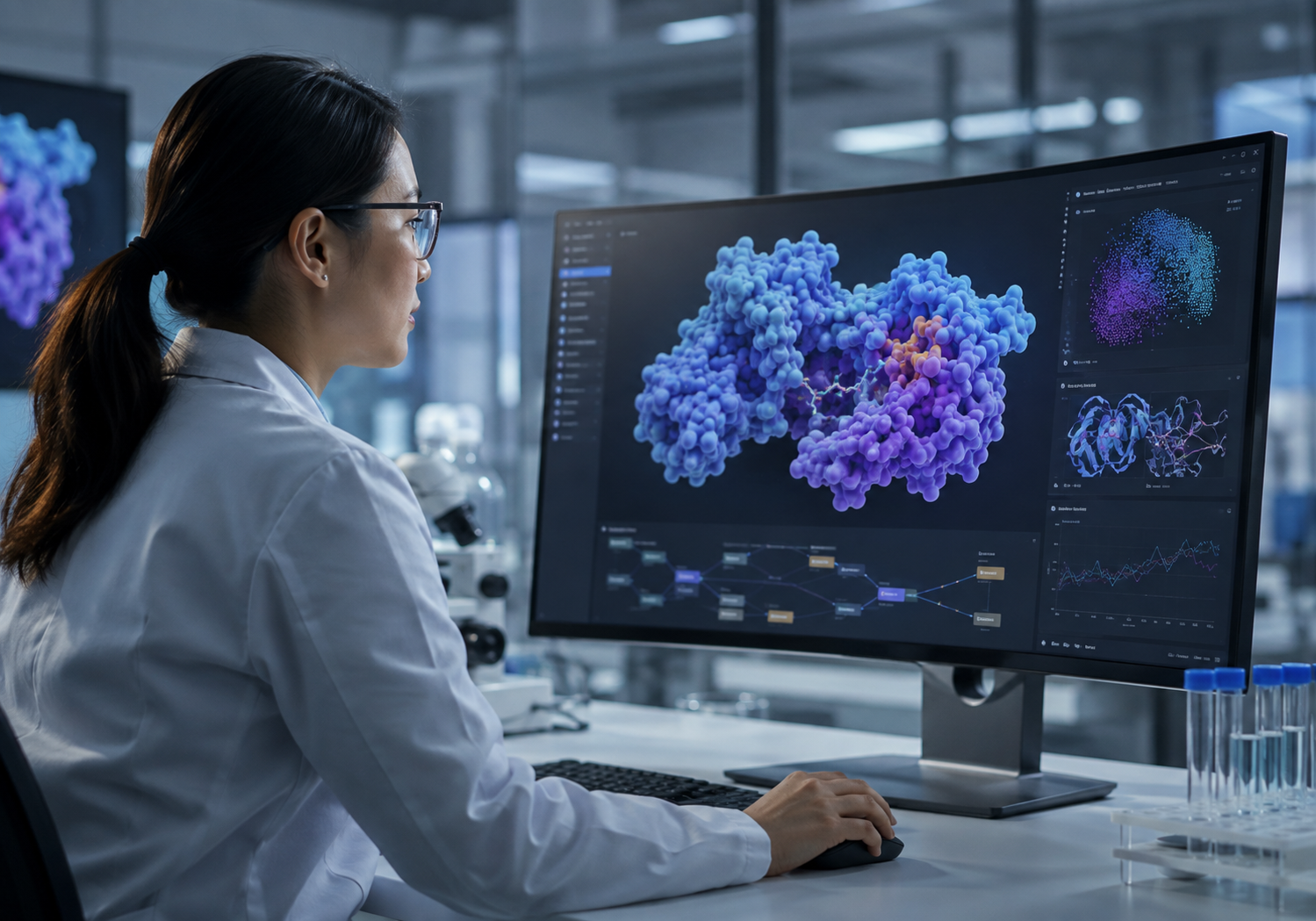
Researchers working in molecular biology, cellular biology, genetics, chemistry, structural biology, and drug discovery are the primary audience for Claude Science.
The platform’s specialized connectors and computational capabilities are designed around these workflows.
Biotech and Pharmaceutical Companies
Biotech and pharmaceutical organizations are arguably Anthropic’s most important commercial audience.
The launch itself was positioned heavily around this sector, and the business case is straightforward: these companies have expensive research pipelines and strong incentives to reduce the time researchers spend on repetitive computational and analytical tasks.
Academic and Nonprofit Laboratories
Academic and nonprofit researchers can access Claude Science through eligible Pro, Max, Team, or Enterprise plans.
The availability of research grants worth up to $30,000 could also make early adoption more realistic for institutions with limited technology budgets.
Students
For most students, Sonnet 5 is likely to be more useful than Claude Science.
Students can benefit from its reasoning, writing, coding, research assistance, and general productivity capabilities. Claude Science becomes more relevant when a student is involved in computational or laboratory research that uses the platform’s specialized tools.
Clinicians and Healthcare Administrators
Clinicians and healthcare administrators are not the primary target audience.
Claude Science is focused on the research and drug-development side of healthcare rather than clinical decision-making, hospital administration, or routine patient management.
The Bigger Picture
Anthropic’s latest releases represent more than two new products.
Sonnet 5 strengthens the company’s general-purpose AI and agent strategy, while Claude Science pushes Anthropic into a high-value vertical where AI can directly influence research and development.
That combination is strategically important.
Anthropic is competing with OpenAI and Google on model performance, agentic software, enterprise adoption, scientific research, and access to elite AI talent at the same time.
Claude Science also gives the company a potential path into markets where the value of AI is measured less by chatbot usage and more by the economic value of the work being accelerated.
Whether Anthropic can turn that potential into a major life sciences business remains to be seen. But the direction is now clear.
Anthropic does not want Claude to remain primarily a chatbot or coding assistant. With Claude Science, the company is positioning its models as infrastructure for scientific work itself.
And with Google, OpenAI, and Anthropic all moving aggressively into AI-for-science, the next phase of the AI competition may be decided not only by who builds the smartest model, but by who can make those models genuinely useful inside the world’s most demanding research environments.