
Artificial intelligence has advanced rapidly over the past few years, with large language models (LLMs) becoming more accurate, faster, and more affordable. However, during VB Transform 2026, engineering leaders from LinkedIn, Walmart, and Zendesk highlighted a different challenge that is preventing enterprises from fully benefiting from AI agents.
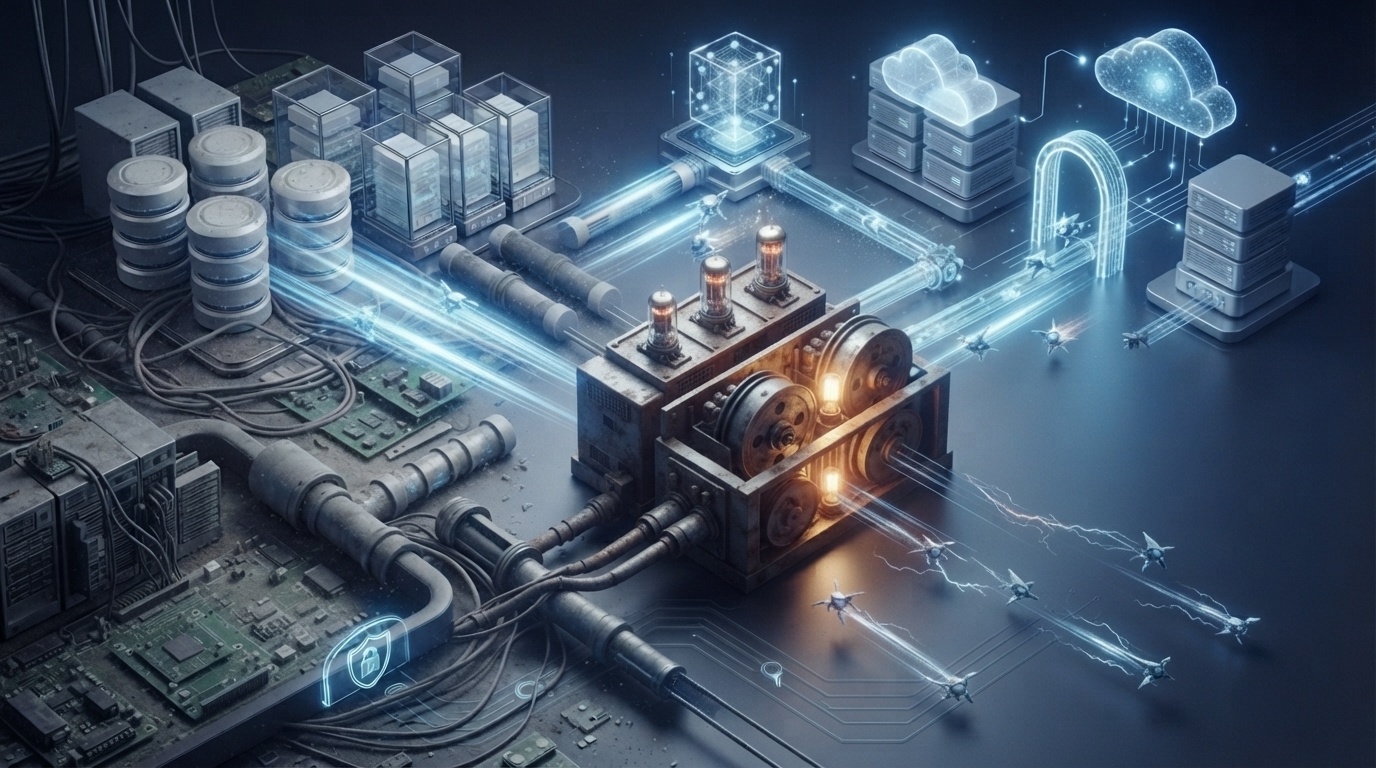
According to executives speaking at the event, today’s AI models are no longer the biggest limitation. Instead, the real bottleneck is legacy enterprise infrastructure that was designed for human-operated software rather than autonomous AI agents operating around the clock.
As organizations expand the use of autonomous systems, many are adopting AI tools for business automation to improve efficiency across departments.
The discussion marks a significant shift in enterprise AI strategy. Instead of focusing solely on choosing the best language model, organizations are increasingly investing in modern infrastructure, governance systems, orchestration platforms, and data pipelines capable of supporting thousands of AI-driven tasks simultaneously.
What Happened at VB Transform 2026?
VB Transform 2026 brought together technology leaders from some of the world’s largest enterprises to discuss the future of artificial intelligence in business. While previous industry discussions focused primarily on selecting the most capable AI model, this year’s conversation centered on the infrastructure required to deploy AI agents at scale.
Representatives from LinkedIn, Walmart, and Zendesk shared real-world experiences from deploying enterprise AI systems across millions of users and internal business operations.
Despite operating in different industries, all three companies reached a similar conclusion: AI models continue to improve rapidly, but existing enterprise systems struggle to support autonomous AI workflows because they were never designed for machine-speed decision making.
Why Legacy Infrastructure Has Become the Biggest AI Bottleneck
Traditional enterprise software was designed around human interaction. Employees submit requests, wait for responses, approve workflows, and perform manual tasks over minutes or even hours.
AI agents work differently.
Modern AI systems perform multiple reasoning steps in seconds, interact with APIs continuously, retrieve data from multiple sources, and coordinate with other AI agents without human intervention.
This speed creates enormous pressure on legacy infrastructure.
Many enterprise systems experience delays because of:
- Slow database queries
- Legacy authentication systems
- API bottlenecks
- Container startup latency
- Limited orchestration capabilities
- Outdated networking infrastructure
Even if an advanced language model generates an answer within milliseconds, the surrounding enterprise infrastructure may require several additional seconds to complete the overall task.
As organizations deploy thousands of AI agents simultaneously, these delays multiply quickly, reducing productivity and increasing operational costs.
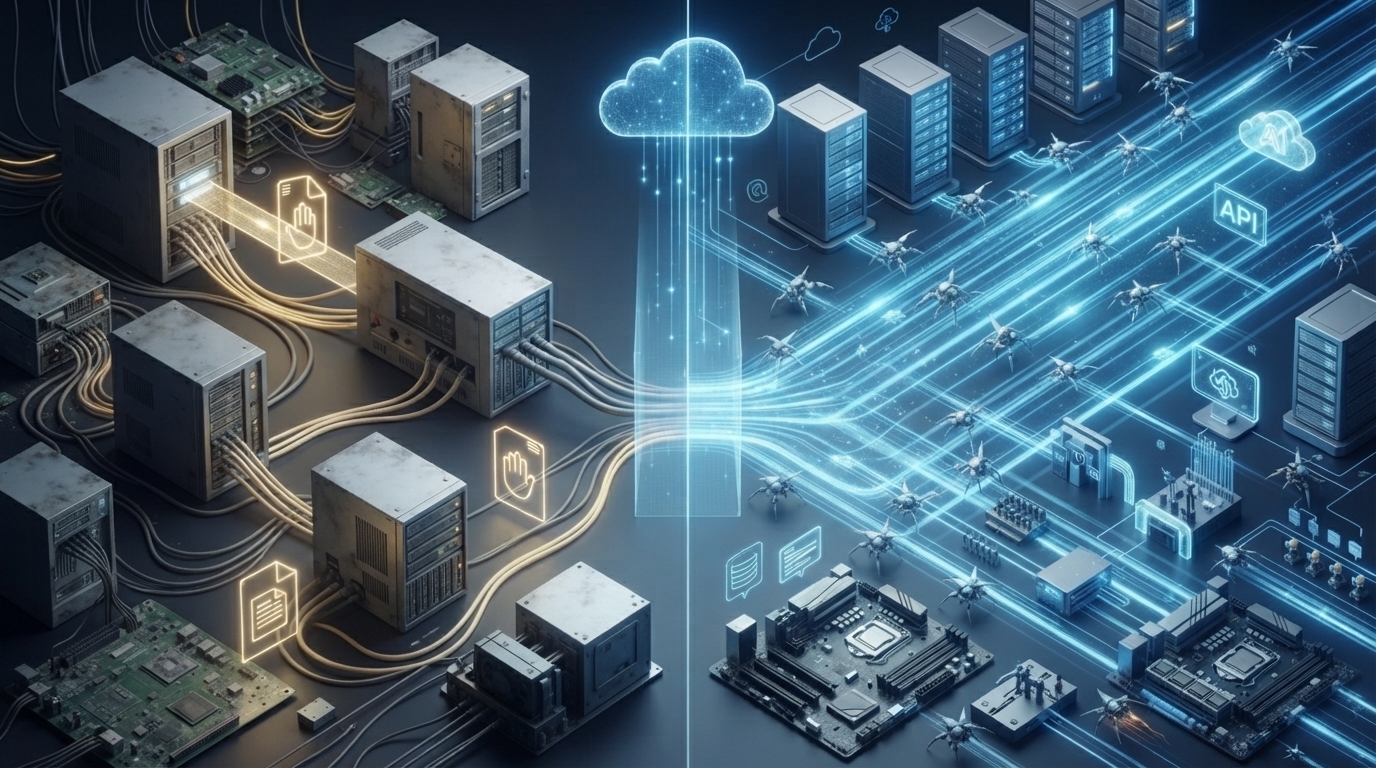
Human-Speed Systems vs AI-Speed Systems
One of the most important themes from the discussion was the mismatch between systems designed for humans and systems required for autonomous AI.
Human workflows generally involve:
- Manual approvals
- Sequential processing
- Business-hour operations
- Predictable workloads
AI agents operate differently:
- Continuous execution
- Parallel processing
- Instant decision making
- High-frequency API requests
- Multi-agent collaboration
This difference means organizations can no longer rely solely on traditional enterprise architecture if they want AI agents to deliver real business value.
LinkedIn’s AI Infrastructure Challenges
LinkedIn discussed how infrastructure optimization has become essential for supporting AI-powered services.
One major issue involved Kubernetes container provisioning. AI workloads often require immediate access to computing resources, but waiting for new containers to start introduces delays that reduce overall system performance.
To address these issues, LinkedIn focused on reducing infrastructure latency rather than simply deploying larger language models.
The company also emphasized deterministic workflows that improve reliability by combining AI reasoning with structured business logic. This approach helps reduce hallucinations while ensuring enterprise applications remain predictable and trustworthy.
For enterprise environments where reliability is critical, deterministic orchestration provides far greater consistency than allowing AI agents to operate without constraints.
Walmart’s AI Governance Strategy
Walmart highlighted another emerging challenge: AI governance.
As AI adoption expands across large organizations, employees increasingly build their own AI assistants, automation tools, and internal agents.
While this accelerates innovation, it also creates new risks.
Without governance, organizations may encounter:
- Duplicate AI agents
- Inconsistent business logic
- Security vulnerabilities
- Compliance issues
- Poor data quality
- Increased infrastructure costs
Rather than restricting innovation, Walmart focused on establishing governance frameworks that allow employees to build AI applications safely while maintaining centralized oversight.
This balance between innovation and control is becoming increasingly important as enterprise AI adoption grows.
Zendesk’s Data Pipeline Challenge
Zendesk approached the problem from a customer service perspective.
Managing billions of customer interactions requires AI systems to retrieve accurate context quickly before generating responses.
The company explained that improving AI quality depends not only on better language models but also on stronger data infrastructure.
Efficient data pipelines allow AI agents to retrieve customer history, previous conversations, product information, and business knowledge in real time.
Without high-quality data retrieval, even the most advanced AI model cannot consistently deliver accurate responses.
For Zendesk, investment in data engineering has become just as important as investment in AI models themselves.
Why Infrastructure Matters More Than Model Selection
Over the past two years, organizations have often compared AI providers based on benchmark scores.
However, enterprise deployment introduces additional considerations.
Successful AI systems require:
- Fast infrastructure
- Reliable APIs
- Efficient data pipelines
- Strong governance
- Monitoring tools
- Security controls
- Evaluation frameworks
- Scalable orchestration
A company using a slightly less powerful model on modern infrastructure may outperform another organization using a state-of-the-art model running on outdated enterprise systems.
This represents a major shift in enterprise AI strategy.
Common Lessons From LinkedIn, Walmart, and Zendesk
Although each company serves different markets, several common themes emerged from their experiences.
Infrastructure Modernization
Organizations must upgrade systems originally built for traditional enterprise software to support autonomous AI operations.
AI Governance
Companies need policies, permissions, and oversight to ensure AI agents remain secure and compliant.
Vendor Flexibility
Many enterprises prefer architectures that allow them to switch between different AI providers rather than depending on a single model vendor.
Data Quality
Reliable AI depends on accurate, accessible, and well-organized enterprise data.
Observability
Monitoring AI behavior helps organizations detect failures, improve performance, and maintain trust in automated systems.
Industry Impact
The discussion at VB Transform 2026 could influence enterprise technology investments over the next several years.
Rather than spending the majority of AI budgets on larger models, organizations are expected to invest more heavily in:
- Cloud infrastructure
- AI gateways
- Vector databases
- Workflow orchestration
- Data engineering
- AI monitoring
- Security platforms
- Infrastructure automation
Cloud providers and infrastructure vendors are likely to benefit as enterprises modernize their technology stacks.
What This Means for CIOs and CTOs
Technology leaders planning enterprise AI deployments should rethink their priorities.
Instead of asking only which AI model performs best, decision-makers should evaluate whether their infrastructure can support autonomous AI at scale.
Important questions include:
- Can existing systems handle thousands of AI requests simultaneously?
- Are APIs optimized for machine-speed communication?
- Is enterprise data easily accessible?
- Are governance policies in place?
- Can AI systems be monitored effectively?
- Is the architecture flexible enough to support future AI models?
Answering these questions may have a greater impact on AI success than selecting the newest language model.
The Future of Enterprise AI Infrastructure
The next phase of enterprise AI will likely focus less on model innovation and more on infrastructure optimization.
Future enterprise platforms are expected to include:
- AI-native orchestration layers
- Intelligent routing systems
- Unified governance platforms
- Automated monitoring
- Vendor-independent AI gateways
- Persistent agent memory
- Real-time knowledge retrieval
Organizations that modernize these foundational technologies will be better positioned to deploy reliable AI agents across business operations.
Conclusion
The discussion at VB Transform 2026 highlights a growing reality for enterprise AI: the future of artificial intelligence depends as much on infrastructure as it does on language models.
LinkedIn, Walmart, and Zendesk each demonstrated that successful AI deployment requires modern architecture, scalable orchestration, reliable governance, and efficient data pipelines. While AI models continue to evolve rapidly, organizations that fail to modernize their underlying technology may struggle to realize the full value of autonomous AI agents.
For enterprises planning the next stage of AI adoption, infrastructure is no longer a background concern. It has become the foundation upon which successful AI strategies will be built.