
Meta is spending more money on artificial intelligence than ever before, but investors are asking a simple question: How will all of that spending turn into long-term revenue? During the company’s latest earnings call, CEO Mark Zuckerberg shared the clearest answer yet. Rather than relying only on subscriptions or usage-based pricing, Meta believes many of its future AI products could eventually charge businesses based on the results they deliver.
That statement may sound straightforward, but it represents a significant shift in how enterprise AI could be sold. Instead of paying for software licenses, API requests, or employee seats, businesses could increasingly pay when an AI agent helps complete a sale, books an appointment, or successfully resolves a customer issue.
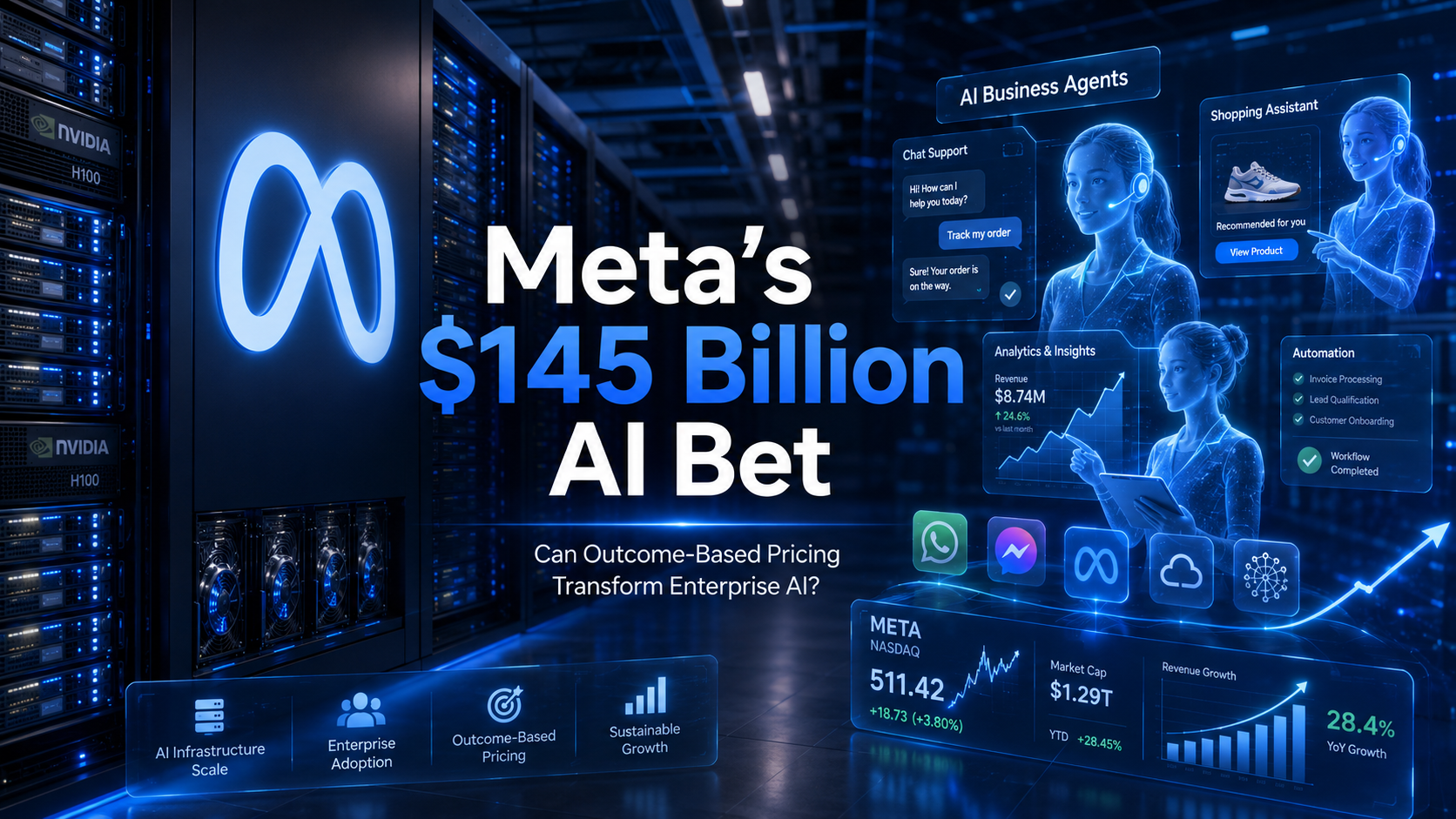
The announcement also comes at a time when Meta is investing aggressively in AI infrastructure. The company has raised its 2026 capital expenditure outlook to between $130 billion and $145 billion, while continuing to build new data centers, purchase AI hardware, and expand enterprise AI services. Although revenue continues to grow, investors remain focused on whether these investments can eventually create a second major business alongside Meta’s advertising empire.
In this article, we’ll explain what Meta actually announced, how its proposed pricing model works, why it matters for businesses, and whether this ambitious strategy can justify one of the largest AI investments in corporate history.
What Meta Actually Announced About AI Pricing
Several headlines suggested Meta is launching a “pay only when AI delivers results” pricing model. That description is only partly accurate.
During the earnings call, Zuckerberg explained that Meta expects to offer a combination of subscriptions, usage-based pricing, and eventually outcome-based pricing across different AI products. In other words, businesses won’t necessarily stop paying subscriptions. Instead, some AI services may gradually evolve toward charging based on measurable business outcomes.
According to Meta, its expanding AI portfolio includes:
- Business AI agents
- Enterprise APIs
- Productivity tools
- Coding assistants
- AI-powered customer support
- Personal AI assistants
- Future compute services
Official earnings transcript: This mixed approach reflects how different businesses use AI. A developer using an API may prefer paying for usage, while an online retailer may prefer paying only when an AI assistant generates qualified sales or customer conversions.
Why Meta Wants Businesses to Pay for Results
Meta already understands performance-based pricing better than almost any technology company.
Its advertising platform has spent years measuring clicks, purchases, conversions, impressions, and return on ad spend. That experience gives Meta a unique advantage if AI products eventually move toward charging based on measurable business performance.
Imagine a small online clothing store.
Instead of hiring additional customer service representatives, the company installs Meta Business Agent inside WhatsApp and Instagram. The AI answers product questions, recommends sizes, suggests accessories, and helps customers complete purchases.
If the AI directly contributes to verified sales, Meta could potentially charge according to those successful outcomes rather than simply billing for conversations.
For many businesses, this could reduce upfront risk because they pay more when the AI actually creates value.
Meta Business Agent Could Become the Center of Its Enterprise Strategy
Meta’s Business Agent is quickly becoming one of the company’s most important AI products.
The company says more than one million businesses already use these AI-powered business agents every week across WhatsApp and Messenger, with Instagram integration continuing to expand. Meta’s Business Agent announcement:
Rather than acting like a traditional chatbot, Meta wants these AI agents to function as virtual employees capable of handling tasks such as:
- Answering customer questions
- Recommending products
- Managing FAQs
- Scheduling appointments
- Following up on sales leads
- Summarizing conversations
- Helping businesses understand customer behavior
Zuckerberg even described a future “business-in-a-box” vision where AI manages much of a company’s digital customer communication automatically.
For small businesses that cannot afford large support teams, this could significantly reduce operating costs while improving response times.
Why Meta Is Spending So Much Money on AI
The pricing announcement cannot be understood without looking at Meta’s enormous infrastructure investment.
During its latest earnings report, Meta disclosed another increase in expected capital spending. Much of that money is being directed toward AI infrastructure rather than traditional software development.
The investment includes:
- Massive AI data centers
- High-performance GPU clusters
- Networking infrastructure
- Model training
- AI inference capacity
- Enterprise AI deployment
- Research into next-generation models
Meta’s official earnings release: Building advanced AI requires enormous computing power.
Training frontier language models can involve tens of thousands of GPUs running simultaneously for weeks or even months. Once those models are trained, businesses still require significant inference capacity every time customers interact with AI agents.
The Financial Challenge Facing Meta
While revenue continues growing, AI investment is putting pressure on Meta’s finances.
The company reported:
| Metric | Latest Result |
|---|---|
| Revenue | $60.8 Billion |
| Revenue Growth | 28% |
| Operating Expenses | $42.03 Billion |
| Net Income | $15.85 Billion |
| Capital Expenditure | $31.08 Billion |
| Free Cash Flow | $784 Million |
Those numbers reveal an important story.
Meta remains highly profitable, but free cash flow has fallen sharply because AI infrastructure requires enormous upfront investment.
Investors therefore want evidence that enterprise AI products can eventually generate meaningful recurring revenue rather than remaining expensive research projects.
Why Investors Are Watching Enterprise AI So Closely
Advertising still generates the overwhelming majority of Meta’s revenue.
Although AI already improves advertising performance behind the scenes, investors want additional income streams that diversify the business.
Enterprise AI offers exactly that opportunity.
Potential future revenue sources include:
- Business Agent subscriptions
- API usage fees
- AI productivity software
- Enterprise coding assistants
- Customer support automation
- Compute services
- AI consulting partnerships
If these products succeed, Meta could reduce its dependence on advertising while creating predictable enterprise software revenue.
How Outcome-Based AI Pricing Could Work
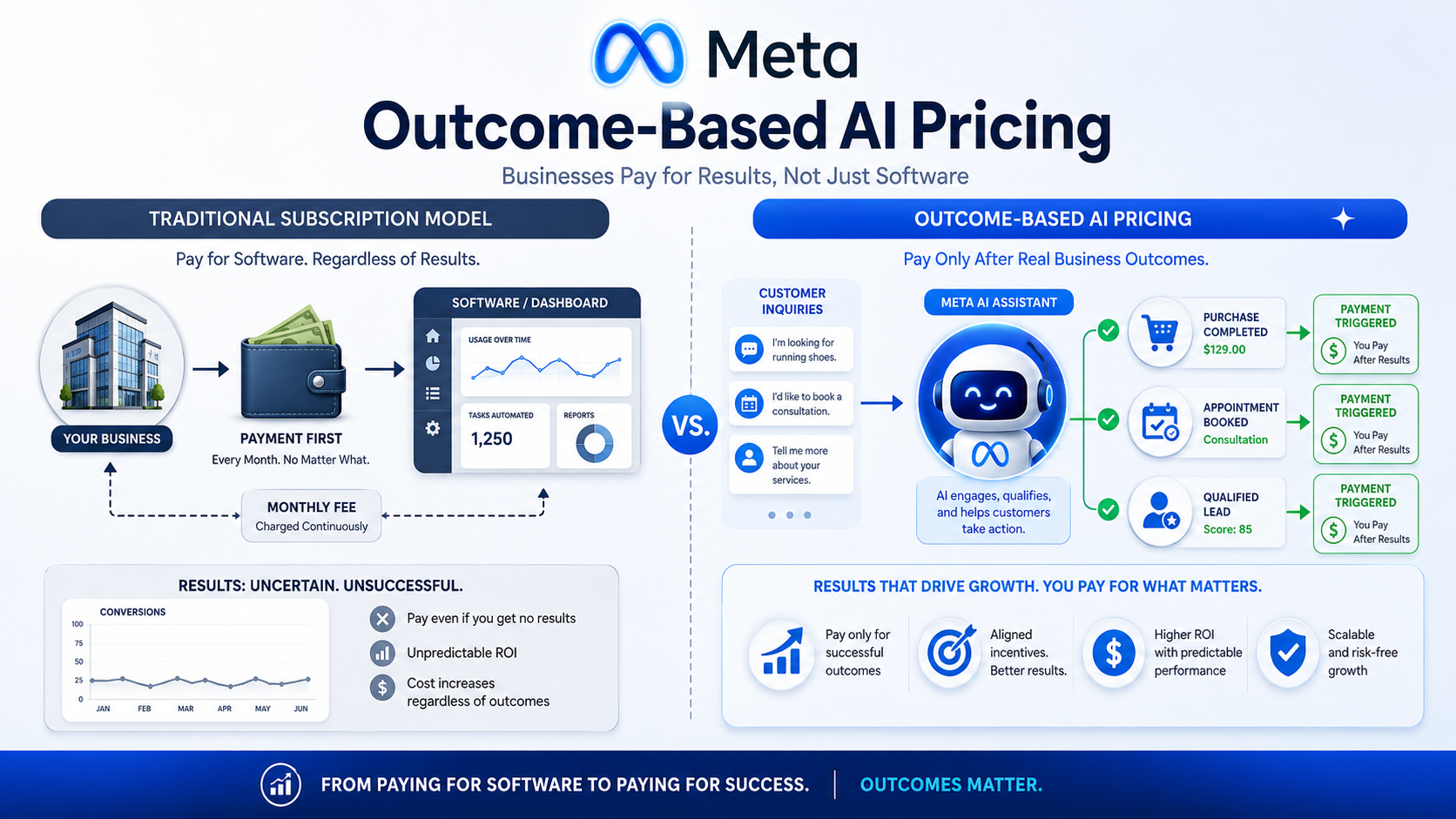
Traditional enterprise software generally follows one of three pricing models:
| Pricing Model | Customer Pays For |
|---|---|
| Subscription | Monthly or yearly access |
| Per Seat | Number of employees |
| Usage-Based | API requests or tokens |
Meta believes another model may become increasingly important:
| Outcome-Based Pricing |
|---|
| Customer pays when AI delivers measurable business value. |
That sounds simple, but measuring business outcomes is surprisingly complex.
Consider these examples:
| Business | Possible Outcome |
|---|---|
| Ecommerce | Completed purchase |
| Restaurant | Confirmed reservation |
| Dental Clinic | Appointment booked |
| Real Estate | Qualified lead |
| Customer Support | Issue resolved |
Each business measures success differently.
Meta would therefore need reliable systems capable of verifying whether its AI genuinely contributed to those outcomes before charging customers.
That technical challenge may ultimately prove harder than building the AI models themselves.
The Biggest Questions Still Haven’t Been Answered
Although Meta’s vision is compelling, several important questions remain unanswered.
Businesses still don’t know:
- What counts as a billable outcome?
- How will disputed conversions be handled?
- Will failed AI interactions be free?
- Can customers request human support?
- How will privacy regulations affect enterprise deployments?
- What industries will receive access first?
- How much will businesses actually pay?
Until Meta answers those questions, outcome-based pricing remains a promising strategy rather than a finalized commercial model.
Businesses considering enterprise AI should therefore view Zuckerberg’s announcement as a roadmap instead of a finished pricing system.
Can Outcome-Based AI Pricing Really Work?
Meta’s proposal sounds appealing because it aligns the company’s success with the success of its customers. Instead of charging businesses before they see results, the company wants AI to prove its value first. However, turning that idea into reality will not be simple.
Every business measures success differently. An online retailer may define success as a completed purchase, while a law firm might value a qualified consultation request. A hotel could focus on confirmed bookings, whereas a healthcare provider may only count successfully scheduled appointments.
Because every industry has unique goals, Meta would need flexible systems capable of measuring these outcomes accurately. That requires much more than an AI chatbot. It demands secure integrations with customer relationship management (CRM) platforms, payment systems, booking software, and analytics tools.
Another challenge is attribution. A customer rarely makes a purchase because of one interaction alone. They might discover a product through Instagram, ask questions on WhatsApp, visit the company’s website, compare competitors, and finally return days later to complete the purchase.
In that situation, determining how much credit the AI deserves becomes difficult. Businesses will expect transparent reporting before agreeing to pay based on AI-generated outcomes.
Despite these challenges, outcome-based pricing could become one of the most attractive enterprise AI models if Meta solves the measurement problem.
Why Small Businesses Could Benefit the Most
One of the strongest arguments for Meta’s strategy is that it lowers the financial risk for small businesses.
Many small companies hesitate to adopt AI because software subscriptions, implementation costs, and employee training require upfront investment. If an AI solution fails to deliver value, that money is lost.
Outcome-based pricing changes this equation.
Instead of paying thousands of pounds each year for software licenses, businesses may only pay when measurable value is created.
Imagine a local estate agency.
Rather than hiring additional customer support staff, it deploys a Meta AI Business Agent across Facebook Messenger, Instagram, and WhatsApp. The AI answers property enquiries 24 hours a day, collects buyer information, books property viewings, and qualifies leads before forwarding them to human agents.
If the AI consistently generates qualified leads, paying a percentage of that value may seem far more attractive than paying a fixed monthly software fee regardless of results.
This model also encourages Meta to continuously improve its AI because both the company and its customers benefit when performance improves.
How Meta Compares with Other AI Companies
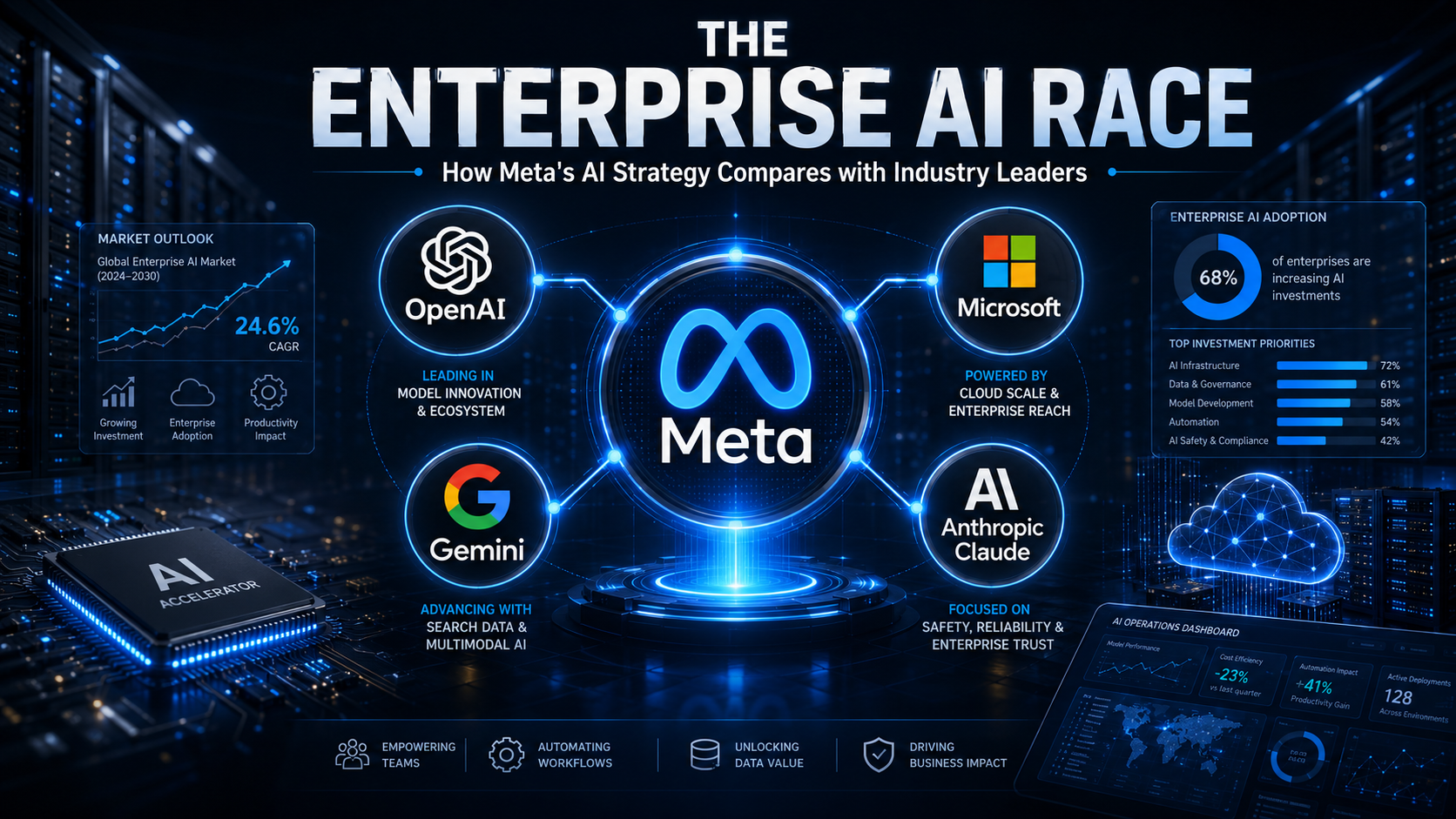
Meta is not the only technology company investing heavily in enterprise AI, but its business model differs from many competitors. OpenAI primarily earns revenue through ChatGPT subscriptions, enterprise licensing, and API usage. Microsoft combines AI services with Microsoft 365, Azure cloud infrastructure, GitHub Copilot, and enterprise software. Google focuses on Gemini subscriptions, Workspace AI features, Google Cloud AI services, and developer APIs. Anthropic has built its enterprise strategy around Claude subscriptions and API access for businesses.
Meta, however, has a unique advantage.
It already owns some of the world’s largest communication platforms, including Facebook, Instagram, Messenger, and WhatsApp. Millions of businesses already interact with customers on these platforms every day. Rather than asking businesses to adopt an entirely new ecosystem, Meta can introduce AI directly into communication channels companies already use. That significantly reduces the barriers to adoption.
If successful, Meta could create one of the largest enterprise AI ecosystems without requiring businesses to change their existing customer engagement workflows.
Can Meta Recover Its Massive AI Investment?
The biggest concern surrounding Meta’s AI strategy remains its enormous spending. The company plans to invest between $130 billion and $145 billion in AI infrastructure, making it one of the largest corporate technology investments ever announced. Building advanced AI models requires expensive graphics processing units (GPUs), specialised networking equipment, massive data centres, and continuous research.
These costs arrive long before meaningful revenue is generated. Investors therefore want evidence that AI products will eventually produce recurring income capable of supporting these investments. Fortunately for Meta, there are several potential revenue streams beyond advertising. These include enterprise AI agents, business messaging tools, premium AI assistants, developer APIs, productivity software, advertising optimisation, and future AI infrastructure services.
Instead of relying on one flagship product, Meta is building an entire AI ecosystem. If several of these services mature simultaneously, they could collectively generate billions in recurring annual revenue.
Risks That Could Slow Adoption
Despite the excitement surrounding AI agents, businesses remain cautious. Many organisations still worry about data privacy, regulatory compliance, inaccurate AI responses, and the challenge of integrating AI into existing workflows. European privacy regulations and increasing AI governance requirements may also influence how quickly enterprise AI products can expand internationally.
Another concern is customer trust.
Many consumers still prefer speaking with a human representative when dealing with financial services, healthcare, legal advice, or complex support requests. For AI agents to succeed, they must demonstrate reliability, transparency, and the ability to hand conversations over to human staff whenever necessary.
Meta will also face intense competition from established enterprise software providers that already have long-standing relationships with business customers.
What This Means for Businesses
For businesses, Meta’s latest announcement is less about immediate pricing changes and more about the future direction of enterprise AI. Companies should begin thinking about how AI agents could support customer service, lead generation, appointment scheduling, sales assistance, and operational efficiency over the next few years. Those that already communicate with customers through WhatsApp, Messenger, Facebook, or Instagram may be among the first to benefit from Meta’s expanding AI ecosystem.
Rather than replacing employees entirely, AI agents are likely to handle repetitive, high-volume tasks while human teams focus on complex conversations and relationship building.
This combination could improve customer satisfaction, reduce operating costs, and allow businesses to scale more efficiently.
Final Thoughts
Meta’s outcome-based AI pricing vision represents one of the most ambitious commercial strategies in the artificial intelligence industry.
Instead of simply selling AI software, the company wants to create systems that directly contribute to measurable business success. If businesses only pay when AI generates real value, adoption could accelerate rapidly across industries.
However, significant technical and operational challenges remain. Measuring outcomes accurately, attributing conversions fairly, protecting customer data, and maintaining transparency will all be essential if this pricing model is to succeed.
With AI infrastructure investment expected to reach $145 billion, Meta is making a long-term bet that enterprise AI will become a major pillar of its future business. Whether that investment delivers the expected returns will depend not only on the quality of its AI models but also on its ability to convince businesses that outcome-based pricing offers genuine value.
For now, Zuckerberg’s announcement should be viewed as a glimpse into the next phase of enterprise AI rather than a fully launched pricing system. Yet if Meta successfully executes this strategy, it could reshape how businesses purchase AI services and influence pricing models across the entire technology industry.