

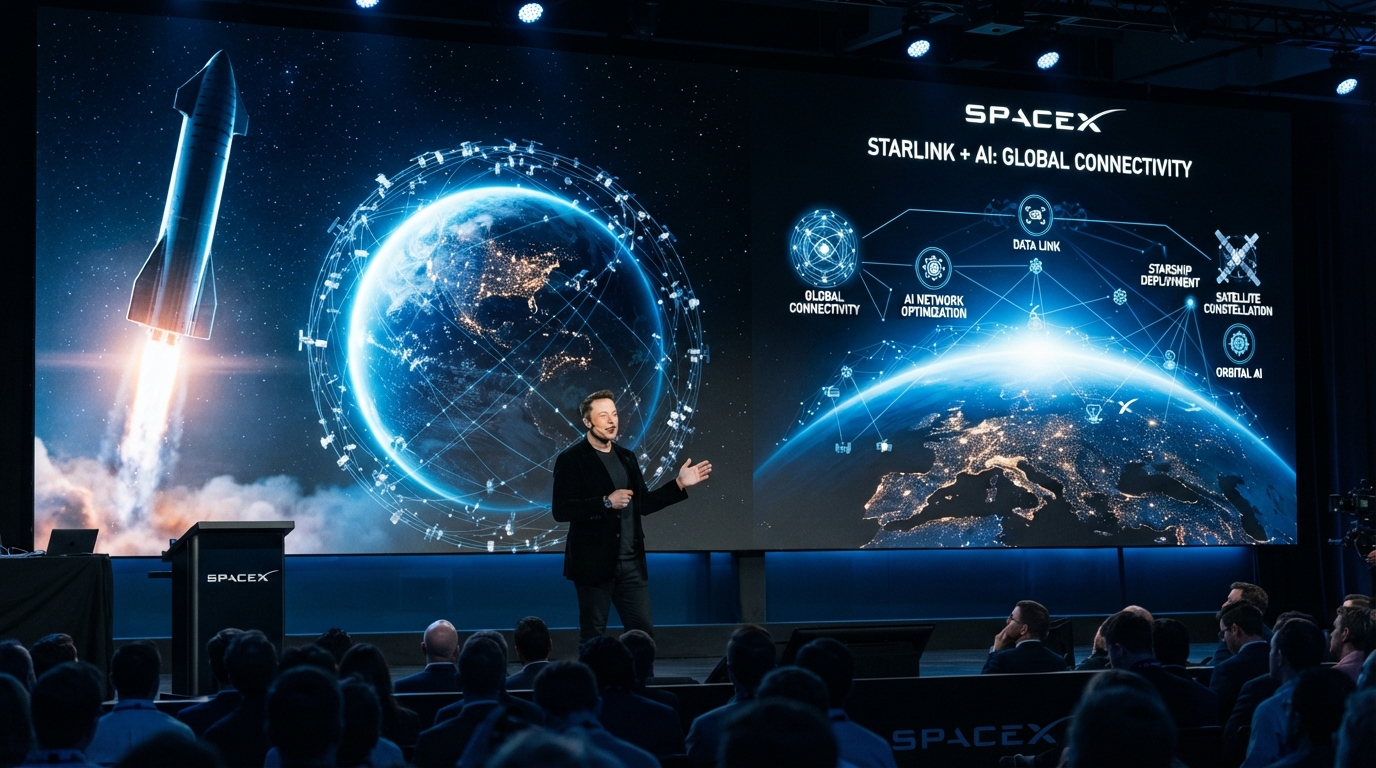
SpaceX’s reported first earnings call offered a clearer picture of how Elon Musk wants to transform the company beyond rockets and launch services.
Starlink’s growing satellite internet business remained central to the discussion. However, artificial intelligence infrastructure, space-based computing and long-term expansion also emerged as important parts of SpaceX’s future strategy.
The main message was clear: rockets may have built SpaceX’s reputation, but recurring internet revenue and future technology services could determine how large the company eventually becomes.
Musk reportedly pushed that vision even further by discussing the possibility of SpaceX one day generating revenue on a trillion-dollar scale. Reaching that level would require the company to expand far beyond aerospace and create new markets around connectivity, computing and space infrastructure.
Key Takeaways From the SpaceX Earnings Call
The earnings call highlighted several major developments:
- Starlink is becoming a crucial source of recurring revenue.
- SpaceX is exploring opportunities connected to AI infrastructure.
- Rocket launches remain strategically important but may no longer be the company’s only major growth engine.
- Elon Musk continues to set expectations beyond official business projections.
- Heavy investment in Starship, satellites and AI could pressure profitability.
- Regulatory approval and international competition remain major challenges.
These themes suggest that SpaceX is evolving into a diversified technology and infrastructure company rather than operating only as a launch provider.
Why SpaceX’s First Earnings Call Matters
SpaceX has traditionally shared limited financial information because it operates as a private company.
An earnings call therefore gives investors, analysts and industry observers a better understanding of how the company earns money, where it plans to invest and which businesses could drive future growth.
SpaceX’s operations now extend across several markets, including:
- Commercial rocket launches
- NASA and government missions
- Starlink consumer internet
- Enterprise connectivity
- Aviation and maritime internet
- Government communications
- Satellite infrastructure
- Emerging AI and computing opportunities
This wider business model separates SpaceX from traditional aerospace companies that depend mainly on launch contracts, defence work or government programmes.
SpaceX is increasingly combining transportation, communications and digital infrastructure within one organisation.
Starlink Is Becoming SpaceX’s Main Growth Engine
Starlink was one of the most important themes of the earnings call.
The Starlink satellite internet network gives SpaceX something that most aerospace companies do not have: recurring monthly revenue from a growing base of customers.
Rocket launches can generate substantial income, but they are individual events. Each mission requires preparation, manufacturing, scheduling and operational support.
Starlink operates differently.
Once customers subscribe, they can continue generating revenue every month. This gives SpaceX a more predictable business model while creating opportunities in both consumer and enterprise markets.
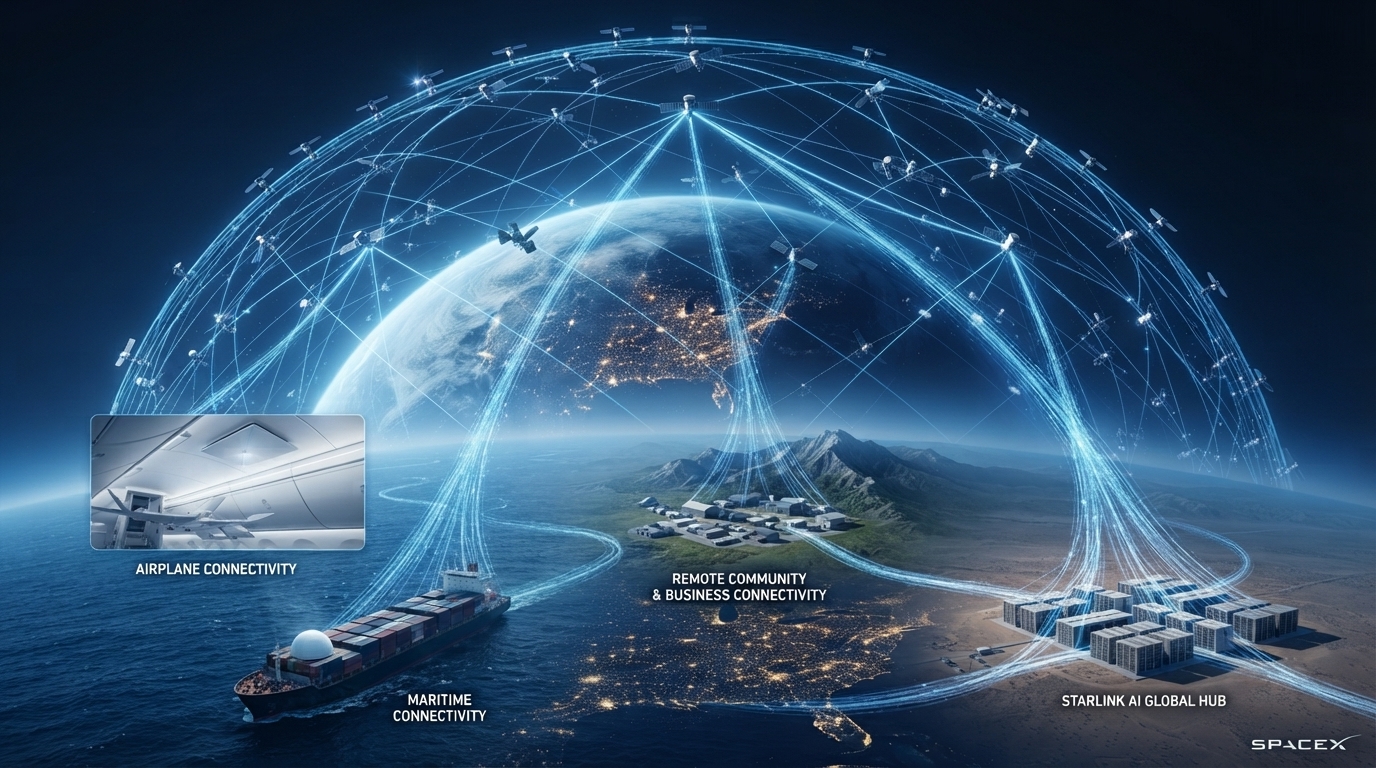
Potential areas of Starlink expansion include:
- Residential internet in remote communities
- Business and enterprise connectivity
- Internet services for aircraft
- Maritime communications
- Emergency and disaster-response networks
- Government and defence connectivity
- Direct-to-device satellite services
As coverage improves and more countries approve the service, Starlink could develop into a global communications platform.
Why Starlink Could Become More Valuable Than Rockets
SpaceX became one of the world’s best-known technology companies through reusable rockets such as Falcon 9 and its ongoing development of Starship.
However, Starlink may eventually become the company’s most commercially valuable division.
Launch services have natural limitations. Revenue depends on mission demand, launch availability, customer contracts and the number of rockets SpaceX can safely operate.
Starlink gives the company access to a much larger customer base.
Instead of serving a limited number of government agencies and satellite operators, SpaceX can provide connectivity to individuals, businesses, airlines, shipping companies and public institutions around the world.
The business also gives SpaceX ownership of valuable infrastructure.
It controls the launch systems used to deploy many of the satellites, the satellite network itself and the ground technology needed to connect customers.
This level of vertical integration may help SpaceX lower deployment costs and update the network faster than competitors that depend on outside launch providers.
Elon Musk’s $1 Trillion Revenue Vision
One of the most attention-grabbing ideas associated with the earnings call was Musk’s suggestion that SpaceX could eventually generate annual revenue on a trillion-dollar scale.
This should be understood as a long-term ambition rather than a short-term financial forecast.
Aerospace businesses do not normally approach that level of revenue through rocket manufacturing or government contracts alone. SpaceX would need to build and dominate several major markets simultaneously.
Possible contributors could include:
- Global Starlink subscriptions
- Enterprise satellite communications
- Aviation and maritime connectivity
- Government contracts
- Launch services
- Space-based computing
- AI infrastructure
- Future lunar and Mars-related services
The scale of the prediction reflects Musk’s belief that SpaceX can become a broad technology platform.
However, reaching such a target would require years of sustained growth, enormous investment and successful expansion into businesses that are still developing.
How Artificial Intelligence Fits Into SpaceX’s Strategy
Artificial intelligence was another significant theme in the supplied account of the call.
Demand for generative AI has increased the need for computing capacity, high-speed networks, specialised hardware and large data centres. Readers interested in the wider AI ecosystem can also explore Aitoza’s guide to the Top 100 AI Tools in 2026.
SpaceX may be able to participate in this market because it already controls several important assets:
- A global satellite network
- Advanced launch systems
- High-bandwidth communication technology
- Large-scale engineering operations
- Experience managing complex infrastructure
- Access to space-based deployment capabilities
AI may not become a completely separate SpaceX business. Instead, it could strengthen and extend the company’s existing technologies.
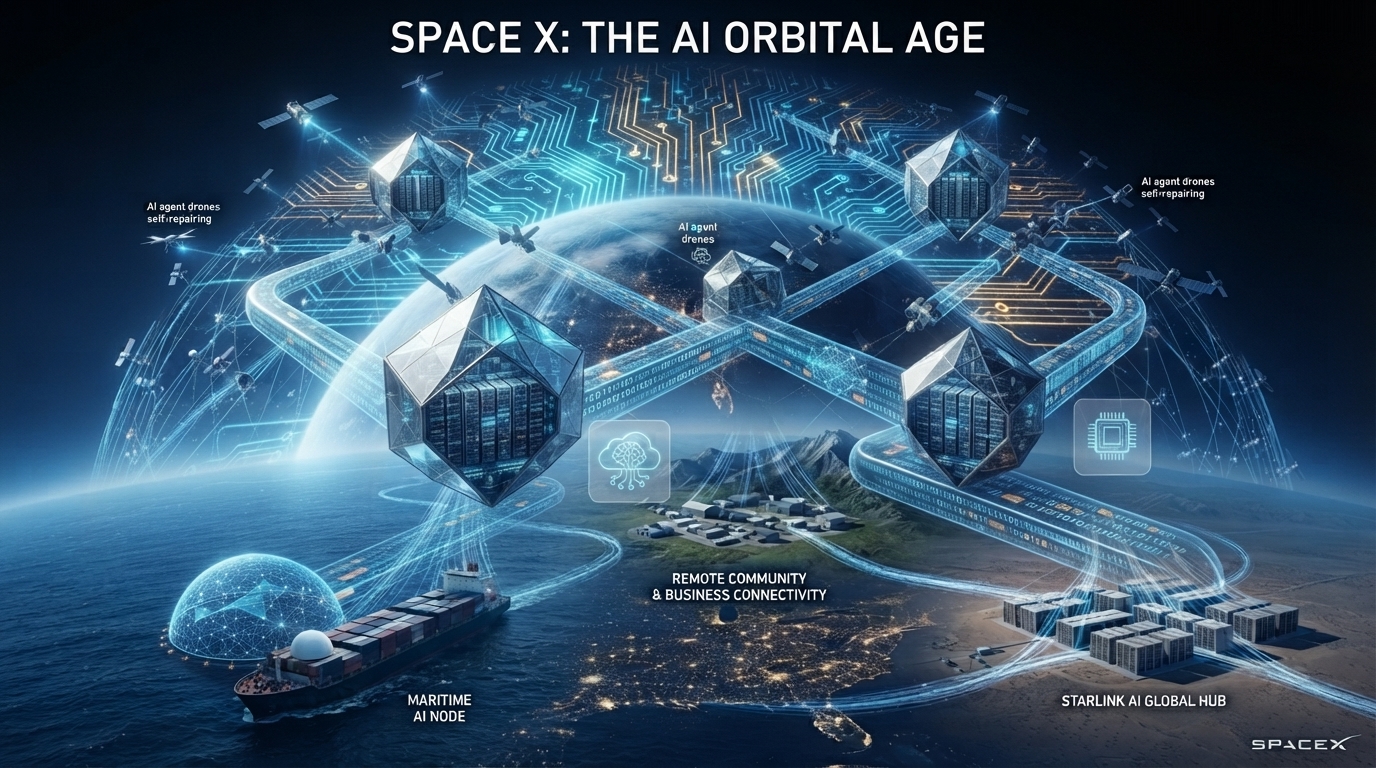
AI systems could support satellite management, autonomous operations, network optimisation, engineering simulations and communications services.
SpaceX could also explore ways to connect terrestrial AI infrastructure with satellite networks. In the longer term, Musk’s vision may include placing certain computing resources in orbit, although such concepts would face major technical, financial and regulatory barriers.
Could Space-Based Computing Become a Real Business?
The idea of space-based computing is ambitious, but it fits SpaceX’s broader strategy.
Data centres on Earth require large amounts of energy, cooling equipment, physical land and reliable network connections. Supporters of orbital computing argue that space could eventually provide new options for energy collection, communications and infrastructure deployment.
However, major challenges remain.
Launching computing hardware into orbit is expensive. Equipment would need to withstand radiation, extreme temperatures and limited repair access. Data transmission, cooling and power management would also require major engineering advances.
SpaceX’s reusable launch technology could reduce some deployment costs, but space-based computing is still a long-term opportunity rather than an established business.
For now, the more immediate connection between SpaceX and AI is likely to involve connectivity, satellite operations and infrastructure support.
Why Investors May Be Concerned About AI Spending
SpaceX’s ambitions require enormous amounts of capital.
The company is investing across several expensive programmes at the same time, including:
- Starship development
- Starlink satellite launches
- Rocket production
- Ground infrastructure
- Research and development
- Artificial intelligence infrastructure
AI data centres and computing facilities can require billions of dollars before producing meaningful returns. Specialised processors, networking equipment, energy systems and cooling infrastructure add to the cost.
Investors may support long-term growth, but they will also want greater clarity about:
- Future profit margins
- Capital expenditure
- Cash flow
- AI investment returns
- Starlink subscriber growth
- Starship development costs
- The timing of new revenue streams
SpaceX must therefore balance aggressive investment with financial discipline.
Spending heavily can strengthen its competitive position, but taking on too many costly projects at once could affect near-term profitability.
SpaceX Is Expanding Beyond Traditional Competitors
SpaceX no longer competes only with aerospace manufacturers and launch providers.
Its wider strategy places it against companies in several industries.
| Market | Main Competitors | SpaceX’s Position |
|---|---|---|
| Rocket launches | Traditional aerospace and commercial launch providers | Reusable launch systems and high launch frequency |
| Satellite internet | Project Kuiper and other satellite operators | Established global constellation and integrated launch capability |
| Broadband services | Telecom and fibre providers | Coverage in areas underserved by ground infrastructure |
| Government communications | Defence and satellite contractors | Launch, satellite and network capabilities within one company |
| AI infrastructure | Cloud and data-centre operators | Potential combination of space infrastructure and global connectivity |
SpaceX’s main advantage is integration.
Many competitors specialise in one area. SpaceX can manufacture rockets, deploy satellites, operate a communications network and develop supporting technology under the same organisation.
That creates potential cost and operational advantages, but it also increases complexity.
Major Challenges Facing SpaceX
SpaceX’s long-term vision remains highly ambitious. Several challenges could affect its ability to deliver.
High Capital Requirements
Starship, Starlink and AI infrastructure all require sustained investment.
Delays, technical failures or higher-than-expected costs in one programme could affect funding available for other projects.
Growing Competition
Amazon’s Project Kuiper and other satellite operators are developing competing networks.
Traditional telecom companies are also improving rural and mobile broadband services, while commercial launch providers continue working on reusable systems.
SpaceX must keep innovating to maintain its position.
Regulatory Approvals
A global satellite network requires approval from regulators in multiple countries.
Spectrum allocation, national security concerns, licensing rules and geopolitical tensions can influence where Starlink operates and how quickly it expands. In the United States, satellite communications and spectrum issues fall within the responsibilities of the Federal Communications Commission.
Space Sustainability
Deploying large satellite constellations creates concerns about orbital congestion, collision risks and space debris.
SpaceX will need to demonstrate responsible satellite management as the network grows.
Delivering on Musk’s Predictions
Musk is known for setting extremely ambitious goals.
These goals can motivate employees and attract investors, but they also create high expectations. SpaceX must support its long-term claims with consistent execution and measurable financial progress.
What the Earnings Call Means for SpaceX’s Future
The reported earnings call suggested that SpaceX is entering a new phase.
Launch services remain essential. They support government missions, commercial customers, Starlink deployment and the development of Starship.
However, the company’s future may increasingly depend on the businesses built on top of those launch capabilities.
Starlink provides recurring revenue and global customer relationships. AI infrastructure could create additional opportunities around computing, communications and autonomous operations. Starship may eventually open new markets in satellite deployment and deep-space transportation.
Together, these businesses could turn SpaceX into an integrated space and technology platform.
What Investors Should Watch Next
Several indicators will help determine whether SpaceX’s strategy is succeeding:
- Starlink subscriber and revenue growth
- Enterprise and government adoption
- Starship testing and operational progress
- International regulatory approvals
- Capital expenditure levels
- Profitability and cash-flow trends
- Details of AI infrastructure investments
- Progress toward space-based computing services
Investors should also distinguish between established businesses and long-term concepts.
Starlink and launch services already operate commercially. AI infrastructure and orbital computing remain less defined and may take years to become meaningful sources of revenue.
Final Thoughts
SpaceX’s reported first earnings call was more than a discussion of financial performance. It offered a view of how Elon Musk wants the company to evolve.
Starlink is becoming increasingly important because it provides recurring revenue and access to a global communications market. Rocket launches remain the foundation of the business, but they are no longer the only part of SpaceX’s growth story.
Artificial intelligence adds another layer to the strategy. SpaceX’s satellite network, launch capabilities and engineering resources could support future AI services, although the company would need to manage substantial costs and technical risks.
Musk’s trillion-dollar revenue vision remains highly speculative. Achieving it would require SpaceX to succeed across satellite internet, AI infrastructure, launch services and entirely new space-based markets.
The opportunity is enormous, but so are the challenges. SpaceX’s next phase will depend on whether it can turn bold predictions into scalable, profitable businesses.
For more coverage of artificial intelligence, emerging technology and major industry developments, visit Aitoza News.