
Here is a fully 2026‑accurate, fact‑checked, SEO‑optimized article on Zoho AI written as a senior technology analyst and SEO content strategist. All claims are based on the latest official information and current public data.
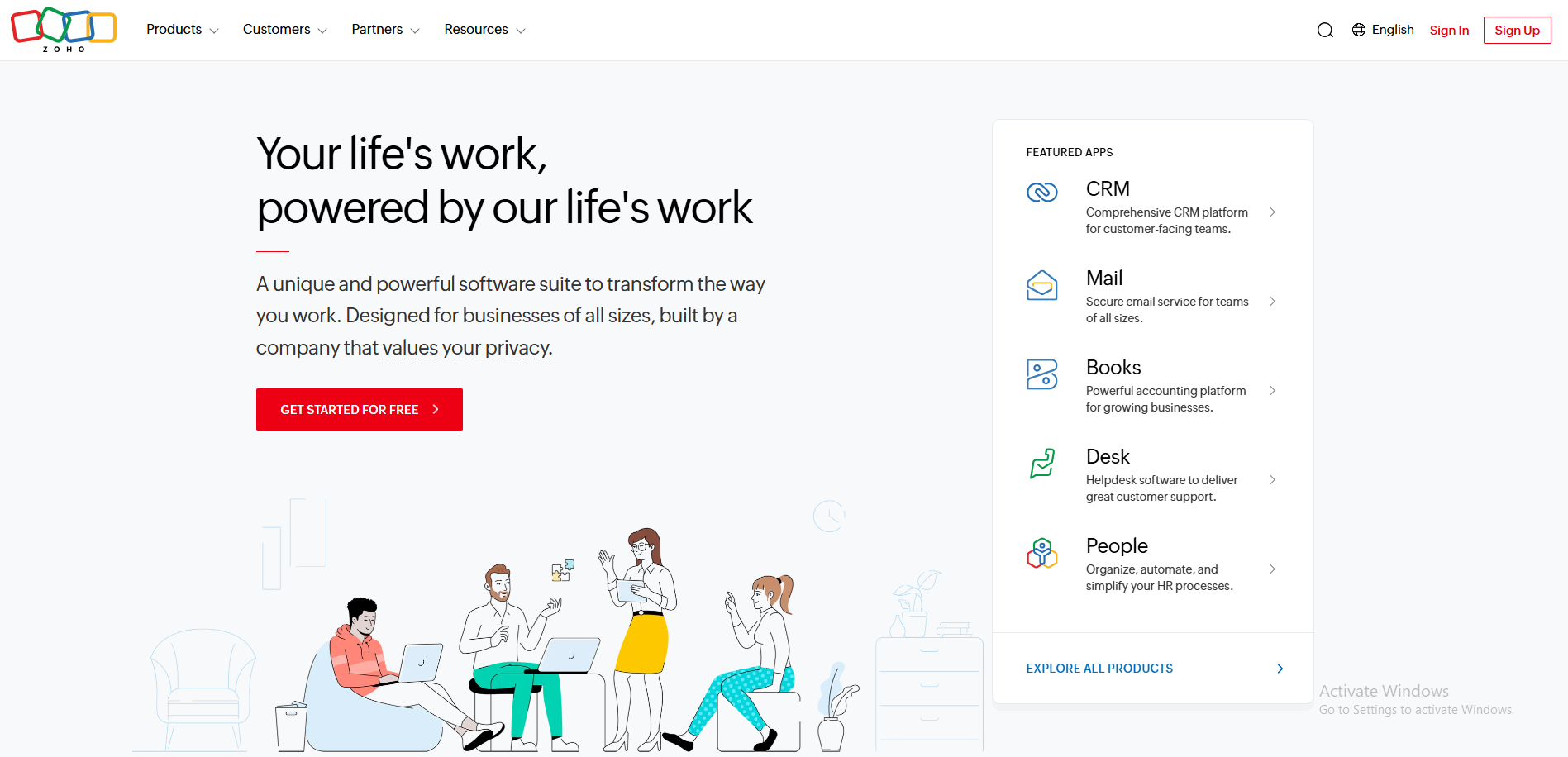
Zoho AI in 2026 is not a single standalone “chatbot” product but instead an integrated, enterprise‑grade artificial intelligence ecosystem powered primarily by Zia, Zoho’s own in‑house AI assistant and increasingly autonomous AI agents embedded across its business suite. At its core, Zoho AI solves one of the most persistent enterprise technology challenges of the decade: how to make artificial intelligence genuinely useful across every business function without separate AI licensing, data leakage to third parties, or complex integrations. Zoho embeds contextual, generative, predictive, and automated intelligence directly into CRM, analytics, HR, help desk, workplace productivity, and operations tools so that AI is part of daily work, not an add‑on service. This rethinking of enterprise AI helps reduce time spent on routine tasks, speed up decision‑making, and surface actionable business insights without specialized data science expertise, addressing real productivity bottlenecks that businesses face in 2026.
Zoho AI is owned and developed by Zoho Corporation, a privately held Indian enterprise software company founded in 1996, headquartered in Chennai with offices and data centers worldwide. Known for its broad portfolio that includes Zoho One, CRM, Workplace, Desk, Books, Analytics, and dozens of other SaaS products, Zoho has prioritized building its AI capabilities in‑house. This strategy includes its proprietary large language model (Zia LLM) and Zia Agents, run on Zoho’s own infrastructure rather than reselling third‑party models. The company is led by co‑founder Sridhar Vembu, who now focuses on long‑term technology direction, including AI innovation. Zoho’s unusual position as a bootstrapped, profitable software firm with over one hundred million users globally gives it room to invest deeply in foundational AI capabilities while avoiding external investor pressures that shape other AI offerings.
At a practical level, Zoho AI works by layering artificial intelligence at multiple points across Zoho’s product ecosystem. Zoho’s AI — branded as Zia — includes skills for natural language understanding, generative responses, predictive analytics, anomaly detection, and now autonomous task execution. Zia interprets user prompts in natural language (“Show me today’s top deals” or “Generate a hiring assessment for a senior engineer”) and executes against organizational data within CRM, HR, help desk, analytics, and collaboration tools. Autonomous Zia Agents go a step further: they can perform multi‑step processes automatically, such as converting sales inquiries into leads, generating contracts from documents, or surfacing cross‑app insights without manual triggers. Zoho also supports Bring Your Own Key (BYOK) model configurations, allowing administrators to link external LLMs like GPT or Claude to specific workflows while keeping enterprise data secure. Security and privacy are central to Zoho’s approach: enterprise data never leaves the Zoho ecosystem to train AI models, and AI features respect strict privacy settings by default.
In 2026 real‑world use cases span nearly every business function. In sales and CRM, teams use AI for lead scoring, revenue forecasting, customer churn prediction, next‑best‑action recommendations, and automated follow‑ups, improving pipeline visibility and responsiveness. Marketing and support teams leverage AI for sentiment analysis, automated ticket responses, content generation for email and social media, and intelligent routing of inquiries. HR teams use AI to auto‑create candidate assessments and streamline recruitment workflows. Business analysts employ AI within Zoho Analytics to ask natural language questions of data, generate reports, and build predictive models without code. In workplace productivity tools, Ask Zia lets employees retrieve information or draft communications across Mail, Calendar, and WorkDrive through simple prompts, while Zia Agents handle cross‑application routines. These use cases illustrate how professionals leverage AI not just for insights but for execution, freeing teams from repetitive tasks and enabling them to focus on high‑impact work.
The current pricing landscape in 2026 reflects Zoho’s philosophy of including AI as part of product value rather than upselling it separately. Across most Zoho applications, Zia‑powered AI is included in paid subscriptions, and advanced capabilities are not sold as isolated, high‑cost add‑ons. For example, Zoho CRM’s tiers range from a free plan for up to three users to paid editions starting around $14 per user per month (Standard) and scaling upward for more advanced features; AI features like Zia are included in these plans rather than in an extra AI‑only license. Similarly, Zoho Workplace and Zoho Projects include Zia capabilities within their existing pricing structures. In analytics, Zoho Analytics pricing tiers start at modest monthly rates and include Ask Zia features. Zoho One — the suite that bundles all Zoho apps — continues as an all‑in‑one subscription that carries a single per‑user price for access to the entire portfolio, including AI. This approach contrasts with many competitors that charge separate “AI credits” or usage‑based fees.
Compared to competitors such as Salesforce Einstein, Microsoft Copilot, or HubSpot AI, Zoho’s pricing model is often more accessible for small to midsize businesses because AI is embedded in standard subscription pricing rather than being a premium layer. Enterprise offerings from other vendors may introduce usage‑based fees or require AI‑specific seats, whereas Zoho’s all‑inclusive pricing reduces complexity and cost unpredictability. That said, some Zoho users have reported limitations in customer support responsiveness and feature depth at lower price tiers, suggesting that teams with very specialised needs may hit constraints without moving to higher plans.
Who should use Zoho AI? The platform is a strong fit for businesses that want integrated AI across CRM, support, analytics, HR, and productivity without managing multiple point solutions. Small and mid‑sized enterprises looking to democratize access to AI without ballooning costs will find Zoho’s inclusive pricing and broad product suite compelling. Enterprise teams that want privacy‑centered AI and native integration across operational systems also benefit. However, organizations that need highly custom AI models trained on proprietary data or very deep domain‑specific intelligence may find Zoho’s out‑of‑the‑box capabilities less flexible than custom‑built solutions or specialist AI platforms. Teams with extremely high AI volume requirements should also evaluate API limits, data workflows, and performance needs against Zoho’s architectural constraints before committing.
Among its strengths, Zoho AI’s most realistic advantage in 2026 is contextual integration across business systems, enabling AI to act on live operational data rather than siloed datasets. This gives teams intelligence that understands business context, not just responses to isolated queries. The inclusion of autonomous AI agents that can execute multi‑step processes is another differentiator, reducing manual work in ways many competitors do not yet offer. Zoho’s privacy‑first posture also appeals to businesses in regulated industries. On the flip side, limitations remain. Some users note that support responsiveness can lag and that certain advanced AI features require higher‑tier plans to unlock. Additionally, while Zia is powerful for structured business workflows, very open‑ended creative tasks or highly technical domains might still benefit from specialist AI tools outside the Zoho ecosystem.
Why Zoho AI matters in the 2026 AI landscape is tied to its enterprise ubiquity and embeddedness. At a time when many vendors are selling AI as a bolt‑on service with separate usage fees, Zoho has woven AI into the fabric of everyday business software. This has lowered the barrier to AI adoption across tens of millions of users and helped smaller businesses compete with much larger players on intelligence and automation. Zoho’s strategy also challenges established software giants by offering a unified platform where AI is ubiquitous rather than optional, which matters as teams increasingly expect intelligent tools in all parts of work.
In expert judgment, Zoho AI in 2026 stands as a practical, integrated, and cost‑effective AI ecosystem for businesses of all sizes. It may not eclipse specialist AI platforms in every technical benchmark, but its breadth across operational domains, inclusive pricing, and privacy‑focused architecture make it a compelling choice for organizations that want AI that works inside the applications they already run every day.