
What SpyFu AI is and what problem it solves in 2026
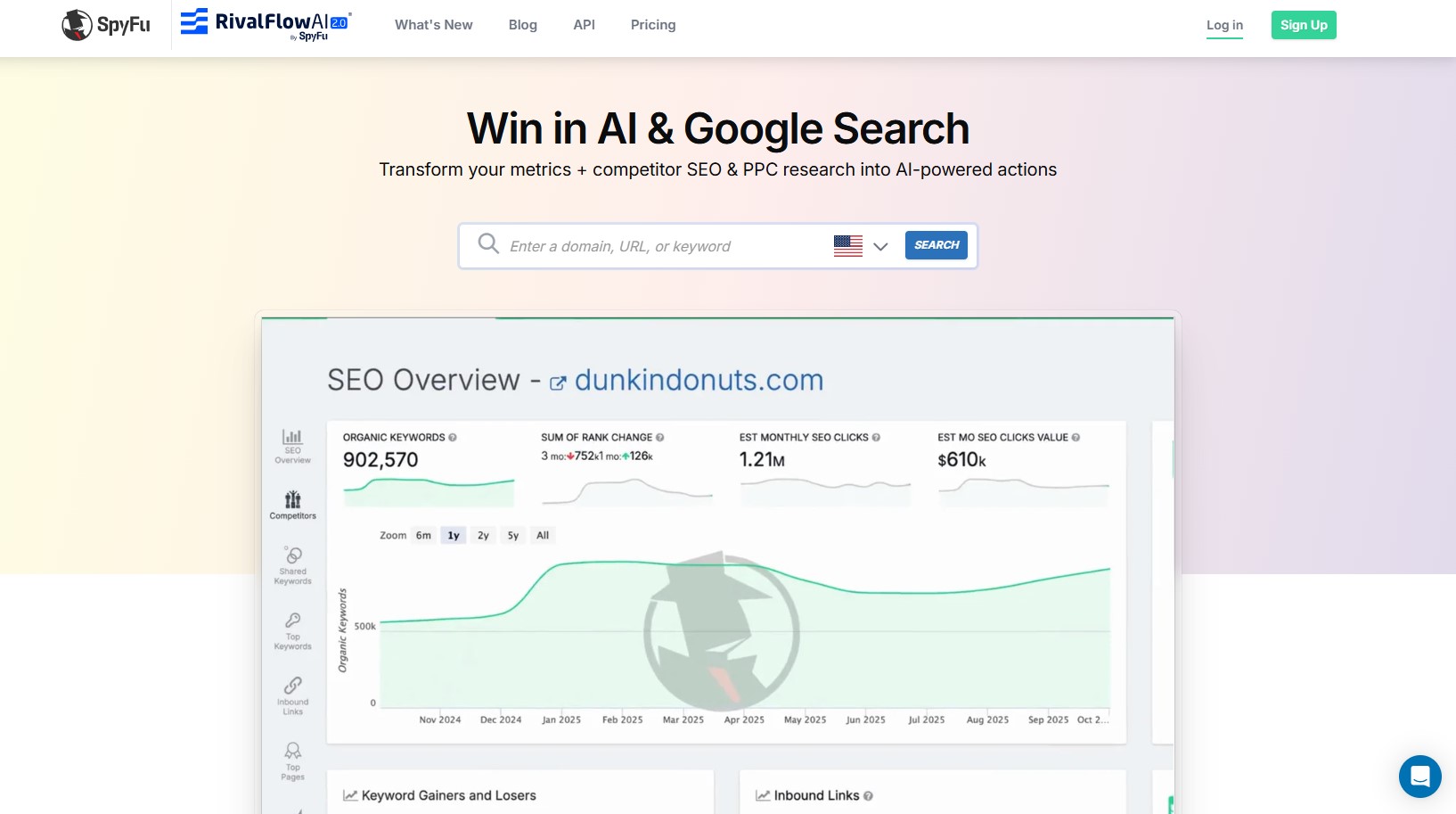
SpyFu AI refers to the artificial‑intelligence‑enhanced features embedded within the SpyFu competitive intelligence platform, a tool focused on SEO and PPC competitor research, keyword intelligence, and market insight. Where traditional SEO tools require manual data digging and pattern recognition, SpyFu AI uses machine learning and AI‑powered workflows such as RivalFlow AI content optimization and SpyFu GPT integration to accelerate insight generation, identify content gaps, and help teams interpret rich competitor data more quickly. This makes competitor analysis, keyword discovery, and PPC strategy development more efficient, especially for small and mid‑sized teams that need actionable guidance without manual guesswork.
Who owns SpyFu AI and the company behind it
SpyFu is developed by SpyFu, Inc., a US‑based competitive intelligence software company founded in 2005 and headquartered in Scottsdale, Arizona. Initially launched as GoogSpy, the company has evolved into a well‑established competitor research platform that mines historical and current SEO and PPC data through its extensive web‑scraped database spanning nearly two decades. The AI features are part of the core product rather than a separate spin‑off.
How SpyFu AI actually works
SpyFu AI builds on the platform’s foundational competitive datasets — including organic keyword rankings, PPC keyword purchases, ad history, and domain performance metrics — by integrating machine learning‑driven recommendations. Two prominent AI components include RivalFlow AI, which analyzes competitor keyword and content profiles to suggest improvements for existing pages, and SpyFu GPT, which allows users to query SpyFu’s data directly within ChatGPT or similar AI environments to get synthesized insights and recommendations. These features combine structured SEO/PPC data with AI analysis to help users find “gaps” in their own content relative to competitors and prioritize topics or strategies that are likely to win visibility.
Real‑world use cases and how professionals use it today
Professionals use SpyFu AI in several practical ways: SEO and PPC specialists identify competitor keywords and historical ad strategies to inform organic and paid campaigns. Content strategists leverage RivalFlow AI to uncover topic gaps, refine existing pages, and boost relevance against competitors’ high‑performing content. Agencies use SpyFu GPT integrations during client pitches to demonstrate competitor landscape insights quickly. Small business marketers rely on the platform’s data to decide which keywords are worth targeting and how competitors’ spending patterns align with their marketing goals. These workflows reduce the need for separate AI content tools and manual analysis.
Current pricing plans in 2026
SpyFu’s pricing in 2026 includes several tiers. A Free for Life tier provides limited access with up to 10 results per search. Paid offerings start with the Basic plan at approximately $39 per month ($29/mo billed annually), which includes core competitor and keyword research with data export limits. The Pro + AI plan — typically around $119 per month — adds unlimited search results, RivalFlow AI content optimization, SpyFu GPT/ChatGPT integration, AI‑powered insights, and API credits. The Team/Agency plan starts around $249 per month, supporting multiple users, extended projects, unlimited reporting, and enhanced AI capabilities for larger teams.
How pricing compares to competitors
Compared with larger SEO and analytics suites like Semrush or Ahrefs, SpyFu is generally more affordable and accessible for small and mid‑sized teams focused on competitive research rather than full‑stack SEO ecosystems. Its pricing tiers deliberately pack competitive intelligence and AI‑augmented insight features at price points lower than many enterprise SEO tools, though some competitors include broader audit, backlink, or technical SEO features that SpyFu doesn’t emphasize as strongly. Thus, SpyFu is often seen as value‑oriented for competitive and PPC insight rather than deep, all‑around SEO analysis.
Who should use SpyFu AI and who should not
SpyFu AI is well suited for small to mid‑sized marketing teams, freelancers, and agencies that need to understand competitor SEO and ad strategies quickly and cost‑effectively. It’s especially useful where competitive keyword research and PPC intelligence are central to decision‑making and where budget constraints preclude larger, enterprise‑priced tools. It’s less appropriate for larger enterprises needing full technical SEO audits, comprehensive backlink analysis, or real‑time rank tracking, as those domains are not SpyFu’s core strength and can be better served by other platforms with broader SEO toolkits.
Strengths, limitations, and realistic drawbacks
SpyFu’s strengths include deep historical competitive data, robust PPC insights, adaptive AI‑augmented recommendations, and generally lower pricing compared with full‑stack SEO suites. RivalFlow AI and SpyFu GPT integrate search data with AI analysis in ways that help deliver action‑oriented insights quickly. Limitations include less emphasis on technical SEO and backlink depth than competitors, occasional data accuracy differences depending on market geography, and a UI that some users find less modern compared with big‑brand tools. Its AI features are useful but not as extensive as standalone content generation platforms or broader analytics suites.
How SpyFu AI is being used in businesses and teams
In real workflows, teams embed SpyFu AI into monthly strategy reviews to benchmark competitor visibility, refine keyword targeting, and adjust PPC bids based on historical ad insight. Agencies use the AI features to generate custom reports and pitch decks showing opportunity gaps. Content teams use RivalFlow AI to identify missing semantic topics and develop content briefs that fill those gaps. Small business owners integrate SpyFu into planning tools to decide where to prioritize organic investment versus paid search based on competitor histories and projected opportunities.
Why SpyFu AI matters in the AI landscape in 2026
By 2026, the SEO landscape is characterized by a mix of traditional search competition and AI‑augmented discovery behavior. Tools that layer AI insights on top of rich competitive data help teams interpret not only what competitors are doing but why those strategies are effective and how to respond. SpyFu AI matters because it brings accessible AI‑augmented competitive intelligence to teams that might otherwise lack resources for larger analytics platforms, enabling evidence‑based decision‑making without excessive price barriers.
A concise final verdict written like a human expert
SpyFu AI in 2026 remains a practical competitive intelligence platform that balances affordability, depth of historical SEO/PPC insight, and AI‑augmented recommendations. Its suite is especially compelling for small to mid‑sized agencies and content marketers who need to understand competitor strategy quickly and cost‑effectively. While it doesn’t replace full enterprise SEO suites with comprehensive backlinks or technical audits, its AI enhancements — especially RivalFlow AI and SpyFu GPT — add meaningful value by turning data into actionable insights without steep manual effort, making it a solid choice for teams prioritizing competitive visibility and tactical optimization.