

What Peppertype (often referred to as Peppertype.ai or Pepper Content) is and what problem it solves in 2026
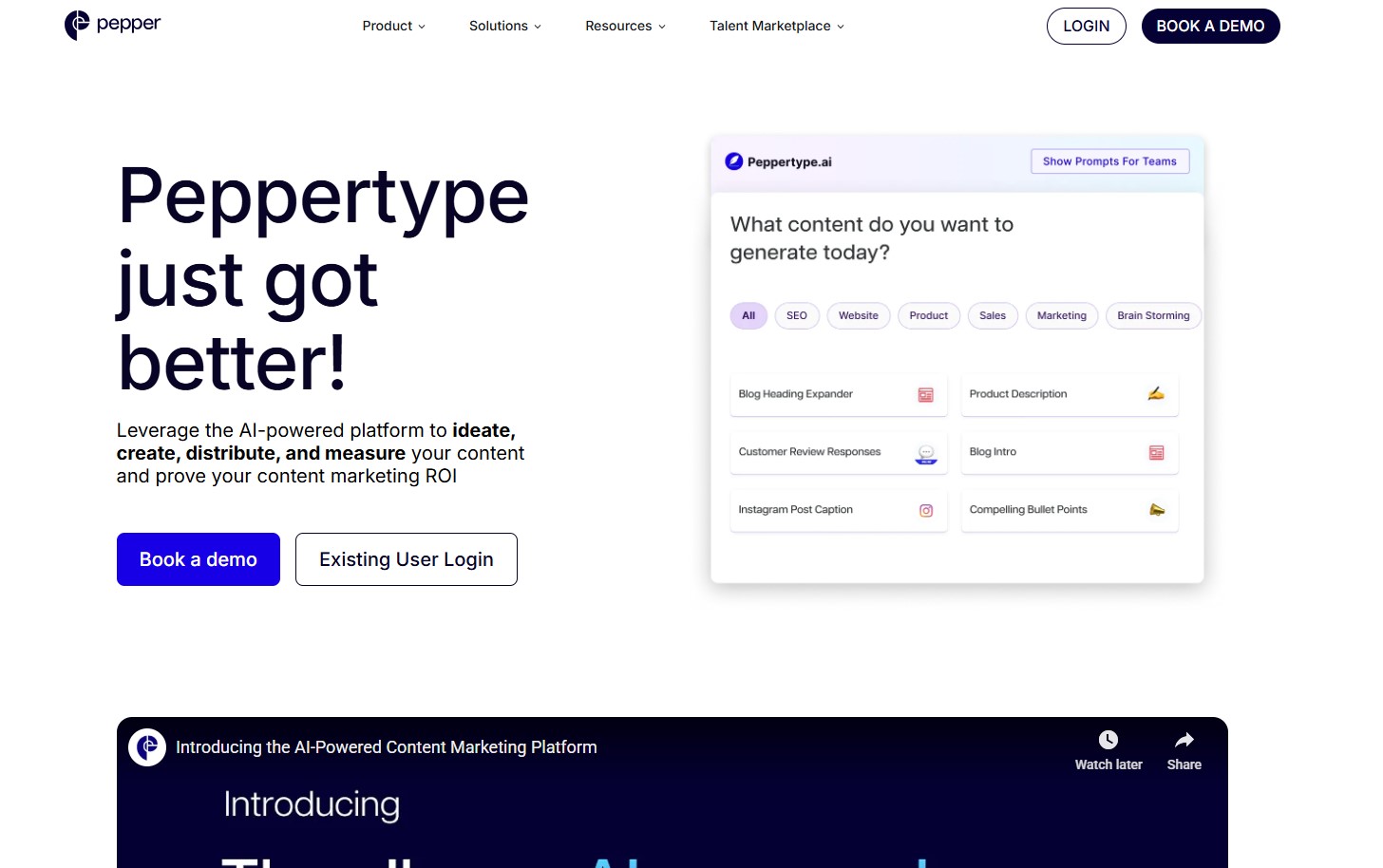
Peppertype is an AI-assisted content generation platform designed to help writers, marketers, agencies, and small teams create marketing and copywriting content quickly. It focuses on generating short-to-mid-form marketing text — such as social media posts, email copy, product descriptions, ad creative, headlines, and other conversion-oriented pieces — using AI templates and customizable prompts to reduce the time and effort involved in producing consistent written content. In a crowded field of AI writing assistants, its core appeal lies in simplicity and speed for routine content tasks, helping users overcome writer’s block and produce working drafts rapidly.
Who owns Peppertype and the company behind it
Peppertype was developed as part of Pepper Content, a content-technology company that historically operated “Peppertype.ai” as its flagship AI writing assistant. The company positions itself as a provider of content-creation tools for professionals and teams, with a focus on streamlined copywriting workflows. Reviews and user commentary indicate the platform has evolved over time, with business strategy and pricing updates affecting user experiences in recent years.
How Peppertype actually works
Peppertype runs on advanced natural language processing (NLP) models that generate text based on user inputs and selected content templates. Users typically choose a content type — like “ad copy,” “social post,” or “product description” — enter a brief description or keywords, and Peppertype’s AI produces multiple draft versions that can be refined further. The platform’s interface emphasizes quick generation and template flexibility, letting users iterate quickly between versions. While it’s capable of generating a variety of content formats, its strength is not in long-form SEO articles or deep research-oriented writing but in short-form and structured marketing copy.
Real-world use cases and how professionals use it today
Professionals use Peppertype for tasks like brainstorming ideas, generating multiple versions of marketing text, and supporting social media campaigns. Freelancers and small business owners often use it to produce landing page snippets, email sequences, and promotional copy without hiring external writers. The interface and template library make it useful for marketing teams that prioritize speed over deep editorial workflows. Some reviewers note its output can serve as a starting point that still requires human editing and refinement.
Current pricing plans in 2026
In 2026, pricing for Peppertype tends to start with a Starter or Personal plan around $35 per month, which typically includes a word-generation quota (for example, 50,000 words per seat per month) and access to 20+ content templates. A Growth or Team plan is often priced around $199 per month and includes collaboration, access control, and project sharing features for multiple users. An Enterprise tier with custom pricing is available for larger organizations with bulk content needs, custom models, and advanced integrations. A free trial or freemium tier is commonly offered so users can test capabilities before purchasing.
How pricing compares to competitors
Peppertype’s entry-level pricing is competitive with mid-tier AI content tools, aligning with other general-purpose AI writers that cost roughly $30–$50 per month. However, compared with larger SEO and long-form content platforms, it’s more narrowly focused and may deliver less comprehensive workflows (such as deep SEO optimization or long-form blog production). Team plans at higher price points can feel expensive relative to alternatives that offer broader feature sets or more advanced analytics. Small users focused on basic copy generation may find simpler tools more cost-effective if they don’t need collaboration or agency-level features.
Who should use Peppertype and who should not
Peppertype is best suited for marketers, small teams, freelance copywriters, and business owners who need rapid marketing copy generation and structured short-form text templates. It fits well when the goal is to produce many variations quickly or brainstorm ideas. It’s less appropriate for deep long-form content production, SEO research and optimization, or enterprise analytics workflows — functions better served by platforms focused on SEO strategy, content audits, and editorial planning.
Strengths, limitations, and realistic drawbacks
Among Peppertype’s strengths are its ease of use, fast content generation, and template-driven workflows that help teams produce routine marketing text. Limitations include variable output quality that often requires manual editing, limited support for long-form writing, and a lack of deep editorial features like built-in plagiarism checking, advanced formatting, or integrated SEO guidance in many entry plans. Some users also report that support and feature updates lag behind competitors, and there are mixed signals about customer service responsiveness in 2026.
How Peppertype is being used in businesses and teams
Teams integrate Peppertype into content ideation and rapid copy generation workflows. Agencies may use it to produce multiple ad copy versions and social media captions for clients, while startups and small teams use it to bulk out product descriptions and email frameworks. Because it’s designed for short-form and structured marketing content, many businesses combine Peppertype with other tools for SEO strategy, analytics, and long-form editorial workflows.
Why Peppertype matters in the AI landscape in 2026
By 2026, the AI content market is crowded, but tools that prioritize speed, ease of use, and template-based content workflows remain valuable for specific segments like marketing and short-form copywork. Peppertype matters because it caters to users who want quick draft output across common marketing formats without steep learning curves, especially for teams that generate volume content across multiple channels. Its continued presence, positive user reviews, and template library contribute to its relevance despite intense competition.
A concise final verdict written like a human expert
Peppertype in 2026 remains a practical AI writing assistant with a focus on short-to-mid-form marketing and copy tasks. It’s fast, relatively easy to use, and useful for teams that need high-velocity content generation across templates — but it’s not a full editorial ecosystem or a deep SEO content planner. Users should view Peppertype as a starting point for content drafts that often require human refinement and, for comprehensive workflows, pair it with specialized SEO or long-form editing tools. Its pricing and features are competitive within its niche, though potential buyers should carefully assess whether its template-centric focus matches their content strategy needs before committing.