

What Meltwater AI is and what problem it solves in 2026
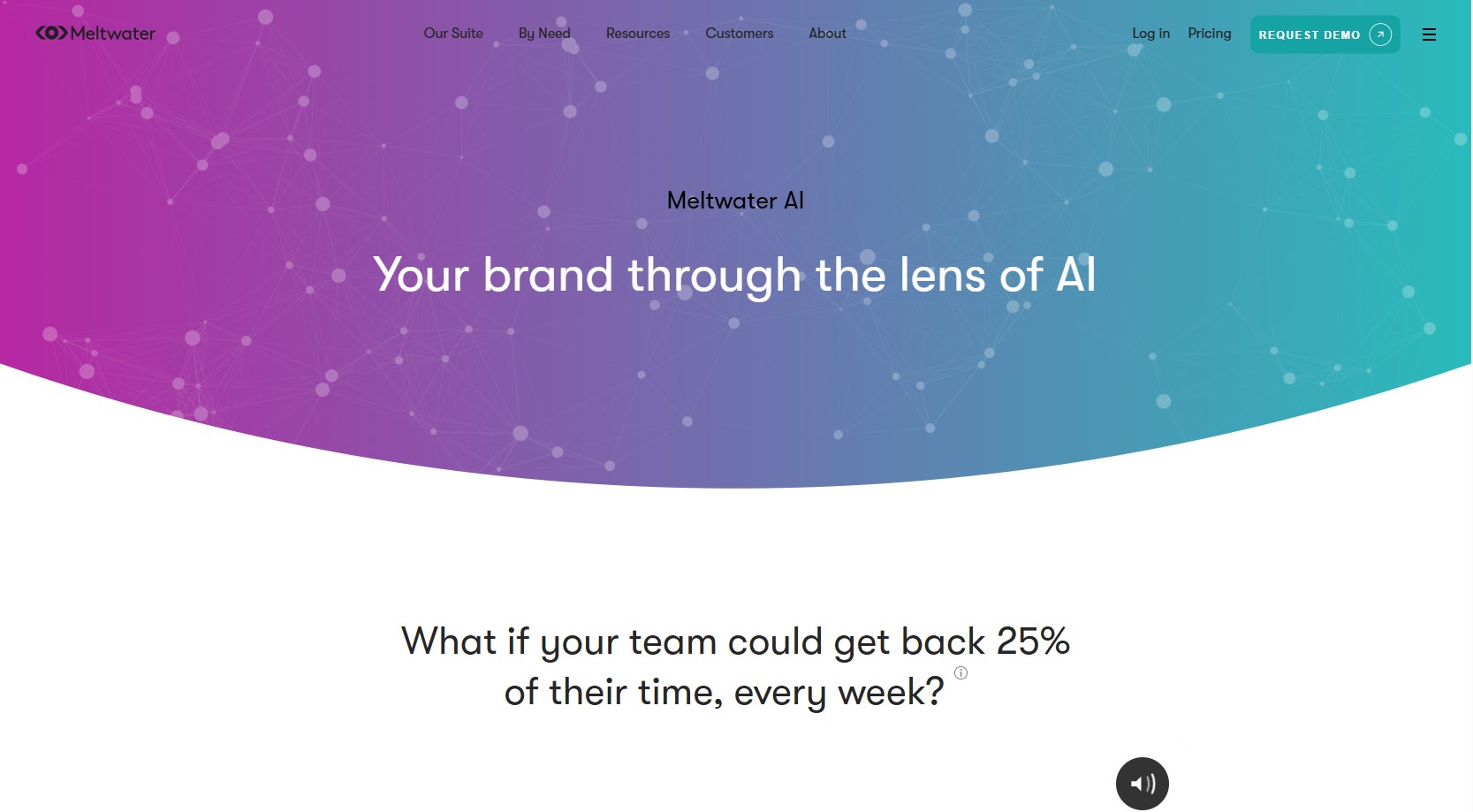
Meltwater AI refers to the suite of generative‑AI and AI‑augmented intelligence capabilities embedded within the Meltwater media, social, and consumer intelligence platform. It helps organizations sift through enormous volumes of communications data — including social media conversations, news articles, blogs, forums, and AI‑generated content — to extract meaningful insights, detect trends, monitor brand reputation, and support media and marketing decisions more efficiently. Rather than forcing communicators to manually interpret data, Meltwater’s AI automates insight generation, makes sense of signal vs. noise, and accelerates time‑to‑strategic‑decision in roles like PR, marketing, communications, customer experience, and research.
Who owns Meltwater AI and the company behind it
Meltwater AI is developed by Meltwater, a global technology company headquartered in San Francisco and part of a widely used suite of media intelligence solutions. Meltwater has been a leader in social listening, media monitoring, and consumer intelligence for decades and operates with thousands of enterprise customers around the world. Its AI innovations — including tools like Mira and GenAI Lens — reflect long‑term investments in machine learning and analytics designed for large‑scale brand and market insight workflows.
How Meltwater AI actually works
Meltwater AI combines proprietary data aggregation, natural language processing (NLP), large language models (LLMs), and purpose‑built algorithms to transform unstructured media and social data into actionable intelligence. Key components include Mira, an intelligent AI assistant that uses agent‑style reasoning to surface insights and recommendations; GenAI Lens, which tracks how major LLMs discuss brands and competitors; Discovery AI Assistant, highlighting spikes, sentiment changes, and emergent themes; and contextual AI cards and explainers that help analysts understand why certain patterns appear in data. These features reduce reliance on manual Boolean searches or dashboards, and instead deliver conversational insights and explanations tailored to business needs.
Real‑world use cases and how professionals use it today
Organizations use Meltwater AI for brand reputation monitoring, crisis detection, competitive tracking, and strategic narrative shaping. Marketing and PR teams rely on AI‑generated summaries, sentiment analysis, and trend spotting to refine campaigns and messaging. Customer experience and support functions integrate social signals into customer care platforms to respond to issues in real time. Analysts and insights professionals use AI explainers and predictive analytics to anticipate conversation shifts or emerging topics before they escalate, while influencer and media teams leverage AI‑powered discovery tools to identify relevant voices and outreach opportunities.
Current pricing plans in 2026
Meltwater does not publish fixed pricing tiers; instead, it offers customized enterprise pricing based on factors such as data volume, geographic coverage, number of users, modules selected (e.g., social listening, AI insights, influencer marketing), onboarding needs, and support levels. Typical implementations for mid‑sized teams and enterprises often range in the tens of thousands of dollars annually (commonly estimated around $6,000–$12,000+ for lighter packages and $15,000–$100,000+ for fuller enterprise suites), with no publicly disclosed self‑serve pricing page and most purchases requiring a sales engagement.
How pricing compares to competitors
Compared to lightweight social listening or content generators, Meltwater’s pricing is in the enterprise segment, reflecting its comprehensive data coverage, customizable analytics, and AI‑augmented insight features. Smaller tools (e.g., basic social schedulers or entry monitoring platforms) may cost hundreds per month, while Meltwater’s solutions start at higher levels because they serve cross‑functional teams and include governance, global datasets, and advanced AI. Direct competitors in this tier include platforms like Brandwatch and Sprinklr, which also price via custom enterprise contracts rather than fixed tiers.
Who should use Meltwater AI and who should not
Meltwater AI is best suited for enterprises, global brands, agencies, research teams, and communications departments that need deep, real‑time insights at scale and want to incorporate media intelligence into strategic decision‑making. It supports cross‑channel monitoring, crisis detection, narrative strategy, and predictive trend spotting — tasks that demand breadth and depth of data as well as AI‑augmented analytics. It is less appropriate for small teams or individual creators with minimal monitoring needs or constrained budgets, who are likely better served by simpler social listening or AI writing tools with transparent pricing.
Strengths, limitations, and realistic drawbacks
Meltwater AI’s strengths include massive data coverage, advanced generative insights, comprehensive brand and LLM visibility, and the ability to surface patterns humans might miss manually. Its tools like Mira simplify complex workflows and help teams act faster on insights. Limitations include the higher cost, a steep learning curve, and the fact that most packages require a custom sales negotiation rather than transparent pricing. Some users also report that social monitoring accuracy can vary with platform APIs, and like any sophisticated analytics system, it requires organizational investment to fully leverage.
How Meltwater AI is being used in businesses and teams
In practice, Meltwater AI is embedded in weekly editorial and analytics cycles where teams monitor brand sentiment, competitor narratives, emerging trends, and crisis signals. Enterprise teams leverage unified dashboards that combine paid, owned, and earned media analytics, and feed insights into broader business planning. PR professionals use AI assistance for drafting and refining messaging, while advanced users incorporate GenAI Lens to understand how their brand appears in large language model responses, a capability uniquely relevant as AI becomes a primary discovery channel for consumers.
Why Meltwater AI matters in the AI landscape in 2026
As generative AI becomes central to how consumers discover and interpret information, tools that combine media intelligence with AI insights are critical. Meltwater AI matters because it goes beyond basic content generation — it applies AI to understand narratives, forecast trends, and gauge brand perception across both traditional and AI‑driven channels, enabling businesses to respond proactively rather than reactively. Its GenAI Lens capability, for example, offers unprecedented transparency into how brands are portrayed in responses from major large language models, addressing a strategic blind spot in an increasingly AI‑mediated information landscape.
A concise final verdict written like a human expert
Meltwater AI in 2026 is a sophisticated enterprise media and consumer intelligence platform that leverages AI agents, generative insights, and predictive analytics to help large organizations cut through vast amounts of data and make informed decisions. It’s not a plug‑and‑play tool for simple content tasks; its value lies in strategic insights, narrative understanding, and enterprise‑scale monitoring across channels and AI environments. Its pricing and complexity match that strategic focus, making it a strong choice for global brands and analytics teams, while smaller teams should evaluate simpler, more transparent tools unless their needs justify the deeper intelligence and broader data coverage Meltwater provides.