
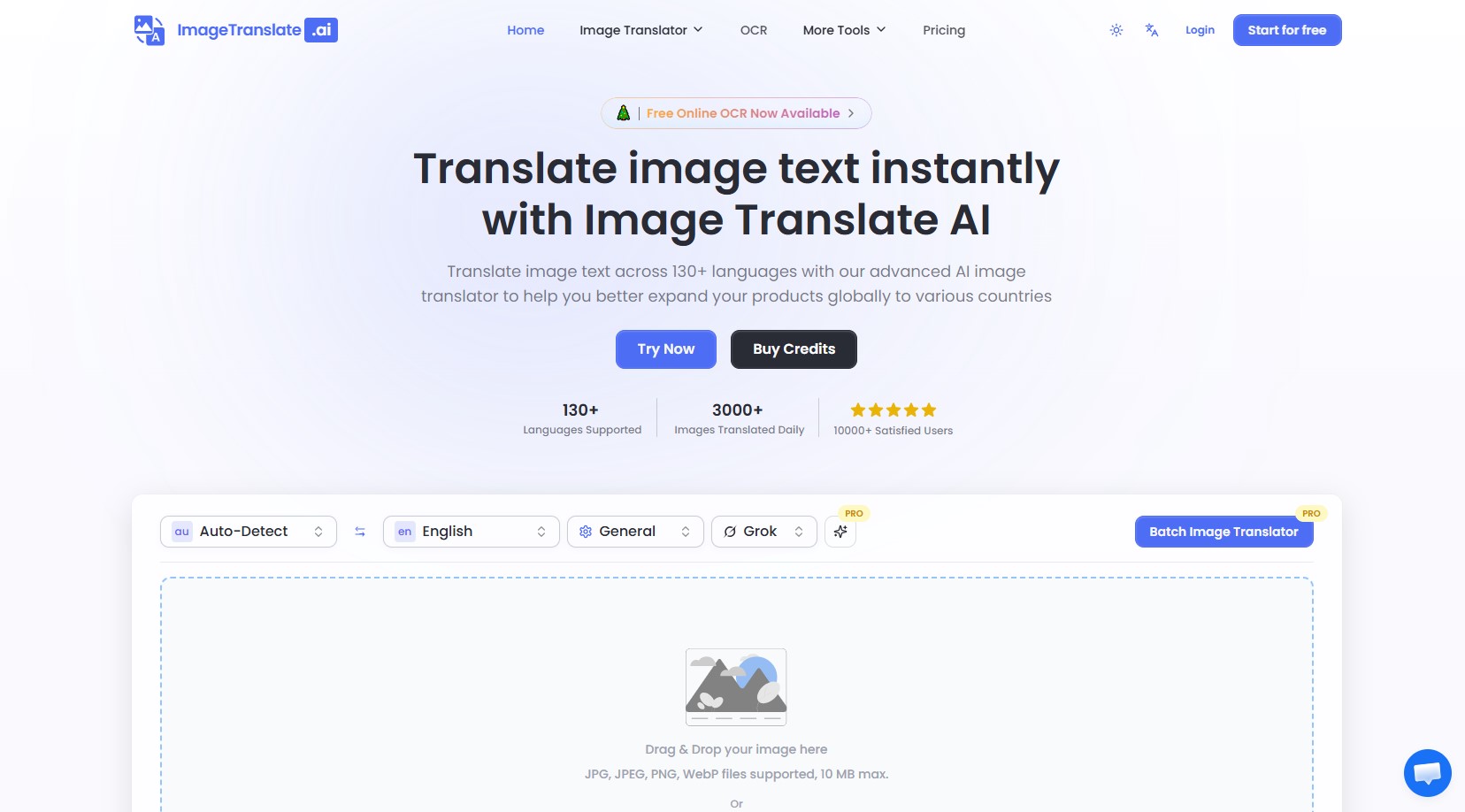

ImageTranslate.AI is an AI-powered image text translation platform that uses advanced computer vision, OCR (optical character recognition), and neural machine translation to convert text embedded in images into other languages while preserving the original layout, fonts, and visual integrity of the image. It addresses a common challenge many businesses and creators face: translating visual content such as product images, marketing graphics, screenshots, menus, comics, and scanned documents without manual design work or loss of visual quality. Instead of extracting text and translating it separately, ImageTranslate.AI reconstructs the translated text back into the image so that the output looks professionally redesigned, not patched or edited manually. This layout-preserving translation capability is especially useful for international e-commerce, global marketing, and content localization workflows in 2026.
The company behind ImageTranslate.AI is ImageTranslate.AI, an independent software provider that focuses on building AI-driven tools for visual language translation. As of 2026 the platform has gained traction with over 10,000 global users and offers a suite of features beyond simple translation, including batch processing, manga and comics translation modes, OCR text extraction, and auxiliary tools such as text removal and image-to-text conversion. Its development reflects user demand for automated, high-quality multilingual image processing without relying on traditional design software.
At a technical level, ImageTranslate.AI combines optical character recognition with advanced neural translation models such as Gemini, GPT-based engines, Claude, Grok, and DeepSeek to detect text in an uploaded image, translate the text into the target language, and then regenerate the image with the translated text embedded in place of the original. The platform supports more than 130 source and target languages and can automatically detect the source language. The system also includes modes optimized for specific use cases such as e-commerce graphics or light novel/manga panels, enabling specialized handling of text layouts and design elements. Batch image translation lets users process multiple images across multiple languages at once, and the interface is web-based, requiring only a browser and internet connection.
In real-world use cases, ImageTranslate.AI is widely adopted by e-commerce sellers who need to translate product labels, packaging, and promotional images for global marketplaces without ordering separate design revisions for each language market. Marketing teams use it to localize ad assets and social media content more quickly than using manual translation and design tools. Content creators and publishers translate visual content for multilingual audiences, while comics and manga translators use the dedicated mode to preserve speech bubble positioning and artwork style. Enterprises with large catalogs of visual content benefit from batch translation workflows that can turn around hundreds or thousands of images efficiently.
ImageTranslate.AI’s pricing structure in 2026 follows a credit-based model with multiple tiers. The Free tier provides 20 basic credits per day for personal use, allowing a limited number of image translations without a subscription. Paid plans scale from the Pro plan (around $8.30–$9.99 per month billed annually) with 5,000 advanced credits per month, up through the Premium tier (about $16.60–$19.99 per month) offering 12,000 advanced credits and features such as batch translation and priority support, to the Ultra plan (approximately $83.30–$99.90 per month) with 80,000 advanced credits and custom support for teams and enterprise users. Credits determine how many translations and operations a user can perform, and the advanced credits unlock higher-quality models and batch capabilities. All paid tiers include commercial use rights, while the Free tier is limited to personal use.
Compared with competitors in the AI image translation space, ImageTranslate.AI’s pricing is competitive: its entry-level plans are affordable for small businesses and individual professionals, and its higher-tier credits accommodate enterprise workloads without extreme cost. Alternatives may focus solely on text extraction or basic OCR, but few combine layout-preserving translation, batch processing, and specialized manga or e-commerce modes in a single platform at similar price points. Users needing deep integration with APIs or workflows may still evaluate other enterprise translation services, but for visual content localization ImageTranslate.AI offers strong value.
ImageTranslate.AI is best suited for e-commerce businesses, marketing agencies, localization teams, content publishers, and creators who regularly handle visual content that needs multilingual adaptation. It is less suitable for users who only require occasional text translation without design needs, or for those working primarily with video content rather than still images. Deep post-editing by a designer will still be required for highly complex graphical work or branding style adjustments beyond simple text replacement.
Major strengths of ImageTranslate.AI include its broad language support (130+ languages), layout preservation that keeps original fonts and design elements, and batch translation capabilities that save significant manual effort. Limitations include dependency on a credit system that may be confusing to new users, potential variation in translation nuance for highly technical texts, and the fact that the platform is primarily web-based with no dedicated desktop app. Users should assess output quality for their specific language pairs and design complexity before scaling to high volumes.
Businesses and teams use ImageTranslate.AI to streamline global marketing campaigns, localize e-commerce imagery across regions, translate instructional graphics for international audiences, and reduce reliance on manual translation plus graphic design workflows. Localization teams often integrate it with content management systems and marketing calendars so that visual assets are translated and deployed systematically across markets.
ImageTranslate.AI matters in the 2026 AI landscape because visual content remains central to communication, and translating that content efficiently is a persistent barrier in global digital strategies. Automated tools that preserve design integrity while offering high-quality NLP translation help organizations maintain brand consistency and accelerate time to market in multilingual contexts. As AI continues to improve OCR precision and contextual translation accuracy, platforms like ImageTranslate.AI exemplify how AI can reduce manual overhead in cross-language visual content production.
In summary, ImageTranslate.AI is a mature and practical AI image translation platform that combines OCR, multilingual translation, layout reconstruction, and batch processing to help businesses and creators localize visual text content at scale. For teams with ongoing visual localization needs, it provides a cost-effective alternative to manual translation plus design reconstruction workflows in 2026.