
What Clearscope is and what problem it solves in 2026
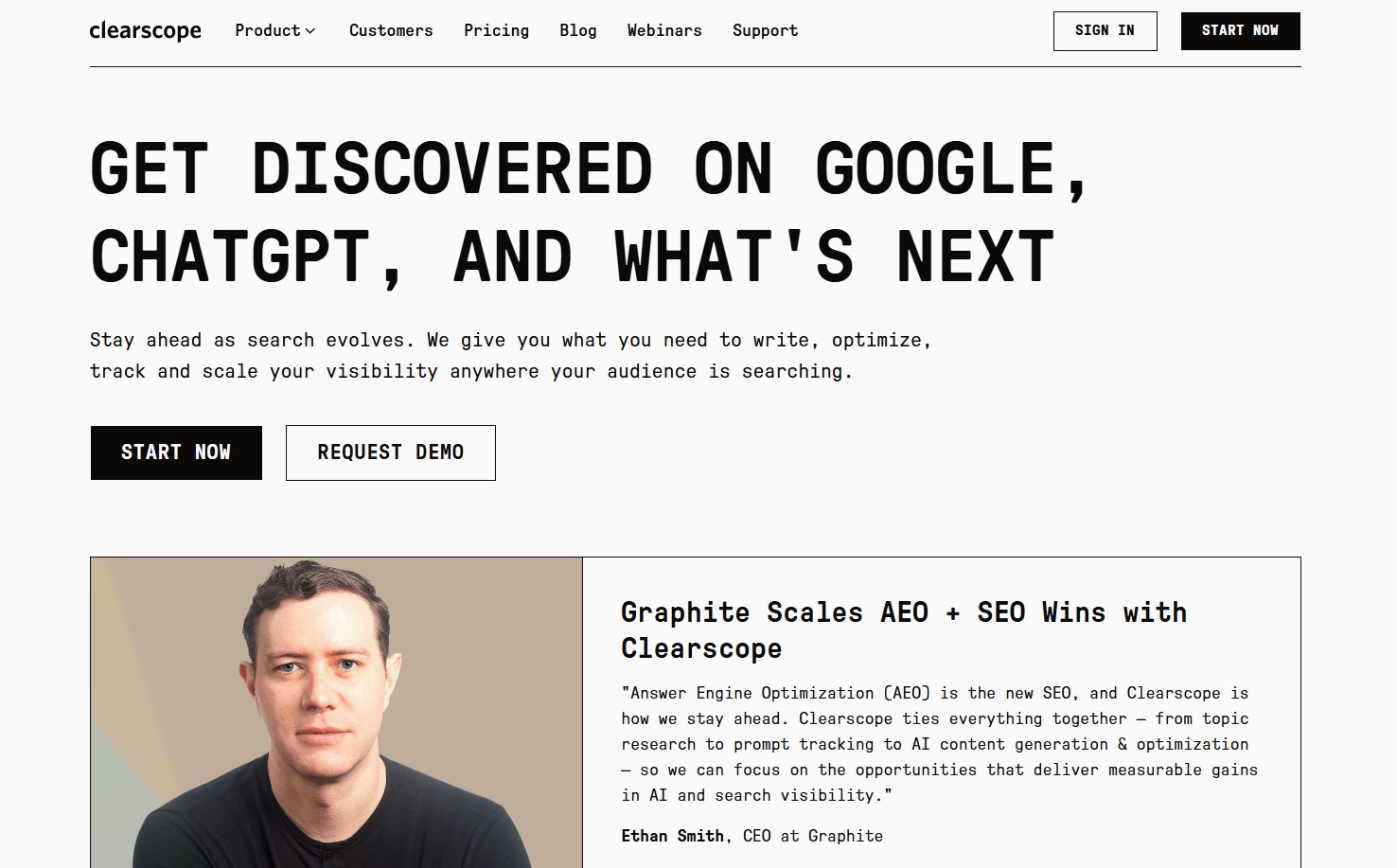
Clearscope is a professional-grade AI-powered content optimization and SEO platform used by content marketers, SEO teams, and editorial operations to produce and refine search-optimized content that performs well both on traditional search engines and emerging AI-driven discovery systems. Instead of guessing which keywords or topics to cover, Clearscope analyzes top-ranking competitor content, extracts key phrases and semantic themes, and provides real-time, data-driven recommendations to guide writers as they draft and revise content. This reduces manual SEO research, closes content gaps, and helps teams create material that meets modern search intent and AI visibility standards.
Who owns Clearscope and the company behind it
Clearscope is developed by Clearscope, Inc., a privately held technology company based in San Francisco, California. The platform has been widely adopted by SEO professionals and agencies around the world. It draws on advanced natural language processing (NLP) and machine learning techniques to analyze large volumes of competitor content and web data, providing actionable SEO and optimization insights. The company emphasizes clarity, usability, and integration with content workflows, positioning itself as a staple for teams scaling optimized content production.
How Clearscope actually works
Clearscope works by connecting to real-world search engine result pages (SERPs) and applying NLP and statistical analysis to identify which terms, topics, and semantic concepts top-ranking content uses most effectively. Users enter a target keyword or topic, and the platform generates optimization reports (now called Drafts) that include recommended terms to include, ideal content length, relevant questions to answer, and competitor benchmarks. Writers can craft or paste drafts into Clearscope’s interface or integrated editors such as Google Docs, Microsoft Word, and WordPress and receive real-time feedback on keyword usage, readability, semantic relevance, and structure. The platform also supports content inventory tracking and performance monitoring, helping teams maintain freshness and capitalize on opportunities as search behavior evolves.
Real-world use cases and how professionals use it today
SEO specialists use Clearscope to build content that ranks more consistently by following its data-backed recommendations. Content marketers and agencies rely on it to standardize writing quality across teams and clients, producing optimized blog posts, landing pages, and long-form articles. Editorial teams use the real-time grading and suggestions to refine drafts before publication, and larger businesses embed Clearscope into their content workflows to protect and grow organic traffic. E-commerce teams use it to optimize category and product content for search visibility, and content operations groups leverage inventory and decay insights to schedule refreshes and prioritize updates.
Current pricing plans in 2026
As of 2026, Clearscope offers a tiered pricing structure with transparent monthly subscriptions and no long-term contracts:
The Essentials plan starts at about $129 per month, providing a set number of tracked topics, topic explorations, AI Drafts, and content inventory pages. The Business plan is around $399 per month, adding larger inventory limits and a dedicated account manager. An Enterprise tier is available with custom pricing for high-volume use cases, including custom credits, single sign-on (SSO), crawler whitelisting, and tailored agreements. Every plan supports unlimited users and projects and includes training and priority support.
How pricing compares to competitors
Compared with competitors like Surfer SEO, Ahrefs, and Semrush, Clearscope sits mid-to-upper range on pricing. Its entry tier is higher than some SEO and AI content tools, reflecting its focus on deep content optimization and visibility tracking rather than basic keyword research. Surfer SEO’s entry plans may be lower, but Clearscope’s bundled AI visibility and optimization features — without per-article fees — offer value for teams prioritizing quality and discoverability across search and AI platforms. Larger enterprise SEO suites may include more technical SEO and backlink analysis tools, so professional teams often pair Clearscope with those systems for a complete stack.
Who should use Clearscope and who should not
Clearscope is ideal for SEO professionals, content marketers, agencies, editorial teams, and businesses with regular content production needs who want to produce high-quality, search-optimized material efficiently. It’s especially appropriate where content volume and consistency matter and where teams need data-driven guidance rather than manual keyword lists. Smaller solo bloggers or individuals with infrequent content needs may find the pricing and feature set more than necessary and might prefer lighter tools. Additionally, organizations needing deep technical SEO, backlink analysis, or predictive forecasting tools should complement Clearscope with other specialized platforms.
Strengths, limitations, and realistic drawbacks
Clearscope’s strengths lie in its real-time content guidance, semantic relevance analysis, and search intent focus that help teams produce comprehensive, competitive content. It integrates with common writing environments and supports collaborative, multi-project workflows. Limitations include its higher entry price point and the absence of extensive backlink analysis or technical SEO features that broader SEO suites offer. Some users also find the limits on topic explorations and draft credits restrictive depending on workload. The tool does not automate publishing; it enhances the drafting and optimization stages, so human editorial oversight remains essential.
How Clearscope is being used in businesses and teams
In real business workflows, Clearscope often serves as the go-to optimization layer before publishing. Marketing teams assign keyword topics, build outlines based on Clearscope recommendations, and have writers refine content with live feedback. Agencies use it to ensure quality across multiple client projects, and in-house teams track content inventory to avoid decay and fill visibility gaps. Integrations with Google Docs and WordPress keep SEO insights within familiar writing environments, reducing friction and training overhead for teams adopting the tool.
Why Clearscope matters in the AI landscape in 2026
By 2026, SEO has expanded beyond traditional rankings to include AI-driven search and discoverability on platforms like ChatGPT and Gemini. Clearscope’s evolution into a Discoverability Platform reflects this shift by blending content optimization, semantic analysis, and AI visibility tracking. Instead of focusing solely on keywords, the tool helps teams understand search intent, topic breadth, and content performance across both classic and AI-augmented search ecosystems — a critical capability in a landscape where search behaviors and ranking signals continue to evolve.
A concise final verdict written like a human expert
Clearscope in 2026 remains a leading content optimization platform that balances data-driven SEO guidance with AI-assisted insights to help teams produce content that performs. Its real-time recommendations, intuitive integrations, and inventory management features make it a strong choice for organizations aiming to scale quality and visibility without guesswork. The pricing reflects its enterprise-ready capabilities, and while it doesn’t replace full technical SEO or backlink tools, its focus on content quality and discoverability gives teams a clear advantage in competitive search landscapes — especially when paired with disciplined editorial processes and complementary SEO systems.