

What Similarweb AI is and what problem it solves in 2026
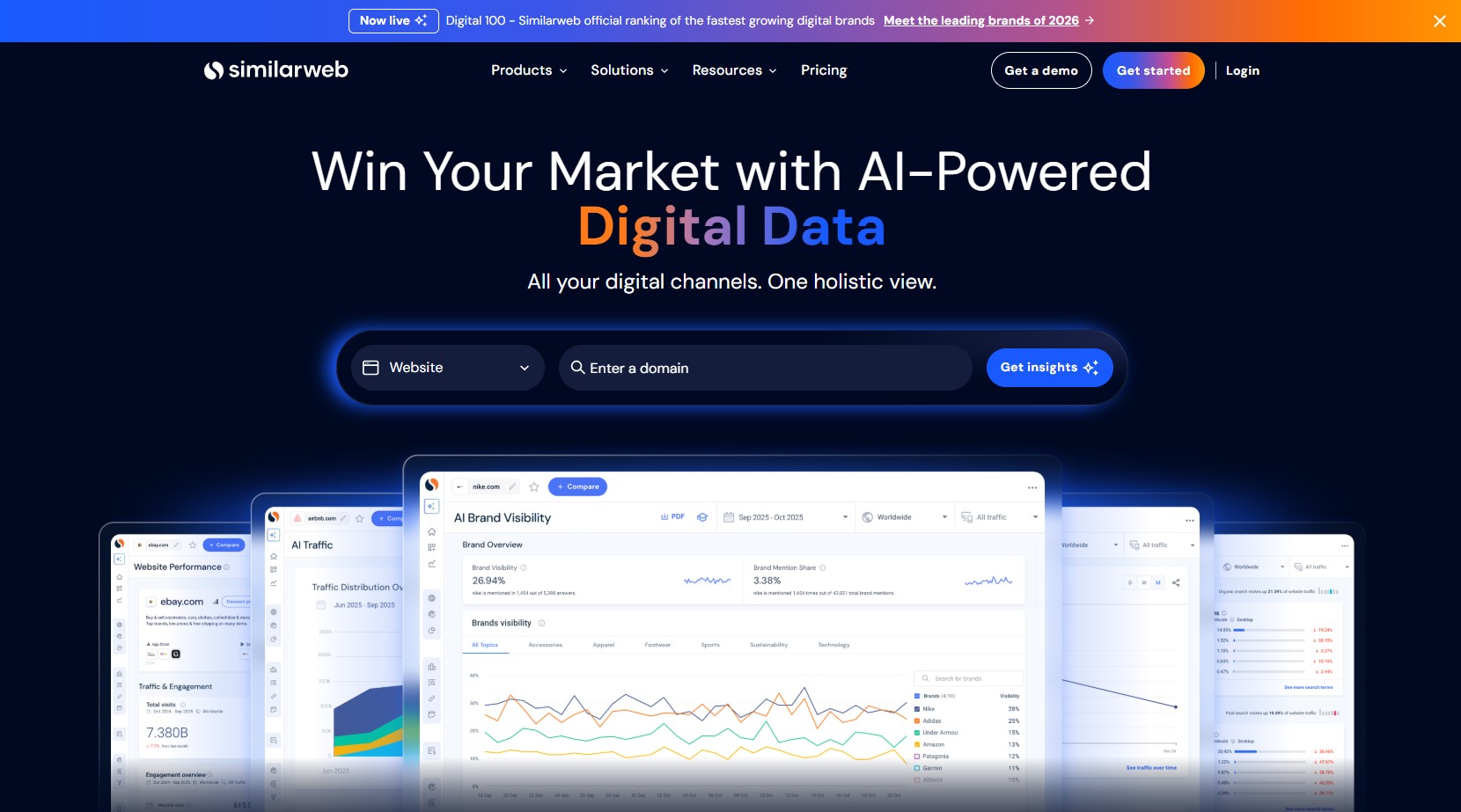
Similarweb AI refers to the suite of artificial‑intelligence‑powered analytics, insights, and digital intelligence features embedded within the broader Similarweb platform, a market‑leading digital data and competitive intelligence solution. Rather than just providing raw web‑traffic statistics, Similarweb AI helps businesses understand how they perform in the evolving digital landscape — including traditional web visibility, app engagement, and the rapidly growing space of AI‑driven discovery and generative search. It solves the problem of fragmented, siloed analytics by combining high‑quality global digital data with AI‑augmented interpretation, allowing teams to measure visibility, benchmark against competitors, understand trends, and make data‑driven strategic decisions at enterprise scale. Similarweb’s AI modules — including Gen AI Intelligence for AI discovery metrics and purpose‑built AI Agents for specialized analysis — reflect this shift from manual analytics to predictive and generative insight.
Who owns Similarweb AI and the company behind it
Similarweb AI is developed by Similarweb Ltd., a publicly traded company (NYSE: SMWB) headquartered in Tel Aviv and New York. Similarweb is widely recognized in the digital analytics industry for its large, proprietary dataset covering web traffic, referrals, search behavior, app metrics, and ecommerce trends for millions of domains and applications. Over time the company has layered AI‑augmented capabilities — such as AI Agents trained on comprehensive digital data and Gen AI Intelligence — on top of its core dataset to enable analysis that goes beyond raw numbers to human‑readable insights in strategic contexts.
How Similarweb AI actually works
Similarweb AI combines enterprise‑grade digital data with machine learning, natural language processing, and generative models to produce contextual insights, trend explanations, and competitive benchmarks. Its Gen AI Intelligence Toolkit helps businesses assess brand visibility in AI‑generated responses and understand how much traffic they and competitors receive from AI engines like ChatGPT, Gemini, and other generative platforms. The AI Trend Analyzer agent detects spikes in search demand, identifies driving keywords, and correlates trends with real‑world events. Similarweb’s AI Agents are purpose‑built for specific tasks — including SEO and content planning, sales intelligence, and Shopper and App intelligence — replacing manual research with automated, data‑backed recommendations.
Real‑world use cases and how professionals use it today
Data analysts and digital marketers use Similarweb AI to benchmark web and app performance against competitors, uncovering shifts in traffic sources, referral patterns, and market share. SEO and growth teams leverage Gen AI Intelligence to quantify and improve AI referral visibility — an emergent metric showing where brands appear in generative search answers and how that influences traffic and conversions. Sales teams use the new SAM Sales AI Module to embed digital intelligence directly into workflows, identifying high‑impact opportunities without manual data mining. Product and ecommerce managers use AI‑driven trend and shopper intelligence to understand consumer journeys and discover pricing or demand patterns at scale.
Current pricing plans in 2026
Similarweb’s pricing is modular and tiered by product category and depth of data access. For example, AI Search Intelligence packages can start around $99 per month (billed annually) for basic access aimed at analysts and marketers, providing limited historical data and core AI metrics. Sales Intelligence packages start at roughly $129 per month with basic usage, while enterprise plans with broader data (including AI Agents, deeper historical spans, and multi‑user seats) are priced via custom annual contracts often reaching into the tens of thousands of dollars per year depending on scale and support requirements. Custom enterprise pricing typically includes dedicated success management and broader API access.
How pricing compares to competitors
Similarweb’s pricing places it in the mid‑to‑enterprise segment relative to standalone analytics or SEO tools. Entry‑level AI Search Intelligence plans are competitively priced with other digital traffic or visibility products, while deeper enterprise analytics — especially with AI Agents and comprehensive datasets — rival custom contracts found with platforms like Brandwatch, Sprinklr, or Adobe Analytics. For teams needing AI‑augmented competitive intelligence and AI visibility insights, Similarweb’s pricing reflects its broad dataset and AI toolkit rather than just single‑point solutions. Simpler SEO or web analytics tools may cost less but won’t provide the same depth of AI discovery and cross‑platform visibility insights.
Who should use Similarweb AI and who should not
Similarweb AI is ideal for enterprise marketers, SEO professionals, digital strategists, ecommerce teams, and sales operations, especially those working across global markets or complex digital ecosystems where AI discovery (Generative Engine Optimization) matters alongside traditional web and app performance. It’s also valuable for competitive intelligence and strategic planning functions where real‑time, AI‑augmented insights reduce time to decision. It is less suited to small businesses or solo practitioners whose analytics needs are simpler and whose budgets cannot justify enterprise‑scaled data access and contract pricing; such users may prefer basic analytics or SEO tools with transparent pricing and lighter AI augmentation.
Strengths, limitations, and realistic drawbacks
Similarweb AI’s strengths include deep integration of AI with extensive digital data, supporting multi‑channel visibility across web, app, and AI discovery platforms. Its purpose‑built AI Agents and Gen AI Intelligence Toolkit help teams go beyond raw traffic numbers to understand why trends occur and how competitive dynamics shift. Limitations include the complexity of the platform and learning curve required to interpret and act on high‑dimensional data effectively, as well as the cost and contract negotiation overhead for deeper enterprise tiers. Smaller teams may find the full suite more than they need and may not use the advanced AI features proportionally to their investment.
How Similarweb AI is being used in businesses and teams
In real workflows, Similarweb AI is incorporated into weekly performance reviews, competitive benchmarking cycles, and strategic growth planning. SEO teams monitor AI brand visibility and adjust content strategies to improve performance across generative discovery channels. Sales operations feed digital intelligence into CRM systems via AI‑augmented modules like SAM to prioritize leads and contextualize outreach. Product and ecommerce leaders use shopper and app AI insights to identify emerging demand patterns and optimize pricing or feature decisions. Many teams also integrate Similarweb data with BI dashboards and reports to inform executive decision‑making on market trends and strategic direction.
Why Similarweb AI matters in the AI landscape in 2026
By 2026, digital discovery extends beyond search engines into generative AI assistants and responses — where traditional metrics like organic search rankings no longer capture the full picture of online visibility. Similarweb AI matters because it bridges traditional analytics and AI visibility by quantifying brand appearances across AI‑generated answers and linking that presence to traffic and competitive outcomes. Its ability to measure and explain where, how, and why brands are mentioned and clicked through from AI platforms reflects broader trends in digital behaviour and helps organizations adapt their strategies to AI‑driven discovery channels, a capability increasingly essential for maintaining relevance and growth.
A concise final verdict written like a human expert
Similarweb AI in 2026 stands as a comprehensive, data‑rich digital intelligence platform that goes far beyond simple web analytics or SEO tools by embedding AI into every layer of insight and competitive measurement. Its integration of AI‑augmented trend analysis, generative visibility measurement, and purpose‑built intelligence agents equips sophisticated teams to make faster, more strategic decisions across marketing, sales, and product functions. While the complexity and enterprise pricing make it less approachable for smaller operations, for mid‑to‑enterprise organizations facing AI‑driven shifts in how consumers discover and engage with content, Similarweb AI provides a rare combination of depth, breadth, and actionable intelligence grounded in one of the largest proprietary digital datasets available today.